![Ep.17 "Kaze, Kaoru" Analyzed by a Nurse! Mitsu's Fierce Opposition, Tama's High Fever & Prejudice Against Nursing — Thinking About Career Choice [Shi-chan's Nurse Perspective]](https://considerate-thank-you-nursecareer.com/wp-content/uploads/2026/07/Kaze-Kaoru-Episode-17-eyecatch.jpg)
By reading this page, you will…
✅ Understand Episode 17 from a nurse’s perspective
✅ See Mitsu’s fierce opposition to Rin’s path as a mix of love and anxiety
✅ Understand the prejudice against nursing work and its historical roots
✅ Connect Tama’s high fever to clinical observation skills for pediatric fever
✅ Think about why hesitation in career choices is not weakness
- Episode 17 Synopsis
- Nurse’s Perspective ①: Family Opposition Is a Mix of “Love” and “Anxiety”
- Nurse’s Perspective ②: Prejudice Against Nursing
- Nurse’s Perspective ③: Tama’s High Fever Confronts Rin With “Helplessness”
- Nurse’s Perspective ④: Don’t Blame the Anxious Parent
- Nurse’s Perspective ⑤: The Pain of Only Being Able to Watch
- Nurse’s Perspective ⑥: A Career Choice Is Never Just One Person’s Decision
- Nurse’s Perspective ⑦: Why Naomi Visits Yoshie
- Nurse’s Perspective ⑧: Noticing the Prejudice Within Yourself
- Nurse’s Perspective ⑨: Warning Signs to Watch in a Child’s Fever
- Nurse’s Perspective ⑩: Hesitation Is Not a Bad Thing
- Observation Points New Nurses Can Use in Clinical Practice
- Report Examples for Senior Nurses and Doctors
- Frequently Asked Questions
- Summary: Episode 17 — Depicting the Struggle Before Choosing the Path of Nursing
- English Summary: Episode 17 in 10 Lines
- 🛒 しーちゃんのおすすめ情報
Episode 17 Synopsis
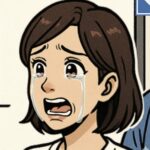
Shi-chan, Episode 17 was hard to watch. When Rin told Mitsu about the trained nurse proposal, Mitsu strongly opposed it — and then Tama got a high fever, and Rin felt so frustrated that she couldn’t do anything to help.

That’s right. Episode 17 showed the big walls that come before becoming a nurse. Rin’s own will, her family’s anxiety, society’s prejudice, and the helplessness of watching her daughter suffer through illness — all of these collided, shaking Rin’s conviction about whether she truly wants to walk the path of nursing.
In Episode 17, Rin tells her mother Mitsu about being invited by Sutematsu to become a trained nurse.
In the previous episode, at the soup kitchen, Rin and Naomi rushed to help a boy who had fallen ill. Seeing this, Sutematsu proposes the path of trained nursing to them both.
For Rin, this was a sudden suggestion. But at the same time, it was a proposal that lit something deep inside her heart.
However, Mitsu strongly opposes it. She has no understanding of nursing work and cannot accept Rin taking that path.
For Mitsu, nursing doesn’t look like a path her daughter should take. More than that, she worries that Rin will struggle, and be looked down on by society.
Rin is moved by Sutematsu’s words, yet shaken by Mitsu’s opposition.
In the midst of this, her daughter Tama develops a high fever.
As a mother, Rin stays by Tama’s side. But there is almost nothing she can do.
She can only watch.
Faced with Tama’s suffering, Rin feels the full weight of her own helplessness.
Meanwhile, Naomi visits Yoshie.
Naomi too, faced with Sutematsu’s invitation, begins confronting her own path, her past, and the prejudices she has carried inside herself.
Episode 17 was an episode where both Rin and Naomi, each in their own place, began asking what it would truly mean to choose the path of nursing.
Nurse’s Perspective ①: Family Opposition Is a Mix of “Love” and “Anxiety”
The first thing I want to think about in Episode 17 is Mitsu’s fierce opposition.
Mitsu strongly objects to Rin becoming a trained nurse. Her words, when heard through a modern lens, can sound harsh and prejudiced.
But from a nurse’s perspective, I don’t want to simply cast Mitsu as the villain. I want to also see the anxiety behind her opposition.
What if her daughter struggles? What if society looks down on her? Can she really study while raising Tama? What if she enters an unknown world and gets hurt? Will the family be able to support her?
These anxieties are likely what’s behind Mitsu’s fierce opposition.
Family opposition causes pain to the person, but it also comes from the family’s own worry.
Exactly. Of course, it’s not okay to crush someone’s will. But family opposition often contains a mix of love, anxiety, prejudice, lack of knowledge, and concern about appearances. Separating these out can sometimes reveal an opening for real dialogue.
Even in modern times, people who aim to become nurses can face family opposition.
Worry about night shifts. Concern that it’s physically demanding. Fears about infection or violence. Anxiety about balancing it with marriage or childcare. Being told there are better jobs out there. Family who knows how tough healthcare is, worrying about you.
Being opposed hurts. But when you sort through what the opposition is actually about, you may find that “I don’t want you to become a nurse” is really “I’m scared of you getting hurt.”
The same applies in nursing care. When a patient’s family opposes what the patient wants, nurses don’t immediately decide who is right — they check what the family is worried about.
“What is the family most concerned about?” “What kind of life does the patient themselves want?” “Let’s work through the worries one by one.”
Mitsu’s opposition in Episode 17 can be seen not only as a wall confining Rin, but also as a family’s anxiety taking shape.
Nurse’s Perspective ②: Prejudice Against Nursing
Behind Mitsu’s lack of understanding toward nursing work lies prejudice about the profession.
In the society of that time, nursing had not yet been fully recognized as a professional field.
Work that involves caring for sick people. Work that is looked down upon. A profession women couldn’t proudly choose.
That kind of view existed.
Nursing is a national qualification and specialized profession now, but it wasn’t seen that way in the past, was it?
That’s right. The status nursing has today wasn’t there from the beginning. It’s because the nurses who came before us studied, worked, and demonstrated nursing’s necessity to society that it has gradually been recognized as a profession.
Even in modern times, prejudice against nurses hasn’t completely disappeared.
“Just following doctor’s orders.” “Anyone nice enough can do it.” “Suitable for women.” “Getting by on physical stamina alone.” “Basic caregiving anyone could do.” Nurses who have felt irritated by words like these are not uncommon.
Nursing is not simply caregiving.
Observation. Judgment. Anticipation. Communication. Infection control. Emergency response. Life support. Ethics. Team coordination. Protecting patients’ dignity.
These make it a true profession.
The prejudice shown in Episode 17 is from the past — yet it still lingers faintly in modern times.
That’s exactly why Rin confronting that prejudice means confronting the history of nursing itself.
Nurse’s Perspective ③: Tama’s High Fever Confronts Rin With “Helplessness”
In Episode 17, Tama develops a high fever.
This scene is a major turning point for Rin.
As a mother, she wants to protect Tama. But she doesn’t know what to do.
There’s a fever. She seems to be suffering. I want to do something. But I don’t have the knowledge. All I can do is watch.
This helplessness shakes Rin deeply.
Not being able to do anything while your own child is suffering must be so painful.
It must be. Many people who start learning nursing have that kind of “frustration at not being able to do anything.” The experience of not being able to help someone you love, or being unable to say anything when a patient was suffering — that can connect to a desire to learn.
A child’s fever is a major source of anxiety for any caregiver.
Even in modern times, when a child gets a high fever, caregivers face difficult decisions: Should we go to the emergency room? Can we watch at home? Should we use a fever reducer? Are they drinking enough? What if they have a seizure? Are they listless, or just sleepy?
These judgments are terrifying without medical knowledge.
A nurse’s role is not to blame the caregiver, but to check observation points together.
“Are they taking in fluids?” “Is urine output normal?” “Do they respond when you call their name?” “How does their color look?” “Does their breathing seem difficult?” “Have there been any seizures?”
Tama’s high fever, I believe, was the experience that made Rin feel: “If I had nursing knowledge, I might be able to support the people right in front of me better.”
Nurse’s Perspective ④: Don’t Blame the Anxious Parent
When Tama develops a high fever, Rin is overcome with anxiety.
I’m her mother and I can’t do anything. Maybe I should have noticed sooner. Maybe it’s my fault.
She may have felt all of this. But of course a parent becomes anxious when their child is unwell.
Nurses need to first receive that anxiety, not blame the caregiver.
In outpatient and emergency settings, caregivers are often visibly very anxious.
That’s true. It’s important not to dismiss a caregiver’s worry as “overreacting.” Especially with young children, who can change quickly — a caregiver’s sense of “something feels different” is important clinical information.
In pediatric nursing, caregivers are essential observers. They know the child’s normal state best.
Less energy than usual. Crying differently. Not eating. Sleeping differently. Not settling even when held.
This information is vital for healthcare providers.
So nurses want to say: “What you noticed is important information.” “It’s completely fine that you came in.” “Let’s check the condition together.” “I’m asking not to blame you, but to figure out what’s needed right now.”
Rin’s anxiety is a completely natural response as a mother. And that anxiety becomes the thread that leads her toward wanting to learn nursing.
Nurse’s Perspective ⑤: The Pain of Only Being Able to Watch
In Episode 17, faced with Tama, Rin feels the frustration of being able to do nothing but watch.
Nurses feel this too.
Not everything can be cured. There are times when pain can’t be fully relieved. Times when disease progression can’t be stopped. Times when a family’s dynamics can’t be changed quickly. Times when a post-discharge life can’t be fully arranged.
Nursing is a profession that encounters helplessness.
I thought if I became a nurse, I’d be able to help with everything. But in reality, there’s a lot that can’t be done.
That’s true. But not being able to do everything doesn’t make the work meaningless. When a nurse can’t cure, they can still ease suffering a little, be present, connect to the right people, and protect dignity.
Even in moments of “all I can do is watch,” nurses have things they can do.
Observe breathing. Ask about pain. Adjust position. Check fluid intake and oral health. Listen to anxiety. Explain the situation to family. Relay changes to the doctor. Prepare what’s needed. Simply be present with the patient.
Watching is not doing nothing.
Professional watching means observing, judging, and connecting to the next action.
Rin doesn’t yet know this professional form of watching.
That’s why being able to do nothing but watch is painful for her.
And that pain becomes the seed of wanting to learn.
Nurse’s Perspective ⑥: A Career Choice Is Never Just One Person’s Decision
Whether Rin becomes a trained nurse is her own career choice.
But Rin has Tama. She has her mother Mitsu. She has a family to sustain.
That’s why a career choice is never just one person’s matter.
People in modern times who aim to become nurses face the same reality.
Tuition. Clinical training. Night shifts. Family caregiving. Childcare. Income. Housing. A partner’s understanding. Physical health.
Career choices are made within all of these real-life factors.
There are circumstances where “I want to do this” isn’t enough to decide on its own.
Exactly. That’s why it’s important not to deny the “want to” feeling, but to organize the practical realities one by one. Dreams and life aren’t opposites — I think it’s about looking at both and building a path forward.
In nursing career guidance too, working through these things is helpful.
What do you want to learn? What kind of work style do you want? Is there family support? Is the financial picture clear? Is there childcare available for training and shifts? Is your health up to it? Is there someone you can talk to?
For Rin, the path of trained nursing is a major challenge.
Mitsu’s opposition is painful — but it also becomes an opportunity for Rin to sort through her own feelings and her real-life situation.
Nurse’s Perspective ⑦: Why Naomi Visits Yoshie
In Episode 17, Naomi visits Yoshie.
Naomi too is hesitating, faced with Sutematsu’s invitation.
Naomi looks like someone who charges forward without wavering.
But she has her own inner conflict.
Her past. Her relationship with the church. Her feelings for Kohinata. The lie that Sutematsu saw through. Her uncertainty about the path of nursing.
Carrying all of that, she goes to Yoshie.
Naomi looks strong, but she’s carrying it alone inside, isn’t she.
That’s true. People who appear strong often need someone to talk to the most. Nurses too shouldn’t assume that because a patient seems fine, everything is fine — it’s important to see where that person can go for support.
Having someone to talk to connects to emotional safety.
When you’re unsure about your path. When your family is opposed. When you notice a prejudice inside yourself. When you want to sort through your past.
Just being able to talk to someone helps things feel a little more organized.
Nurses think about where patients and families can go for support: family, friends, medical social workers, public health nurses, home visit nurses, mental health professionals, religious figures, community supporters.
For Naomi, Yoshie is not someone who imposes a judgment — she’s someone who listens and stands alongside.
This is an important attitude in any supporter.
Nurse’s Perspective ⑧: Noticing the Prejudice Within Yourself
An important theme in Episode 17 is noticing “the prejudice you carry inside yourself.”
Rin isn’t only opposed by Mitsu — she also begins to face the fact that there is hesitation and prejudice about nursing within herself.
Did she look down on nursing work? Had she actually ever thought of caring for the sick as one of her own life’s options? Even as Mitsu’s words hurt her, was there not a similar view somewhere inside her as well?
This realization is painful.
Noticing you have prejudice within yourself is quite hard, isn’t it.
It is hard. But being able to notice it is also the beginning of growth. Because nurses are in the business of supporting patients and families, we need to keep noticing the biases within ourselves.
Nurses too carry unconscious biases.
An elderly person probably can’t understand. A young person is probably fine. They’re on welfare, so… They have a psychiatric history, so… They keep coming to the emergency room, so… They’re a foreigner, so… Their family doesn’t come, so… They can’t stick to their medication, so…
Views like these can come through in how we treat patients without us even realizing it.
Nurses are not perfect humans.
That’s precisely why we need to keep noticing and correcting the biases within ourselves.
Rin noticing her own hesitation and prejudice is an important first step toward becoming a nurse.
Nurse’s Perspective ⑨: Warning Signs to Watch in a Child’s Fever
Using Tama’s high fever as a prompt, let me organize what to look for when a child has a fever.
A fever itself is a sign that the body is responding to infection or other causes.
What matters is not just the height of the fever, but the overall condition of the child.
When a fever is high, it seems scary right away — but you should not judge by the number alone?
That’s right. Of course high fever requires attention. But beyond the number, what’s important is looking at alertness, fluid intake, urine output, breathing, consciousness, and whether there are any seizures.
Points to check when a child has a fever:
Do they respond when you call their name? Are they unusually listless? Are they taking in fluids? Is urine output normal? Does their breathing seem difficult? Is the color of their face or lips poor? Are there any seizures? Are there vomiting or diarrhea? Is there a rash? Is anyone nearby with the same symptoms? Does the caregiver feel something is different from usual?
In modern times, these observations inform the decision about whether to seek medical care.
In Rin’s era, the medical access and knowledge we have today did not exist.
That’s exactly why Rin’s helplessness must have been so immense.
Tama’s high fever confronts Rin strongly with the necessity of learning nursing.
Nurse’s Perspective ⑩: Hesitation Is Not a Bad Thing
In Episode 17, Rin hesitates.
Does she want to become a trained nurse? Should she press forward even with her mother opposed? Can she study while raising Tama? Can she truly choose the path of nursing?
To those watching, her hesitation may look agonizing. But hesitation is not a bad thing.
She hesitates precisely because the choice is important.
New nurses also hesitate a lot about careers and work styles. Sometimes I wonder if being uncertain makes me weak.
Hesitation is not weakness. You hesitate because you are seriously thinking about your own life. What matters is not carrying that hesitation alone — gathering information, consulting others, and putting your feelings into words.
Nursing careers come with all kinds of hesitation.
Stay in acute care or move to chronic care? Interested in home visit nursing. Aim for certification? Keep doing night shifts? Balance with childcare? Change jobs? Take a break?
These hesitations are part of growing as a nurse.
Rin’s hesitation is also time she needs to move toward the path of nursing.
Episode 17 is an episode about gradually drawing closer to your own true feelings, even while uncertain.
Observation Points New Nurses Can Use in Clinical Practice
From Episode 17, here are key observation points new nurses can use in the clinical setting.
1. Look at what is behind family opposition
When a family opposes something, do not just label them as stubborn — check what they are worried about.
Money, caregiving capacity, safety, social appearances, past experiences, anxiety. Separating these out makes dialogue easier.
2. Look at a child’s overall condition, not just the fever number
Beyond the temperature, look at alertness, fluid intake, urine output, breathing, consciousness, seizures, and skin color.
The caregiver’s sense of “something is different” is also important information.
3. Support caregivers without blame
Of course a parent becomes anxious when their child is unwell.
“It is completely fine that you came in.” “Let us check together.” Saying this makes caregivers feel more comfortable speaking.
4. Notice your own biases
Reflect on whether you are making unconscious assumptions about patients.
Being able to notice a bias is a sign of growth as a nurse.
5. Do not carry career hesitation alone
Career uncertainty is natural.
It is important to have someone to talk to — a senior nurse, a peer, family, school, or workplace counseling.
Report Examples for Senior Nurses and Doctors
Here are report examples for new nurses that are easy to use in clinical settings.
When a child has a fever and the caregiver is anxious
“The child has a fever, but responds when called and is taking small amounts of fluid. The caregiver is very anxious and mentions the child seems less energetic than usual. I would like to check their overall condition together and connect them to a consultation.”
When a family is opposing the patient’s wishes
“The patient hopes to be discharged home, but the family is strongly opposed. Behind the opposition seems to be anxiety about falls and caregiving burden. I would like to separate the patient’s wishes and the family’s anxiety and work through them.”
When you notice your own bias about a patient
“I may have had a preconception about a patient who comes in frequently. I would like to check again whether there are any underlying difficulties in their day-to-day life.”
When a new nurse is seeking guidance on their career
“A new nurse seems uncertain about their future placement and way of working. I think they need time to sort through their preferences and the practical realities of their life.”
Frequently Asked Questions
Q. What should you do if your family opposes you becoming a nurse?
First, try listening to what exactly they are opposed to.
Are they worried about physical demands? About money? About night shifts? About social appearances? Breaking down the anxiety often reveals areas that can be talked through.
At the same time, your own feelings matter. Finding a trusted person to talk to helps you find your path.
Q. What is the most important thing to watch for in a child’s fever?
The overall physical condition, not just the number.
Whether they are listless, whether they are taking in fluids, whether urine is coming out, whether breathing seems difficult, whether there have been seizures — these are the key points.
Q. Do nurses sometimes hold biases?
Yes.
Nurses are human. What matters is noticing that you might have a bias, re-engaging without predetermined judgments about the patient, and continuing to reflect on your practice.
Q. Is it okay to keep being a nurse while still uncertain?
Of course.
Hesitation is also proof that you are thinking seriously. Rather than carrying it alone, talk to someone you trust and gradually work toward your own way of working.
Summary: Episode 17 — Depicting the Struggle Before Choosing the Path of Nursing
In Episode 17, Rin tells Mitsu about the trained nurse invitation.
But Mitsu, with no understanding of nursing work, fiercely opposes it.
In the midst of this, Tama develops a high fever, and Rin feels the frustration of being able to do nothing but watch.
Meanwhile, Naomi visits Yoshie and begins confronting her own path and her inner feelings.
✅ Family opposition contains a mix of love, anxiety, and prejudice
✅ Prejudice against nursing still lingers — and nurses can confront it through their work
✅ Helplessness can become the seed of wanting to learn
✅ A caregiver’s anxiety is a natural response — receive it, don’t blame it
✅ Professional watching is not doing nothing — it means observing, judging, and connecting to action
✅ Career choices involve the whole life, not just personal desire
✅ Being able to consult someone is essential mental safety
✅ Noticing bias within yourself is the beginning of growth
Episode 17 wasn’t an episode where Rin decided to become a nurse right away — it was an episode of hesitation. But within that hesitation, I felt like her reasons for wanting to become a nurse were gradually becoming visible.
That’s right. The reasons people choose to become nurses aren’t always beautiful, tidy words. The frustration of not being able to do anything, the desire to protect family, a discomfort with prejudice, the wish to choose your own life. A mix of all these things is how people find their path.
Rin was opposed by Mitsu.
She felt helpless in the face of Tama’s high fever.
But that pain teaches Rin the meaning of learning nursing.
Naomi too is confronting her own path alongside Yoshie.
For Shi-chan, Episode 17 was a very important episode depicting “the struggle before choosing the path of nursing” and “the power to notice your own biases.”
New nurses — you may have days of hesitation and helplessness too.
But that feeling can sometimes be the doorway to growing as a nurse.
Don’t ignore your inner uncertainty. Put it into words. Turn it into learning.
English Summary: Episode 17 in 10 Lines
- In Episode 17, Rin tells her mother Mitsu about the trained nurse invitation — and Mitsu fiercely opposes it.
- Mitsu’s opposition carries a mix of love, anxiety about social standing, and prejudice against nursing.
- Nurses can apply this to family opposition in patient care — looking for the anxiety behind the refusal.
- Tama develops a high fever, and Rin can do nothing but watch — feeling helpless and frustrated.
- This helplessness becomes the seed of Rin’s desire to learn nursing and gain the knowledge to help.
- Pediatric fever care means watching overall condition — not just the temperature number.
- Nurses support anxious caregivers by receiving their worry, not blaming them.
- Naomi visits Yoshie, showing that even seemingly strong people need someone to talk to.
- Rin confronts the prejudice within herself — an honest first step toward becoming a nurse.
- Hesitation is not weakness — it means the choice truly matters, and that is where growth begins.
🛒 しーちゃんのおすすめ情報
💼 転職を考えているナースへ。MCナースネットで理想の職場を探そう
「今の職場、なんかしんどいな」と感じたら、それはサインかもしれません。MCナースネットは看護師・保健師・助産師専門の転職支援サービス。担当コンサルタントが非公開求人を含めた情報をもとに、あなたの希望にあった職場を一緒に探してくれます。登録・相談は無料なので、転職を決めていなくても「話だけ聞いてみる」から始めてOKです。
- 非公開求人も多数掲載
- 専任コンサルタントが転職をサポート
- 登録・利用は完全無料
。°+°。°+ °。°。°+°。°+ °。°。°+°。°+ °。°+ °。°
◇◆ 看護師の求人・転職ならMC─ナースネット ◆◇
業界最大級!求人数20000件以上、会員数100,000人の実績!
全国での拠点展開だから身近なコンサルタントに相談可!
大人気の企業・健診・添乗のお仕事も豊富!
登録・お問い合わせはこちら
⇒https://px.a8.net/svt/ejp?a8mat=4AVF01+3RQUPE+28MI+61JSJ
。°+°。°+ °。°。°+°。°+ °。°。°+°。°+ °。°+ °。°
📚 しーちゃんのおすすめ看護本・国試参考書【Amazon】
「もっと深く勉強したい」「国試に向けてしっかり対策したい」という方へ。Amazonで購入できるおすすめの看護関連書籍をご紹介します。現役ナースの私が実際に使ったり、役立つと感じた本を厳選しています。
🛌 看護師の疲れた体に。特許取得の整体枕で熟睡できる眠りを
立ちっぱなしのシフト勤務、夜勤明けの肩こり・首こり……看護師のカラダって毎日本当にしんどいですよね。そんな私が出会ったのが、整体師が開発した特許取得の枕「Cure:Re THE MAKURA」。首・肩・背中のコリをほぐしながら寝られる設計で、翌朝の目覚めが全然違います。ふだん整体に行く余裕がない方にこそ試してほしい一品です。
✨ 夜勤明けのむくみ・疲れ顔に。自宅でできるEMS美顔器「BIOAESTECH」
夜勤明け、鏡を見てため息……なんてこと、ありませんか?
看護師の仕事は不規則なシフト・立ちっぱなし・ストレスで、顔のむくみやたるみが気になりやすい。エステや美容院に行く時間もなかなか取れないですよね。
そこでしーちゃんが試してみたのが、BIOAESTECH DUAL ORB DEEP LIFT。EMSで深部の筋肉にアプローチして、顔のリフトアップ・引き締めを自宅でケアできる美容機器です。
月々2,191円(税込)のサブスクで始められるから、忙しいナースにもお財布にやさしい。
🌙 夜勤明けのスキマ時間でセルフケア
💆 エステ不要、自宅で本格EMS体験
💳 月々2,191円〜のサブスク形式で気軽にスタート
テクノロジーと実証で肌を変える!高機能スキンケアの新定番【BIOAESTECH】
PR
📱 スキマ時間の勉強・調べ物に|通信費を抑えたい看護師さんへ
休憩中に薬や疾患を調べたり、勉強動画を見たり…看護師はスマホのデータ通信を使う場面がたくさんあります。「ギガが足りない」「通信費が高い」と感じている方に、データ使い放題の楽天モバイルはぴったりです。
- ✅ データ高速無制限・使い放題で 月3,278円(税込)※1
- ✅ 契約事務手数料0円・初期費用なし
- ✅ Rakuten Linkアプリで国内通話かけ放題 ※2
- ✅ 楽天市場のお買い物ポイントが最大+4倍 ※3
※1 製品代・オプション料・通話料別。公平なサービスのため、速度制限の場合あり。環境により速度低下する場合あり。
※2 Rakuten Linkアプリ利用時。(0570)などから始まる他社接続サービスや一部特番(188)への通話は無料通話の対象外。アプリ未使用時は30秒22円。
※3 ご契約中のプラン・会員ランクに応じてポイント倍率が異なります。上限・達成条件あり。
※本記事はプロモーション(アフィリエイト)を含みます。
PR
💬 いまの働き方、これからのこと|看護師求人サイト「MCナースネット」
毎日がんばっているからこそ、ふと「このままでいいのかな」と立ち止まる日もありますよね。すぐに転職しなくても、どんな働き方の選択肢があるかを知っておくだけで、心はぐっと軽くなります。MCナースネットは、看護師資格を持つ方のための求人サイト。常勤だけでなく、いろいろな働き方に出会えます。
- ✅ 常勤・非常勤・派遣・単発など多様な働き方
- ✅ ツアーナース・健診・夜勤なしの企業求人も
- ✅ 全国に拠点があり、地方の求人にも対応
- ✅ 登録・相談は無料。面談で自分に合う働き方を整理できる
※看護師・准看護師・保健師・助産師の資格をお持ちの方向けのサービスです。登録後、電話での本人確認と面談のご案内があります。
※本記事はプロモーション(アフィリエイト)を含みます。
コメント