![A Nurse Analyzes "Kaze, Kaoru" Episode 16: A Sick Child, Fear of Infectious Disease & the First Step Toward Trained Nursing [Shi-chan's Nurse Perspective]](https://considerate-thank-you-nursecareer.com/wp-content/uploads/2026/07/Kaze-Kaoru-Episode-16-eyecatch.jpg)
By reading this page…
✅ You will understand the plot of Episode 16 from a nurse’s perspective
✅ You will understand the meaning behind Rin and Naomi rushing to the child at the soup kitchen
✅ You will learn about the initial response and infection control that nurses value in situations involving suspected infectious disease
✅ You will understand why Sutematsu makes “a certain proposal” to the two women — reading it as recognition of nursing aptitude
✅ You will gain perspective needed for new nurses in “scary but I’ll act anyway” situations
Hello, I’m Shi-chan, a working nurse!
I have 20 years of experience as a veteran nurse, and I work as a Certified Critical Care Nurse.
Hi, I’m Mirai-chan! I’m in my first year as a nurse, and I watch the morning drama “Kaze, Kaoru” every day — and ask Shi-chan lots of questions!
Today, we’ll break down Episode 16 of “Kaze, Kaoru” from a nurse’s point of view — in thorough detail!
※ At the end of this article, there is an “English Summary” with 10 lines covering Episode 16 in English. Feel free to use it for language practice or reviewing the story.
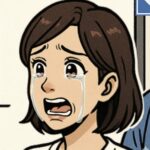
Shi-chan, Episode 16 felt like the nursing story suddenly started moving all at once! A boy who ate at the soup kitchen suddenly collapsed, and while everyone suspected infectious disease and stepped back, only Rin and Naomi rushed toward him. That scene made my heart race.

That’s right. Episode 16 was a really important one for me. What nurses need is not to be people who aren’t afraid — it’s to feel the fear and still think about what they can do to not abandon the person in front of them, and then act. I think the seeds of that were clearly visible in Rin and Naomi’s actions.
Episode 16 is the episode where the path toward “Trained Nursing” — which is central to this drama’s title — begins to come into view.
Until now, Rin and Naomi have each faced poverty, family, work, and the walls of society in their own lives.
But in Episode 16, the two of them react together for the first time, in the same place, to the same life-threatening crisis.
A soup kitchen. A child who suddenly falls ill. Fear of infectious disease. The hesitation of those around them. Two women who rush forward without thinking. Sutematsu watching them.
This sequence of events poses a question that is deeply important for nurses.
There is a person suffering right in front of you. But there may be danger for you too. The people around you are too afraid to approach.
In that moment, what do you do?
Episode 16 came close to the very origins of nursing.
- Plot Summary: Episode 16
- Nurse Point ①: A Soup Kitchen Is a Place Where Health Problems Become Visible
- Nurse Point ②: First Response When a Child Suddenly Becomes Unwell
- Nurse Point ③: When Infectious Disease Is Suspected, Fear Keeps People Away
- Nurse Point ④: A Nurse Is Not Someone Who Isn’t Afraid — They Are Someone Who Can Work With Fear
- Nurse Point ⑤: Rin and Naomi’s Common Thread Is “The Refusal to Abandon”
- Nurse Point ⑥: Sutematsu Saw the “Makings of a Nurse” in the Two Women
- Nurse Point ⑦: “Trained Nursing” Is the Path That Turns Courage Into Expertise
- Nurse Point ⑧: Infectious Disease Stigma and Patient Isolation
- Nurse Point ⑨: In an Emergency, “Calling for Help” Is Also Nursing
- Nurse Point ⑩: Episode 16 Shows the “Nursing Before Becoming a Nurse”
- Clinical Observation Points for New Nurses
- Report Examples: For Seniors and Doctors
- Frequently Asked Questions
- Summary: Episode 16 Showed “Nursing Before Becoming a Nurse”
- English Summary: Episode 16 in 10 Lines
- 🛒 しーちゃんのおすすめ情報
Plot Summary: Episode 16
In Episode 16, Naomi heads to the soup kitchen together with Sutematsu and others.
In the previous episode, Sutematsu had discovered Naomi’s lie — but rather than excluding Naomi, she asked her to help with the soup kitchen.
From the glamorous world of the Rokumeikan, Naomi now moves toward the soup kitchen — a community support site where those in need gather.
There, by coincidence, Zensaku Yoshie and Rin are also present.
Rin had been asked by Yoshie to come and help at the same soup kitchen.
It’s so meaningful that Rin and Naomi end up at the same place again. And this time it’s the site of a soup kitchen — community support in action.
That’s right. The two women appear to be walking different paths, but they keep intersecting at places where people need help. Even before becoming nurses, their gaze is already turned toward those who are struggling.
At the soup kitchen, people who need meals gather.
People who can’t afford food. People with unstable housing or employment. People carrying family responsibilities. People whose strength has declined. People who can’t afford to go to the hospital.
This is not a medical facility. But it is a place where health problems become visible.
In the middle of all this, a boy who ate at the soup kitchen suddenly becomes unwell.
The people around him suspect infectious disease, and no one wants to approach.
In the Meiji era, infectious disease was a major source of fear.
Without full understanding of the nature of disease, fear of infection stopped people in their tracks.
But Rin and Naomi instinctively rush toward the child.
It must be frightening if you think it could be infectious disease. But when a child is suffering right in front of you, you can’t just leave them…
That internal conflict is so important. A nurse is not someone who charges in without protection. But if fear alone paralyzes you, you cannot protect the life in front of you. You need to think about both infection control and life-saving at the same time.
Seeing their response, Sutematsu invites Rin and Naomi to her home.
And there, she makes the two women a certain proposal.
That proposal is at the heart of what makes Episode 16 so significant for the drama’s nursing storyline.
Nurse Point ①: A Soup Kitchen Is a Place Where Health Problems Become Visible
Soup kitchens are typically seen as social welfare — places that provide food to people in need.
But from a nursing perspective, they are something more.
Even though it’s not a hospital, you can see health problems there, can’t you?
That’s right. Not everyone who has a health issue is a hospital patient. Some people don’t have the money. Some don’t have the time. Some are afraid. Some don’t know the system. Some simply can’t make it to a hospital. Those people’s health problems can become visible in community support settings.
At a soup kitchen, health problems that would otherwise go unseen can come to light.
Someone’s skin color looks off. Someone is moving with great difficulty. Someone’s clothing is too thin for the weather. A child looks like they haven’t been getting enough nutrition. Someone is coughing persistently.
These are not the kinds of observations that happen in a hospital waiting room. They happen in places like soup kitchens.
In modern public health nursing, this kind of community-based observation is exactly what school nurses, public health center nurses, and visiting nurses do.
They find health problems in people who have not come to the hospital.
Nurse Point ②: First Response When a Child Suddenly Becomes Unwell
When a child who was eating at the soup kitchen suddenly collapses, what should the first response be?
Children can suddenly get worse even when they seemed fine, can’t they?
They can. Children have less physiological reserve than adults, so conditions like dehydration, low blood sugar, infection, allergy, aspiration, and fever can cause their condition to deteriorate rapidly. That’s why assessing the overall physical condition first is so important.
In clinical nursing, when a child (or any patient) suddenly collapses, the first steps are:
Call for help immediately. Assess consciousness, breathing, skin color, and vital signs. Determine when it started and what has happened. Create a safe environment. Prepare for emergency response.
“Calling for help” is especially important when you are a new nurse, or when you are not in a hospital setting.
You cannot do everything alone. Getting more people involved quickly is the most important first step.
Rin and Naomi moved toward the child without hesitation. From a nursing perspective, this “first movement toward the patient” is a crucial initial response.
Nurse Point ③: When Infectious Disease Is Suspected, Fear Keeps People Away
When people at the soup kitchen suspect infectious disease, they back away.
This is not necessarily wrong behavior.
In fact, in infectious disease situations, “not approaching” can itself be a form of prevention.
But it also means the sick child becomes isolated.
Even as a nurse, infectious disease is scary. I know I shouldn’t be afraid, but the fear is still there.
It’s okay to be afraid. Fear is an important sensation. Because of fear, you take infection precautions. The key is not to let fear alone leave a patient abandoned — and that’s why knowledge and procedures are necessary.
In modern medicine, when an infectious disease is suspected, healthcare workers:
Use appropriate personal protective equipment (PPE). Assess whether the situation requires isolation. Communicate clearly with other staff. Provide necessary treatment while preventing further spread.
The goal is to balance infection control with patient care — not to abandon the patient because of fear.
The people at the soup kitchen backed away from the child. Their fear was natural. But the child still needed someone to help.
Rin and Naomi became that someone.
Nurse Point ④: A Nurse Is Not Someone Who Isn’t Afraid — They Are Someone Who Can Work With Fear
This nurse point is one of the most important ones in the entire series.
Many nursing students and new nurses have this question: “Is it okay that I’m scared?”
Sometimes I worry that being scared means I’m not suited to be a nurse.
Not at all. Being afraid shows that you understand the weight of what’s at stake. The important thing isn’t that fear is absent — it’s that fear doesn’t make you do nothing. Being afraid, and then confirming what to do, calling for help, and following the right procedure — that’s what matters.
Florence Nightingale, who is considered the founder of modern nursing, worked in battlefield conditions during the Crimean War.
She was not unafraid. She was well aware of the dangers.
But she brought knowledge, systems, and organization to the work — and reduced suffering.
Sutematsu Oyama, the character who appears in this drama, was a real historical figure who studied in the United States for 11 years and became deeply involved in nursing education in Japan.
Her real-life drive to establish trained nursing in Japan came precisely from the recognition that nursing requires more than courage — it requires knowledge, skills, and systems.
That recognition is what makes “Trained Nursing” so significant in this story.
Nurse Point ⑤: Rin and Naomi’s Common Thread Is “The Refusal to Abandon”
Rin and Naomi are very different people.
Rin is a mother raising her daughter Tamaki after escaping a difficult marriage. She is practical, quiet, and focused on survival.
Naomi is bold, active, and always looking for ways to use her English skills and intelligence to shape her own future.
Their personalities are almost opposites.
Their personalities are completely different, but the part where they can’t just leave a child in front of them is the same.
That’s right. What nursing needs isn’t just the ability to say kind words. It’s the inability to remain indifferent when you see someone who needs help right in front of you. I think that’s where it begins.
What the two women share is exactly this: they cannot look away from suffering.
In nursing, this quality is sometimes called “empathy” or “compassion.”
But it is more primal than that. It is the reflex to see a person in distress and move toward them.
That reflex is not something taught in a classroom. It is something that exists in a person before they ever receive training.
Sutematsu saw that reflex in both Rin and Naomi.
Nurse Point ⑥: Sutematsu Saw the “Makings of a Nurse” in the Two Women
After watching Rin and Naomi rush toward the child, Sutematsu invites them to her home.
And there, she makes them a proposal — to train as nurses.
Did Sutematsu feel that the two of them could become nurses?
I think so. Nurses acquire knowledge and techniques through training. But the sensitivity to want to help the person in front of you, and the willingness to reach out to people even in the face of fear — these are an incredibly important foundation.
Sutematsu’s real-life history is important to understand here.
The historical Sutematsu Oyama studied in America for 11 years starting in 1872, when she was just 11 years old. She returned to Japan with sophisticated knowledge of Western culture and education.
She was deeply invested in the advancement of nursing in Japan — and she understood that what Japan lacked was not just medical knowledge, but trained, professional nurses.
In the drama, Sutematsu recognizes in Rin and Naomi the qualities that cannot be taught:
The inability to look away from suffering. The courage to act under fear. The instinct to help rather than analyze.
These, combined with proper training and knowledge, are what make a nurse.
Nurse Point ⑦: “Trained Nursing” Is the Path That Turns Courage Into Expertise
The proposal Sutematsu makes to Rin and Naomi is, in effect, an invitation to become trained nurses.
The concept of “Trained Nursing” in the Meiji era was itself revolutionary.
Just kindness or courage isn’t enough, is it?
That’s right. Kindness matters. But to protect patients as a professional, you need knowledge and technique. Trained nursing is the path that transforms feeling into expertise.
Before formal nursing education existed in Japan, care for the sick was largely provided by family members or untrained helpers.
There was no standard protocol. No infection control procedures. No systematic observation of vital signs.
Nursing education — “Trained Nursing” — changed all of that.
It took the impulse to help and gave it structure, knowledge, and tools.
In the modern context, this is still what nursing education does.
It takes students who have the desire to help people and teaches them: how to assess a patient’s condition systematically; how to recognize deterioration early; how to communicate with a medical team; how to manage infection risk while still providing care; how to document observations clearly.
The path from Rin and Naomi’s instinctive action to trained nursing is exactly this journey: from feeling to expertise.
Nurse Point ⑧: Infectious Disease Stigma and Patient Isolation
The scene where people back away from the sick child raises an important issue: stigma around infectious disease.
To protect patients from infection, we also need to work on reducing stigma, don’t we?
That’s right. Infection control is necessary. But distancing yourself from a patient as a human being is different from implementing infection control measures. Creating distance is to prevent infection spreading — not to abandon the person.
In the history of medicine and nursing, stigmatization of infectious disease has caused enormous harm.
People with tuberculosis, leprosy, cholera, or later HIV/AIDS were often not just isolated from infection — they were abandoned by society.
They lost their jobs, their families, their housing.
The physical disease was compounded by social isolation.
Modern nursing takes seriously the distinction between necessary infection control and unnecessary social stigma.
Nurses can say: “We’re using protective equipment to prevent the spread of infection. We’re still here with you. Your treatment and care will continue.”
That statement matters enormously to a patient.
Nurse Point ⑨: In an Emergency, “Calling for Help” Is Also Nursing
What can a new nurse do in an emergency?
This question comes up repeatedly for nursing students and first-year nurses.
As a new nurse, when an emergency happens, I lose track of what I should do.
The first thing is to call for help. That alone is a vital action. Emergency response is never completed by one person. Gathering people, reporting the situation, and doing what you can — all of those matter.
In clinical practice, new nurses often feel paralyzed during emergencies because they feel like they don’t know enough.
“I don’t know what to do” becomes “I can’t do anything” — and they freeze.
But there is always something to do.
Calling loudly for help. Staying beside the patient and watching them. Describing what you observe to others. Getting the crash cart. Clearing the space for others to work.
These actions don’t require years of experience.
They require presence of mind and the willingness to act.
Rin and Naomi’s instinct to rush toward the child — that is the foundation of all of it.
Nurse Point ⑩: Episode 16 Shows the “Nursing Before Becoming a Nurse”
Rin and Naomi are not nurses in Episode 16.
They have no nursing training. No clinical knowledge. No infection control protocol.
But when a child collapsed in front of them, they moved.
Even before becoming nurses, the two of them had the seeds of nursing within them.
I think so. Qualifications matter. Training matters. But before all of that, there is the sensitivity to notice human pain. Episode 16 is the episode where that sensitivity caught Sutematsu’s eye.
In modern nursing education, this is a concept sometimes called “pre-professional nursing identity.”
Even before entering nursing school, some people already carry the qualities that will make them good nurses:
The ability to notice when someone is struggling. The willingness to move toward, not away from, someone in distress. The discomfort at leaving a person alone when they need help.
These are not skills learned from a textbook. They are qualities of character.
Training builds the structure around those qualities — the knowledge, the procedures, the systems.
But the qualities themselves? They have to already be there.
Episode 16 shows us exactly where Rin and Naomi’s nursing journey begins. Not in a classroom. Not in a hospital. In a soup kitchen, in the Meiji era, in front of a sick child — and in the choice to rush forward.
Clinical Observation Points for New Nurses
Here are key points from Episode 16 that new nurses can apply in clinical practice.
1. Share changes in a child’s condition early
Children’s conditions can change rapidly. Unlike adults, they have less reserve.
Any sudden change in consciousness, breathing, skin color, or feeding should be shared with a senior nurse or doctor immediately.
“The patient suddenly looks pale” — this kind of observation, shared promptly, can be life-saving.
2. When infectious disease is suspected, convert fear into infection control
Fear of infection is natural. It is also useful — it motivates protective behavior.
Use PPE correctly. Consult the infection control guidelines. Ask a senior nurse what the protocol is.
“I’m scared, so I won’t approach” is not infection control — it’s abandonment. The goal is to approach safely.
3. Don’t let the patient become isolated
Infection control can create distance. But distance and abandonment are different.
Tell the patient what you’re doing and why. “I’m wearing this equipment to protect both of us.” Keep communication open even when contact is limited.
4. In an emergency, don’t try to handle it alone
Call for help first. Then observe and describe. Provide what support you can.
A new nurse who calls loudly and clearly is already contributing to emergency response.
5. Reflect on why you moved instinctively
When you find yourself acting on instinct in a difficult situation, later ask yourself: what made me move? What did I see? What did I feel?
These reflections build professional identity and deepen your practice.
Report Examples: For Seniors and Doctors
When a child suddenly becomes listless
“The child I’m caring for has suddenly become very listless and is not responsive as usual. Their skin appears pale. I’m not sure what’s happening, so I’d like someone more senior to come and assess.”
When infectious disease is suspected
“A patient has developed a sudden fever and I’m concerned it could be infectious. I wanted to check the isolation protocol and get guidance on appropriate PPE before continuing care.”
When those around the patient are becoming anxious
“Other patients and family members near this patient seem to be getting anxious about possible infection. It might help to provide some brief information to reassure them.”
When you froze during an emergency
“During the emergency earlier, I froze for a moment and wasn’t sure what to do. I want to debrief on what happened so I can respond more effectively next time.”
Frequently Asked Questions
Q. Is being afraid of infectious disease a disqualification for nursing?
No, it is not.
Feeling afraid is natural.
The key is to convert that fear into infection control measures and appropriate action.
Q. What can a new nurse do first in an emergency?
Call for backup first.
Then assess consciousness, breathing, skin color, and vital signs, and communicate when it started and what has been observed.
Not trying to handle it alone is critical.
Q. Doesn’t keeping distance from infection control hurt the patient?
Communication is the key.
“We’re using protective equipment to prevent the spread of infection.” “We will continue to provide the care you need.”
Explaining this reduces patient anxiety and the feeling of being isolated.
Q. What qualities does a nurse need?
Knowledge and skills are acquired through training.
The foundation underneath those is: the readiness to notice changes in patients, the refusal to abandon people who are struggling, and the willingness to learn what you don’t yet know.
Summary: Episode 16 Showed “Nursing Before Becoming a Nurse”
In Episode 16, Naomi heads to the soup kitchen with Sutematsu, and coincidentally encounters Rin there.
A boy who ate at the soup kitchen suddenly becomes unwell.
Others suspect infectious disease and cannot bring themselves to approach.
In the middle of this, Rin and Naomi instinctively rush toward the child.
Seeing their response, Sutematsu invites them home and makes them a proposal.
✅ A soup kitchen is a place where health problems become visible
✅ In children, sudden changes require an early initial response
✅ Fear of infectious disease is natural — convert it into infection control
✅ A nurse is not someone who isn’t afraid — they’re someone who can work with fear
✅ Both Rin and Naomi have “the refusal to abandon” within them
✅ Sutematsu saw the makings of nurses in both women
✅ Trained nursing is the path that turns courage into expertise
✅ Infection control and patient dignity are both protected
Watching Episode 16, I realized nursing isn’t just about courage, and it’s not just about knowledge either. You learn so that you can do something for the person in front of you, even when you’re scared.
That’s right. Nursing is not a job where you just run on feelings. But it’s also a job that doesn’t start without feelings. Rin and Naomi aren’t trained nurses yet, but they have the seeds of nursing within them. The path that grows those seeds into expertise — that begins here.
English Summary: Episode 16 in 10 Lines
- In Episode 16, Naomi joins Sutematsu at the soup kitchen, where she unexpectedly meets Rin again.
- A boy who ate at the soup kitchen suddenly collapses, and the crowd backs away in fear of infectious disease.
- Rin and Naomi instinctively rush toward the child while others hesitate — and Sutematsu observes them carefully.
- Sutematsu then invites both women to her home and makes a proposal: training as nurses.
- From a nursing perspective, the ability to move toward suffering people rather than away from them is a foundational nursing quality.
- Being afraid of infectious disease is natural — the goal is to convert that fear into appropriate infection control, not paralysis.
- Soup kitchens reveal health problems in people who cannot access formal medical care — a form of public health nursing in action.
- Children’s conditions can deteriorate rapidly; prompt observation and calling for help are the first actions a new nurse should take.
- Trained nursing transforms natural compassion and courage into systematic knowledge and professional skills.
- Episode 16 shows the origin of Rin and Naomi’s nursing journey — not in a school, but in a moment of choosing not to look away.
🛒 しーちゃんのおすすめ情報
💼 転職を考えているナースへ。MCナースネットで理想の職場を探そう
「今の職場、なんかしんどいな」と感じたら、それはサインかもしれません。MCナースネットは看護師・保健師・助産師専門の転職支援サービス。担当コンサルタントが非公開求人を含めた情報をもとに、あなたの希望にあった職場を一緒に探してくれます。登録・相談は無料なので、転職を決めていなくても「話だけ聞いてみる」から始めてOKです。
- 非公開求人も多数掲載
- 専任コンサルタントが転職をサポート
- 登録・利用は完全無料
。°+°。°+ °。°。°+°。°+ °。°。°+°。°+ °。°+ °。°
◇◆ 看護師の求人・転職ならMC─ナースネット ◆◇
業界最大級!求人数20000件以上、会員数100,000人の実績!
全国での拠点展開だから身近なコンサルタントに相談可!
大人気の企業・健診・添乗のお仕事も豊富!
登録・お問い合わせはこちら
⇒https://px.a8.net/svt/ejp?a8mat=4AVF01+3RQUPE+28MI+61JSJ
。°+°。°+ °。°。°+°。°+ °。°。°+°。°+ °。°+ °。°
📚 しーちゃんのおすすめ看護本・国試参考書【Amazon】
「もっと深く勉強したい」「国試に向けてしっかり対策したい」という方へ。Amazonで購入できるおすすめの看護関連書籍をご紹介します。現役ナースの私が実際に使ったり、役立つと感じた本を厳選しています。
🛌 看護師の疲れた体に。特許取得の整体枕で熟睡できる眠りを
立ちっぱなしのシフト勤務、夜勤明けの肩こり・首こり……看護師のカラダって毎日本当にしんどいですよね。そんな私が出会ったのが、整体師が開発した特許取得の枕「Cure:Re THE MAKURA」。首・肩・背中のコリをほぐしながら寝られる設計で、翌朝の目覚めが全然違います。ふだん整体に行く余裕がない方にこそ試してほしい一品です。
✨ 夜勤明けのむくみ・疲れ顔に。自宅でできるEMS美顔器「BIOAESTECH」
夜勤明け、鏡を見てため息……なんてこと、ありませんか?
看護師の仕事は不規則なシフト・立ちっぱなし・ストレスで、顔のむくみやたるみが気になりやすい。エステや美容院に行く時間もなかなか取れないですよね。
そこでしーちゃんが試してみたのが、BIOAESTECH DUAL ORB DEEP LIFT。EMSで深部の筋肉にアプローチして、顔のリフトアップ・引き締めを自宅でケアできる美容機器です。
月々2,191円(税込)のサブスクで始められるから、忙しいナースにもお財布にやさしい。
🌙 夜勤明けのスキマ時間でセルフケア
💆 エステ不要、自宅で本格EMS体験
💳 月々2,191円〜のサブスク形式で気軽にスタート
テクノロジーと実証で肌を変える!高機能スキンケアの新定番【BIOAESTECH】
PR
📱 スキマ時間の勉強・調べ物に|通信費を抑えたい看護師さんへ
休憩中に薬や疾患を調べたり、勉強動画を見たり…看護師はスマホのデータ通信を使う場面がたくさんあります。「ギガが足りない」「通信費が高い」と感じている方に、データ使い放題の楽天モバイルはぴったりです。
- ✅ データ高速無制限・使い放題で 月3,278円(税込)※1
- ✅ 契約事務手数料0円・初期費用なし
- ✅ Rakuten Linkアプリで国内通話かけ放題 ※2
- ✅ 楽天市場のお買い物ポイントが最大+4倍 ※3
※1 製品代・オプション料・通話料別。公平なサービスのため、速度制限の場合あり。環境により速度低下する場合あり。
※2 Rakuten Linkアプリ利用時。(0570)などから始まる他社接続サービスや一部特番(188)への通話は無料通話の対象外。アプリ未使用時は30秒22円。
※3 ご契約中のプラン・会員ランクに応じてポイント倍率が異なります。上限・達成条件あり。
※本記事はプロモーション(アフィリエイト)を含みます。
PR
💬 いまの働き方、これからのこと|看護師求人サイト「MCナースネット」
毎日がんばっているからこそ、ふと「このままでいいのかな」と立ち止まる日もありますよね。すぐに転職しなくても、どんな働き方の選択肢があるかを知っておくだけで、心はぐっと軽くなります。MCナースネットは、看護師資格を持つ方のための求人サイト。常勤だけでなく、いろいろな働き方に出会えます。
- ✅ 常勤・非常勤・派遣・単発など多様な働き方
- ✅ ツアーナース・健診・夜勤なしの企業求人も
- ✅ 全国に拠点があり、地方の求人にも対応
- ✅ 登録・相談は無料。面談で自分に合う働き方を整理できる
※看護師・准看護師・保健師・助産師の資格をお持ちの方向けのサービスです。登録後、電話での本人確認と面談のご案内があります。
※本記事はプロモーション(アフィリエイト)を含みます。
コメント