![A Nurse Analyzes "Kaze, Kaoru" Episode 8: Cholera Outbreak, Isolation Hospitals & Dehydration Care — The Origins of Infection Nursing [Shi-chan's Nurse Perspective]](https://considerate-thank-you-nursecareer.com/wp-content/uploads/2026/06/45332efcb849916df8f083ccded06bc8.jpg)
📺 What you’ll learn by reading this page…
✅ Episode 8 summary through a nurse’s lens
✅ Cholera dehydration treatment compared to modern Oral Rehydration Therapy (ORT)
✅ The isolation hospital’s role paralleled with today’s infectious disease wards
✅ The resolve of nurses working without any infection prevention
✅ How “being present for the person in front of you” connects to modern clinical practice
Hi, I’m Shi-chan — an active nurse! I’ve been a nurse for 20 years and work as a certified critical care nurse.
And I’m Mirai-chan! I’m in my first year as a nurse, watching “Kaze, Kaoru” every episode and asking Shi-chan all my questions.
Today we’re giving a deep nurse’s analysis of Episode 8 of the NHK morning drama “Kaze, Kaoru.”
Note: At the end of this article, we’ve included an English Summary of Episode 8 in 10 lines. Feel free to use it for English study or as a review.
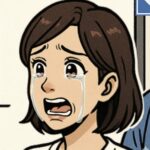
Shi-chan, Episode 8 was so intense — the isolation hospital packed with cholera patients, and Hana nursing them with everything she had. No IV drips, no antibiotics — just carrying warm water sip by sip to each patient’s lips. The image of a nurse staying by the patient’s side even in that extreme situation just stayed with me.

Right. Episode 8 was a look at the origins of infection nursing. Cholera kills through dehydration — in modern times we’d give IV fluids right away, but in the Meiji era, all they had was observation and care. And still, Hana called each patient by name and brought warm water to their lips. “Being present” was the treatment itself. Watching that really made me feel the value of what we take for granted today.
- Episode 8 Summary
- Nurse Point ①: Cholera Dehydration Can Kill in Hours
- Nurse Point ②: Oral Rehydration Therapy (ORT) Is Still the Global Standard
- Nurse Point ③: Isolation Hospitals Are the Origin of Modern Infectious Disease Wards
- Nurse Point ④: The Resolve of Nurses With Zero Infection Prevention
- Nurse Point ⑤: Hana’s Handwashing — Remarkable Foresight
- Nurse Point ⑥: Dr. Kirishima — “Look Your Patients in the Eye When You Speak”
- Nurse Point ⑦: Nurses Who Stay Through the Night
- Nurse Point ⑧: The Weight of Saying Goodbye to Family
- Nurse Point ⑨: The Importance of Documentation
- Nurse Point ⑩: Episode 8 Reminds Us of the Origins of Nursing
- Clinical Observation Points for New Nurses
- Reporting Examples for Senior Nurses and Doctors
- Q&A
- Summary: Episode 8 Is an Episode That Reminds Us of the Origins of Nursing
- 📖 English Summary: Episode 8 in 10 Lines
- Recommended Resources 🛒
Episode 8 Summary
Episode 8 is set in a Meiji-era town hit by a massive cholera outbreak. At the isolation hospital (hekibyoin) where patients pour in day after day, the protagonist Hana fights on as a nurse.
Patients collapse into dehydration from relentless vomiting and diarrhea. Dr. Kirishima tries everything he can — but in an era with no effective medication, the nurses’ care was the last line of defense keeping patients alive.
Hana looks each patient in the eye, calls them by name, and carries warm water to their lips little by little. Gripping the hand of a patient saying farewell to their family, staying by their side through the night — Hana’s presence is nursing in its purest form.
Nurse Point ①: Cholera Dehydration Can Kill in Hours
Cholera bacteria cause massive loss of fluid and electrolytes from the intestinal mucosa, triggering hypovolemic shock within just a few hours.
Today we have the reflexive response of “dehydration = IV drip,” but in the Meiji era, IV routes weren’t established. The battle was: how quickly and how consistently can we get fluids in by mouth?
Shock in just hours… that’s terrifying.
That’s exactly why early observation was life or death. Skin turgor, dry oral mucosa, decreased urine output, low blood pressure, rapid pulse — even today, these are the absolute basics.
Nurse Point ②: Oral Rehydration Therapy (ORT) Is Still the Global Standard
What Hana was doing — carrying warm water to patients’ lips sip by sip — is essentially the prototype of modern ORT (Oral Rehydration Therapy).
The ORT promoted by the WHO — giving water containing salt and sugar in the right ratio in small amounts — has saved millions of cholera patients’ lives. Hana’s instinctive nursing from the Meiji era connects directly to this modern medical standard.
Experiential knowledge is not to be underestimated. What skilled nurses found through observation became the foundation of evidence-based medicine.
So the ORT we use today goes all the way back to what Hana was doing?
Exactly. And the principle hasn’t changed: small amounts, frequently, at the right concentration. What was different was that Hana had none of the measurements or evidence — she was doing it through observation and feel.
Nurse Point ③: Isolation Hospitals Are the Origin of Modern Infectious Disease Wards
The Meiji government’s Infectious Disease Prevention Law required patients with legal notifiable diseases like cholera to be isolated in hekibyoin (isolation hospitals) rather than regular hospitals. These were the prototype of today’s designated infectious disease medical institutions.
The concept of zoning was still primitive at the time, but the core idea of “treat patients separately from healthy people” connects directly to modern COVID-19 responses.
So isolation hospitals were really like today’s infectious disease wards!
Right. The equipment is worlds apart, but the concept of “isolate and protect” has been passed down through generations.
Nurse Point ④: The Resolve of Nurses With Zero Infection Prevention
No hand sanitizer, no PPE, no N95 masks. Hana and the nurses knew they might get infected — and still stayed by their patients’ sides.
This overlaps perfectly with the image of modern nurses who fought through the COVID-19 pandemic. The resolve of those who chose nursing as a profession has not changed across eras.
Nurse Point ⑤: Hana’s Handwashing — Remarkable Foresight
The oral transmission route of cholera was globally established after John Snow’s cholera map (1854), but was still not widely known in Japan’s clinical settings during the Meiji era.
Against that backdrop, the scene where Hana instinctively washes her hands symbolizes the natural nursing instinct to sense risk through observation and intuition.
Modern hand hygiene is the absolute foundation of all infection control. WHO’s 5 Moments for Hand Hygiene — before patient contact, before aseptic procedure, after body fluid exposure risk, after patient contact, after contact with patient surroundings — is still gold standard. Practice all five every time.
Nurse Point ⑥: Dr. Kirishima — “Look Your Patients in the Eye When You Speak”
Before technique and knowledge, “engage with them as a human being” — Kirishima’s one line is a foundation we never want to forget in new nurse training.
Modern medicine has advanced so much technologically that we find ourselves looking at monitors and charts instead of patients. That’s exactly why the meaning of making eye contact and speaking to someone carries such weight.
That’s painful to hear… I sometimes catch myself staring at the monitor all shift.
Noticing it means you’re okay. Start tomorrow morning with “Good morning” — make eye contact first thing. 🌿
Nurse Point ⑦: Nurses Who Stay Through the Night
Hana and the others, forgetting sleep and food to stay at patients’ sides — it’s a scene that connects directly to the image of a modern nurse exhausted after a night shift.
For nurses, “being present” is a job more important than technique.
Nurse Point ⑧: The Weight of Saying Goodbye to Family
Cholera progresses fast — many patients died before their families could get there. Hana held a patient’s hand in place of family and was present at the end.
This is a scene that represents the origins of end-of-life nursing — a “death with dignity” that connects to modern end-of-life care.
Nurse Point ⑨: The Importance of Documentation
Hana writes down each patient’s condition on paper. This act — the prototype of nursing records — allows observations to be put into words and shared with other staff, forming the foundation of infection control.
Nursing records are not just administrative work. They’re a baton — passing care of the patient to the next shift, and to your teammates. “Something feels different” must always be recorded and handed over. That’s how we protect patients.
Nurse Point ⑩: Episode 8 Reminds Us of the Origins of Nursing
Precisely because tools and medications were so limited, it was nurses’ “observation,” “presence,” and “prayer-like care” that sustained patients’ lives.
That is a treasure that has surely been passed down to all of us living in the modern era.
Shi-chan, I want to go back to basics and relearn nursing from the ground up…!
Hold onto that feeling. Hana’s image from Episode 8 will stay with your heart for years. 🌸
Clinical Observation Points for New Nurses
1. Don’t miss signs of dehydration
Skin turgor, dry oral mucosa, decreased urine output, low blood pressure, tachycardia — sharpen your sensitivity to “something is different from usual.”
2. Infection control starts with hand hygiene
Practice WHO’s 5 Moments every time. This alone dramatically reduces the risk of healthcare-associated infection.
3. Look patients in the eye and call them by name
As you begin any care, make eye contact first. A patient’s response tells you a great deal about their level of consciousness, anxiety, and physical condition.
4. For patients who struggle to take oral fluids: small amounts, frequently
For patients with weak swallowing, don’t rush — give one sip at a time. Provide hydration while avoiding aspiration risk.
5. Always put your observations into words and records
Don’t leave a “something feels off” unaddressed — always document it and hand it over. Connecting the next shift is how we protect patients.
Reporting Examples for Senior Nurses and Doctors
When dehydration is suspected in an infectious disease patient
“Patient in Room [X], vomiting 3 times, watery stool 5 times, only 500mL fluid intake over 6 hours. Decreased skin turgor, HR 110, BP 90/60. I’m concerned about progressing dehydration — please consider fluid replacement.”
When you notice an infection control gap
“The workflow is crossing the clean and contaminated zones. Could we confirm the zoning once?”
When you sense deterioration risk at night
“Patient [X] has had unstable vitals since evening and their level of consciousness has shifted from JCS I-1 to II-10. May I request the on-call doctor to assess?”
When a family member needs psychological support
“The family member expressed strong anxiety after the medical explanation. I’d like to discuss setting up a support system, including a referral to the MSW.”
Q&A
Q. Can you still get cholera in Japan today?
Domestic transmission is rare, but imported cases are reported every year. Any patient with diarrhea and vomiting and a recent history of overseas travel must have cholera in the differential.
Q. What modern facility is equivalent to the isolation hospital (hekibyoin)?
Designated infectious disease medical institutions (Category 1 and Category 2) carry that role today, handling responses to Ebola, COVID-19, and other diseases.
Q. How is oral rehydration solution (ORS) different from plain water?
Plain water cannot replace electrolytes and carries a risk of hyponatremia. ORS contains salt and sugar in the correct ratio, allowing efficient absorption from the intestine.
Q. Any tips for watching dramas through a nurse’s lens?
“What would I do in this scene?” — asking that question scene by scene turns the drama into the best case-study session you’ve ever had.
Summary: Episode 8 Is an Episode That Reminds Us of the Origins of Nursing
In an era without IV drips or antibiotics, nurses’ observation and presence were all that sustained patients’ lives. Episode 8 is a truly memorable episode that reminds modern nurses of those origins.
When you feel lost in your clinical practice, think of Hana. “For the person right in front of you, with care and attention” — that is the foundation of nursing, and its most powerful tool.
Mirai-chan, you worked really hard today too. 🌿
Thank you so much, Shi-chan! Starting tomorrow, I’ll take each day one careful step at a time in my nursing! 🌸
📖 English Summary: Episode 8 in 10 Lines
Here’s a 10-line English summary of Episode 8’s key points, in simple English — great for language study or a quick review.
In Episode 8, the story highlights a cholera outbreak, isolation hospitals, dehydration care, and infection nursing.
Rin and the people around her face a new lesson about nursing and life.
The episode shows that nursing is not only about skills, but also about seeing people clearly.
Patients and families needed care, comfort, and presence — not just medicine.
Cholera spreads through contaminated water and causes life-threatening dehydration within hours.
Before IV fluids existed, nurses gave small sips of water — an early form of oral rehydration therapy (ORT).
Isolation hospitals in the Meiji era were the origin of today’s infectious disease wards.
Nurses worked without PPE or hand sanitizers, showing incredible resolve and courage.
Hana’s handwashing habit was ahead of its time — and mirrors modern infection control.
The heart of nursing — being present, observing carefully, and caring with full attention — has never changed.
Recommended Resources 🛒
🛌 看護師の疲れた体に。特許取得の整体枕で熟睡できる眠りを
立ちっぱなしのシフト勤務、夜勤明けの肩こり・首こり……看護師のカラダって毎日本当にしんどいですよね。そんな私が出会ったのが、整体師が開発した特許取得の枕「Cure:Re THE MAKURA」。首・肩・背中のコリをほぐしながら寝られる設計で、翌朝の目覚めが全然違います。ふだん整体に行く余裕がない方にこそ試してほしい一品です。
💼 転職を考えているナースへ。MCナースネットで理想の職場を探そう
「今の職場、なんかしんどいな」と感じたら、それはサインかもしれません。MCナースネットは看護師・保健師・助産師専門の転職支援サービス。担当コンサルタントが非公開求人を含めた情報をもとに、あなたの希望にあった職場を一緒に探してくれます。登録・相談は無料なので、転職を決めていなくても「話だけ聞いてみる」から始めてOKです。
- 非公開求人も多数掲載
- 専任コンサルタントが転職をサポート
- 登録・利用は完全無料
。°+°。°+ °。°。°+°。°+ °。°。°+°。°+ °。°+ °。°
◇◆ 看護師の求人・転職ならMC─ナースネット ◆◇
業界最大級!求人数20000件以上、会員数100,000人の実績!
全国での拠点展開だから身近なコンサルタントに相談可!
大人気の企業・健診・添乗のお仕事も豊富!
登録・お問い合わせはこちら
⇒https://px.a8.net/svt/ejp?a8mat=4AVF01+3RQUPE+28MI+61JSJ
。°+°。°+ °。°。°+°。°+ °。°。°+°。°+ °。°+ °。°
✨ 夜勤明けのむくみ・疲れ顔に。自宅でできるEMS美顔器「BIOAESTECH」
夜勤明け、鏡を見てため息……なんてこと、ありませんか?
看護師の仕事は不規則なシフト・立ちっぱなし・ストレスで、顔のむくみやたるみが気になりやすい。エステや美容院に行く時間もなかなか取れないですよね。
そこでしーちゃんが試してみたのが、BIOAESTECH DUAL ORB DEEP LIFT。EMSで深部の筋肉にアプローチして、顔のリフトアップ・引き締めを自宅でケアできる美容機器です。
月々2,191円(税込)のサブスクで始められるから、忙しいナースにもお財布にやさしい。
🌙 夜勤明けのスキマ時間でセルフケア
💆 エステ不要、自宅で本格EMS体験
💳 月々2,191円〜のサブスク形式で気軽にスタート
テクノロジーと実証で肌を変える!高機能スキンケアの新定番【BIOAESTECH】
📚 しーちゃんのおすすめ看護本・国試参考書【Amazon】
「もっと深く勉強したい」「国試に向けてしっかり対策したい」という方へ。Amazonで購入できるおすすめの看護関連書籍をご紹介します。現役ナースの私が実際に使ったり、役立つと感じた本を厳選しています。
コメント