![Ep.12 "Kaze, Kaoru" Analyzed by a Nurse! Supporting Challenges Through Rin's English Study & Naomi's Rokumeikan Plan [Shi-chan's Nurse Perspective]](https://considerate-thank-you-nursecareer.com/wp-content/uploads/2026/06/2a61a8c3ebd4aa8c4a48a5761e9d55eb.jpg)
By reading this page, you will…
✅ Understand the story of Episode 12 from a nurse’s perspective
✅ Connect Rin’s decision to start studying English with learning support for new nurses
✅ Analyze Naomi’s bold move to the Rokumeikan through the lens of self-determination, risk, and advocacy
✅ Learn “non-blaming support” from Shima-ken’s role as a bridge for Rin
✅ Understand how nurses can support patients and new staff when they take their next step forward
- Episode 12 Synopsis
- Nurse’s Perspective ①: Turning “What You Couldn’t Do” into Learning
- Nurse’s Perspective ②: Supporting the Recovery of Self-Efficacy
- Nurse’s Perspective ③: Shima-ken’s Role Was More Than “Interpreting”
- Nurse’s Perspective ④: Naomi’s Move to the Rokumeikan — “Using Your Own Strengths”
- Nurse’s Perspective ⑤: Self-Determination and Risk Go Together
- Nurse’s Perspective ⑥: The Dress Is “Attire” and “A Means of Accessing Society”
- Nurse’s Perspective ⑦: People Who Are Learning Need “A Safe Place to Fail”
- Nurse’s Perspective ⑧: Rin and Naomi Are Moving Toward “Independence” in Different Forms
- Nurse’s Perspective ⑨: Thinking About Advocacy Through Naomi’s Drive
- Nurse’s Perspective ⑩: The Two Challenges Continue Through Team Support
- Observation Points New Nurses Can Use in Clinical Practice
- Report Examples for Senior Nurses, Doctors, and MSWs
- Frequently Asked Questions
- Summary: Episode 12 — An Episode for Thinking About “Nursing That Supports Challenges”
- English Summary: Episode 12 in 10 Lines
- 🛒 Shi-chan’s Recommended Resources
- 🛒 しーちゃんのおすすめ情報
Episode 12 Synopsis
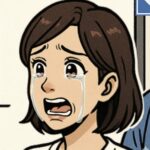
Shi-chan, in Episode 12 both Rin and Naomi stepped into new places. Rin started studying English, and Naomi headed off to the Rokumeikan in a borrowed dress — I was so nervous watching them both!

You’re right. Episode 12 was the episode where the two characters’ forms of challenge clearly diverged. Rin’s was “the challenge of relearning something she couldn’t do,” while Naomi’s was “the challenge of seizing an opportunity through her own strength.” Watching from a nurse’s perspective, it really made me think about how the people around us support someone when they’re ready to take their next step.
In Episode 12, Rin — who had been helped by Shima-ken (Shimada Kenjiro) when she struggled with a foreign customer — decides to start studying English so she can contribute to Mizuho-ya in her own small way.
Rin has only just started working at Mizuho-ya.
A new place.
A new job.
Unfamiliar goods.
Foreign customers.
Unfamiliar words.
She was suddenly thrown into all of it, and in the previous episode she couldn’t handle it well.
But in Episode 12, Rin doesn’t stop there.
She tries to turn what she “couldn’t do” into something she can learn from.
Meanwhile, Naomi hears from Yoshie that Rin’s life has settled down.
Learning that Rin and Tama are managing at Mizuho-ya, Naomi comes up with a plan.
She borrows a dress from Mary and heads to the Rokumeikan.
The Rokumeikan was a truly special place in Meiji Japan.
Western culture, social status, diplomacy, glamour — it was a space where all of these converged.
For Naomi, the Rokumeikan is not a place she can easily enter.
Yet she goes anyway.
Using her English skills, her boldness, and her determination, she sets out to seize a new opportunity.
Episode 12 is the episode where Rin and Naomi, each in their own separate place, begin carving out their own futures.
Rin starts learning at Mizuho-ya.
Naomi steps toward the Rokumeikan.
Both of them are choosing their next step with their own will — not a path laid out by someone else.
Here lies a hint for nurses about what it means to support “independence.”
Nurse’s Perspective ①: Turning “What You Couldn’t Do” into Learning
The first thing I want to highlight in Episode 12 is Rin deciding to study English.
Rin had struggled during the previous episode’s foreign customer encounter.
An unfamiliar language.
An unfamiliar book.
Unfamiliar service etiquette.
Not knowing who to ask for help.
It’s completely understandable that she froze in that situation.
But Rin doesn’t stop there — she thinks, “I want to be at least a little useful to Mizuho-ya.”
This is the power to turn failure into learning.
Rin didn’t just end up feeling down — she tried to study English. If it were me, I think I’d be too embarrassed and it would weigh on me for a while.
Feeling weighed down is natural too. But Rin didn’t let being helped stop at “I’m useless” — she tried to turn it into “Next time, I want to be able to help.” This really connects with new nurses, I think.
New nurses have plenty of experiences where they can’t do something.
Blood draws that don’t go well.
Reports they can’t pull together.
Questions from patients they can’t answer.
Freezing during an emergency.
Going speechless during family conversations.
Losing track of priorities.
You may feel discouraged every time.
But feeling discouraged isn’t itself a bad thing.
What matters is what comes after.
What was it I didn’t understand?
Where did my hands stop?
Who should I consult next time?
What knowledge do I need to prepare?
Which situation do I need to practice with a senior nurse?
This reflection is what becomes learning.
Rin’s decision to study English is exactly this process.
Not stopping at “I couldn’t do it” — but wanting to be able to do it next time.
That’s where the seed of growth lives.
Nurse’s Perspective ②: Supporting the Recovery of Self-Efficacy
Behind Rin’s decision to study English is the feeling “I want to be useful too.”
This is connected to self-efficacy.
Self-efficacy is the feeling of “Maybe I can do this too.”
When people feel they can’t do anything, they lose the will to try.
Conversely, even a small experience of “I did it” makes it easier to take the next step.
It’s true — when a senior tells me “you were doing well here,” I feel like I can keep going a little more.
Exactly. When people are only shown what they couldn’t do, they shrink. But when they can see what they did manage while moving toward the next challenge, it becomes easier to learn.
Self-efficacy is very important when nurses support patients and new staff.
For example, even in discharge life guidance:
Saying “Walk every day,” “Follow your diet restrictions,” “Don’t forget your medication” one-sidedly can make it hard for patients to keep up.
Instead:
“You haven’t forgotten your morning medication”
“You walked a little longer than yesterday”
“You kept your meal diary — that matters”
“You don’t need to be perfect. Let’s figure out what’s easiest to continue”
Checking what they did manage, and then supporting from there, leads to continuity.
Rin doesn’t need to speak English fluently right away either.
First learn a greeting.
Learn the words used in the shop.
Know how to call for help when lost.
Check product names.
Gradually increase what you can do.
That’s enough.
Nursing is the same.
Patients and new nurses both grow step by step.
The role of the supporter is to find those steps together.
Nurse’s Perspective ③: Shima-ken’s Role Was More Than “Interpreting”
Another major point from Episode 12 (carrying over from last time) is the presence of Shima-ken.
Shima-ken helps Rin when she struggles with a foreign customer.
But it wasn’t just translating words.
He became someone who could untangle the difficulty Rin had been holding alone.
Shima-ken is a little unusual, but he really was a help to Rin, wasn’t he?
He was. In nursing, there are lots of roles like that — like an interpreter. Translating the doctor’s explanation so the patient can understand it. Conveying a patient’s anxiety to the doctor. Sharing a family’s feelings with the team. Replacing specialized terms with everyday words. Turning information about systems and services into something the patient can actually use. Bridging between different professionals.
Nurses serve as interpreters in healthcare.
Patients can’t always understand medical jargon and system language directly.
Even when they say “yes” after hearing an explanation, they may not really understand.
Just as Rin froze in front of a foreign language, patients can freeze in front of medical language.
That’s when nurses bridge the gap:
“Was there anything in that explanation that was hard to follow?”
“Let’s go through it together.”
“How could we explain this to your family in a way they’d understand?”
“This medication — you take one tablet after breakfast.”
“If you’re ever stuck, please call here.”
Shima-ken’s help also became the trigger for Rin to start learning.
Support isn’t just helping someone through the immediate moment.
It also means creating a trigger so they can move on their own next time.
Nurse’s Perspective ④: Naomi’s Move to the Rokumeikan — “Using Your Own Strengths”
The other major axis of Episode 12 is Naomi heading to the Rokumeikan.
Naomi learns that Rin’s life has settled a little.
And she begins thinking about her own next path.
Borrowing a dress from Mary and heading to the Rokumeikan, Naomi’s actions reveal her English ability, boldness, powers of observation, acting skill, and a fierce will that says “I’m not ending here.”
Naomi is amazing, isn’t she. I wondered if she was scared at all. But pretending to be someone she’s not does carry some risk, right?
You’re right. Naomi’s boldness is attractive, but from a nurse’s perspective, I also want to look at the risks. Respecting someone’s self-determination and checking for safety always need to go hand in hand.
When supporting patients or families, it’s easy to focus on the problems.
Having an illness.
Financial difficulties.
Few family members.
Lack of knowledge.
Trouble continuing medication.
Unstable living situation.
Of course, understanding the problems is important.
But that alone doesn’t give you the full picture of that person.
Every person has some kind of strength.
The ability to talk.
The ability to rely on others.
The caring they have for their children.
The strength to have kept working.
The ability to manage their household budget.
Community connections nearby.
A willingness to learn.
The desire to protect someone.
For Naomi, her English ability and boldness are her strengths.
She uses those to head to the Rokumeikan.
Nurses too need to look not just at what patients “can’t do” but also at the “strengths they can use” together.
Nurse’s Perspective ⑤: Self-Determination and Risk Go Together
Naomi’s actions are very powerful.
At the same time, they carry risks.
The Rokumeikan is not a place anyone can freely enter.
Naomi heads there with a borrowed dress and a plan in her heart.
Pretending to be someone she’s not carries the danger of being discovered, the risk of losing trust, and the risk of being taken advantage of.
From a nurse’s perspective, I want to think carefully about this.
Respecting a person’s will.
But not overlooking safety.
Both are necessary.
For example, in discharge support, situations like this come up:
The patient wants to go home.
But they live alone and have a high fall risk.
The family is anxious about caregiving.
There’s resistance to bringing in visiting services.
Managing medications is difficult.
Diet is unstable.
In moments like these, nurses don’t just say “going home is impossible” and stop the patient.
They think about how to get as close as possible to what the patient hopes for.
Installing handrails.
Bringing in visiting nursing.
Consolidating medications into single-dose packets.
Using meal delivery services.
Confirming emergency contacts.
Coordinating with family on roles.
Temporarily using a facility or rehabilitation.
They look for a balance between the patient’s hopes and their safety.
Naomi’s trip to the Rokumeikan — as an act of self-determination, it’s something I want to respect.
But I also want to keep an eye on the dangers it holds.
Nurses aren’t there to stop people from taking on challenges.
They’re there to think alongside them about how to make those challenges a little safer.
Nurse’s Perspective ⑥: The Dress Is “Attire” and “A Means of Accessing Society”
Naomi borrows a dress from Mary.
The dress is more than just a costume.
It is an outfit for entering the Rokumeikan.
It is also a means of putting together an appearance that says “I belong here.”
There is a perspective here that connects to modern nursing.
People can have their access to society restricted based on their appearance, possessions, manner of speech, social status, education, occupation, gender, or age.
Naomi’s dress is like a passport to the Rokumeikan.
In modern terms, documents, health insurance cards, referral letters, smartphones, transportation, language, and companions can all become tools for accessing social resources.
For example:
Hesitating to see a doctor because they don’t have insurance.
Unable to make an online reservation because they have no smartphone.
Can’t read Japanese, so can’t understand guidance about available programs.
No money for transportation, so can’t get to appointments.
Can’t find a place to stay because they have no guarantor.
Unstable address means documents can’t reach them.
These aren’t failures of effort on the individual’s part.
They are situations where there are steps at the entrance to society.
Nurses need to notice those steps.
“Why can’t this person connect with support?”
“What is blocking the entrance?”
“What tools or people would allow them to access it?”
Naomi’s dress is also a symbol that helps us think about exactly that.
Nurse’s Perspective ⑦: People Who Are Learning Need “A Safe Place to Fail”
When Rin begins learning English, what she needs isn’t just materials.
She needs a safe place to practice.
Where mistakes won’t be laughed at.
Where she can say “I don’t understand.”
Where she can be taught again.
Where there are moments to try using what she’s learned.
That’s what supports her learning.
For new nurses to grow, stages are necessary.
Observe.
Do it together.
Do it with someone watching.
Do it alone.
Reflect.
Decide the next challenge.
Having this flow allows for safe growth.
Conversely, when someone is suddenly left alone and then harshly blamed when they fail, they shrink.
They start hiding what they don’t know.
They lose the ability to ask for help.
And that affects patient safety.
The same is true for Rin.
Continuing to work at Mizuho-ya requires learning not just English, but the products, the service style, the shop’s rules, and the human relationships there.
What matters is not cutting someone loose after a single failure, but whether there is an environment where they can learn.
Whether we’re raising new nurses or supporting patients, I want to hold the perspective of creating “a safe place to fail.”
Nurse’s Perspective ⑧: Rin and Naomi Are Moving Toward “Independence” in Different Forms
In Episode 12, Rin and Naomi are moving in completely different directions.
Rin steadily begins learning English at Mizuho-ya.
Naomi boldly heads toward the Rokumeikan.
At first glance, Naomi might seem more active and Rin more slow-moving.
But both are taking an important step toward independence.
Independence doesn’t mean being able to do everything alone.
It means choosing your own life while using the support you need.
I used to think independence meant working hard all by yourself.
That’s easy to think. But in nursing, independence isn’t the same as isolation. Being able to use necessary support, being able to ask for help, being able to make choices for yourself — those are all part of independence.
Rin begins learning with the support of Uzaburo and the people at Mizuho-ya.
Naomi borrows a dress from Mary and heads to the Rokumeikan on her own strength.
Both are receiving someone else’s support.
But on top of that support, each is moving her own feet.
The independence support that nurses aim for is similar to this.
It’s not about leaving patients on their own.
It’s about preparing information and an environment so patients can make their own choices.
It’s about supporting them to recover what they can do.
It’s about making sure they can ask for help when they need it.
Episode 12 was an episode that showed us two different forms of independence.
Nurse’s Perspective ⑨: Thinking About Advocacy Through Naomi’s Drive
Naomi doesn’t just wait for a path to be laid out for her.
She moves herself, and goes after opportunities.
This drive connects to nursing advocacy.
Advocacy means speaking up for and taking necessary action on behalf of patients and those in vulnerable positions, in order to protect their rights and interests.
Naomi isn’t a nurse yet.
But she didn’t miss Tama’s hunger, she got angry on Rin’s behalf, and now she heads to the Rokumeikan for her own future.
In that, there is a strength that isn’t just going along with things.
Nurses also have moments where they speak up for patients, right?
They do. Conveying the pain a patient is enduring silently to the doctor. Sharing a patient’s anxiety with the team. Connecting a family’s feelings to the broader conversation. If a difficult living situation seems to be affecting treatment, connecting to a medical social worker. Nurses are also people who turn what they notice into action.
That said, advocacy also requires care.
If you charge ahead driven only by your own sense of justice, you can end up leaving the person’s own wishes behind.
So nurses confirm:
What does the person want?
What are they anxious about?
What risks are there?
Who should be consulted?
When is the right time to act?
Is the person’s dignity being protected?
Naomi’s drive is appealing.
At the same time, that drive also needs the support of people around her to lead somewhere safe.
Nurses need to hold both the ability to act and the ability to pause and think.
Nurse’s Perspective ⑩: The Two Challenges Continue Through Team Support
In Episode 12, Rin and Naomi are each in separate places.
But their challenges aren’t sustained by one person alone.
Rin has Uzaburo, the people at Mizuho-ya, Shima-ken, and Tama.
Naomi has Yoshie, Mary, and everything she’s experienced up to now.
Even when people appear to be taking on a challenge alone, they are in fact supported by many people and circumstances.
Nursing is a team too, right? There’s no nurse who can do everything alone.
That’s absolutely true. Whether supporting patients or raising new nurses, it’s always done as a team. If a nurse tries to carry everything alone, the support won’t last.
In modern clinical settings too, there are many situations that require team support.
Discharge support. Home care. Mother and child support. Abuse prevention. Poverty. Mental health difficulties. Dementia care. End-of-life care. New nurse education.
None of these can be completed by a single nurse.
Doctors, nurses, pharmacists, rehabilitation staff, dietitians, medical social workers, public health nurses, home visit nurses, care workers, local government, and community supporters — many people are involved.
Episode 12’s two characters will also continue to grow through their connections with many people.
It’s important for nurses to hold the perspective of connecting people to a team so they don’t have to carry everything alone.
Observation Points New Nurses Can Use in Clinical Practice
From Episode 12, here are key observation points new nurses can use in the clinical setting.
1. Is a “couldn’t do” experience ending in blame rather than learning?
When a new nurse or patient can’t do something, just blaming them doesn’t lead forward.
What was difficult about it?
Where did things stop?
What support is needed next?
Reflect from this perspective.
2. Are you creating small success experiences?
Setting a big goal right away makes it easy to give up.
First, learn one thing. Do it once. Say it alone. Ask one question.
Small successes connect to the next challenge.
3. Are you looking for the person’s strengths?
Look at both the struggles and the person’s strengths.
A willingness to learn. Caring for family. Having kept working. Being able to consult others. Finding ways to manage daily life.
Support built on a person’s strengths tends to last.
4. Are you looking at both self-determination and safety together?
The person’s hopes matter.
But safety checks are also necessary.
Discharge destination, medications, diet, mobility, family support, emergency responses.
Rather than denying hopes, work together to put the conditions in place that make those hopes possible.
5. Are you avoiding carrying difficult support alone?
The more difficult the support, the more important it is to share with the team.
Financial hardship, mother-child support, mental health difficulties, abuse risk, challenging discharges, new nurse education.
Don’t carry it alone — consult early.
Report Examples for Senior Nurses, Doctors, and MSWs
Here are report examples for new nurses that are easy to use in clinical practice.
When a patient couldn’t follow guidance
“It seems the patient wasn’t following the dietary guidance, but rather than a lack of understanding, it may be that shopping and cooking are difficult in their current environment. I’d like to confirm what made it hard to follow through, and reconsider how to make it more achievable.”
When a new nurse froze during a procedure
“The nurse’s hands stopped during the procedure, but it seems less that they forgot the steps and more that they panicked when the patient asked a question. Next time, I’d like to confirm likely questions in advance and have a senior nurse nearby to observe.”
When the patient strongly wants to go home but safety is a concern
“The patient has a strong desire to return home. At the same time, there are concerns about fall risk and medication management. I’d like to respect their wishes while organizing the conditions for a safe return, including visiting nursing, assistive devices, and family support.”
When you want to use a patient’s strengths in their support
“The patient is good at keeping records and seems likely to be able to continue daily weight checks. For heart failure management, I’d like to draw on that strength and connect it to self-monitoring.”
Frequently Asked Questions
Q. What should you say first to a new nurse who has failed?
First confirm the patient’s safety.
Then, rather than blaming emotionally:
“Where did things get difficult?”
“What were you anxious about?”
“How can we prepare for next time?”
Reflecting together like this tends to connect to learning.
Q. If a patient says they want to try something new, is it better not to stop them?
It’s important to respect their wishes.
But a safety check is also needed.
Respecting the person’s will while organizing the risks together and preparing necessary support is key.
Q. What should you do when you can’t find a patient’s strengths?
Start with small things.
Caring for their family. Being able to come on time. Trying to listen. Not knowing medication names but remembering the timing. Being able to consult when stuck. Finding ways to make daily life work.
Strengths aren’t special talents. If you look from a different angle, almost everyone has something.
Q. How should you engage with someone who has strong drive, like Naomi?
First, don’t deny their drive.
Then, confirm the risks and preparations together.
Rather than “don’t do it,” the approach of “what do we need to move forward safely” is effective.
Summary: Episode 12 — An Episode for Thinking About “Nursing That Supports Challenges”
In Episode 12, both Rin and Naomi began new challenges in their own separate places.
Rin, prompted by the experience of being helped during a foreign customer interaction, begins studying English.
Naomi, learning that Rin’s life has stabilized, borrows a dress from Mary and heads to the Rokumeikan.
Neither of them is simply being protected.
Both are trying to take their next step forward, using their own strength.
✅ What couldn’t be done can be transformed from blame into learning
✅ Supporting self-efficacy means creating small success experiences
✅ Nurses are also interpreters who bring medical language to patients
✅ Seeing a person’s strengths makes support move forward
✅ Self-determination and safety checks go together
✅ There are invisible steps at the entrance to society
✅ People who are learning need a safe place to fail
✅ Challenges shouldn’t be carried alone — support them as a team
Episode 12 had Rin and Naomi each taking on such different challenges, didn’t it. Rin was studying, and Naomi was heading to the Rokumeikan. I never would have thought at the start that either would connect to nursing.
Nursing is a job that gets involved in so many moments when people take their next step. When patients are discharged. When a new nurse makes their first report. When a family begins caregiving. When someone in hardship starts receiving support. All of those are challenges. Supporting those challenges — without blaming, without abandoning, and as safely as possible — that’s what nursing is, I think.
Rin started learning from what she couldn’t do.
Naomi headed to the Rokumeikan using her own strengths.
The two have different strides.
But both are moving forward.
Nurses too want to support while reading each person’s stride.
It’s okay if the step is small.
It’s okay to have a day where you stop.
It’s okay to borrow help.
What matters is that the person is gradually reclaiming their own life.
For Shi-chan, Episode 12 was a very important episode to think about “nursing that supports challenges” and “the power to relearn.”
New nurses — don’t let what you couldn’t do end in self-blame. Turn it into learning for the next time.
And when patients take their first steps into a new life, let’s support them so that step is safe and true to who they are.
English Summary: Episode 12 in 10 Lines
- In Episode 12, the story highlights Rin’s English study, Naomi’s Rokumeikan plan, and supporting challenges.
- Rin begins learning English after being helped by Shima-ken during an encounter with a foreign customer.
- This shows how turning failure into learning is a key part of both nursing and personal growth.
- Naomi borrows a dress from Mary and heads boldly to the Rokumeikan, using her own English skill and drive.
- The episode shows that nursing is not only about skills, but also about seeing people clearly.
- Patients and families have their own fears, their own strengths, and their own ways of moving forward.
- Nurses support people through interpreting — translating not just words, but feelings and situations.
- Self-determination and safety must be balanced — nurses don’t block challenges, they make them safer.
- The dress Naomi borrows represents how “access to society” can depend on having the right tools.
- Both Rin and Naomi show that independence means moving forward with support, not alone.
🛒 Shi-chan’s Recommended Resources
If this article was helpful to you, please check out Shi-chan’s other recommended resources for nurses below.
🛒 しーちゃんのおすすめ情報
🛌 看護師の疲れた体に。特許取得の整体枕で熟睡できる眠りを
立ちっぱなしのシフト勤務、夜勤明けの肩こり・首こり……看護師のカラダって毎日本当にしんどいですよね。そんな私が出会ったのが、整体師が開発した特許取得の枕「Cure:Re THE MAKURA」。首・肩・背中のコリをほぐしながら寝られる設計で、翌朝の目覚めが全然違います。ふだん整体に行く余裕がない方にこそ試してほしい一品です。
💼 転職を考えているナースへ。MCナースネットで理想の職場を探そう
「今の職場、なんかしんどいな」と感じたら、それはサインかもしれません。MCナースネットは看護師・保健師・助産師専門の転職支援サービス。担当コンサルタントが非公開求人を含めた情報をもとに、あなたの希望にあった職場を一緒に探してくれます。登録・相談は無料なので、転職を決めていなくても「話だけ聞いてみる」から始めてOKです。
- 非公開求人も多数掲載
- 専任コンサルタントが転職をサポート
- 登録・利用は完全無料
。°+°。°+ °。°。°+°。°+ °。°。°+°。°+ °。°+ °。°
◇◆ 看護師の求人・転職ならMC─ナースネット ◆◇
業界最大級!求人数20000件以上、会員数100,000人の実績!
全国での拠点展開だから身近なコンサルタントに相談可!
大人気の企業・健診・添乗のお仕事も豊富!
登録・お問い合わせはこちら
⇒https://px.a8.net/svt/ejp?a8mat=4AVF01+3RQUPE+28MI+61JSJ
。°+°。°+ °。°。°+°。°+ °。°。°+°。°+ °。°+ °。°
✨ 夜勤明けのむくみ・疲れ顔に。自宅でできるEMS美顔器「BIOAESTECH」
夜勤明け、鏡を見てため息……なんてこと、ありませんか?
看護師の仕事は不規則なシフト・立ちっぱなし・ストレスで、顔のむくみやたるみが気になりやすい。エステや美容院に行く時間もなかなか取れないですよね。
そこでしーちゃんが試してみたのが、BIOAESTECH DUAL ORB DEEP LIFT。EMSで深部の筋肉にアプローチして、顔のリフトアップ・引き締めを自宅でケアできる美容機器です。
月々2,191円(税込)のサブスクで始められるから、忙しいナースにもお財布にやさしい。
🌙 夜勤明けのスキマ時間でセルフケア
💆 エステ不要、自宅で本格EMS体験
💳 月々2,191円〜のサブスク形式で気軽にスタート
テクノロジーと実証で肌を変える!高機能スキンケアの新定番【BIOAESTECH】
✨ 看護師のスキルアップに。スキンケアアドバイザー資格を自宅で取得
患者さんのスキンケア相談、自信を持って答えられますか?一般社団法人日本スキンケア協会のスキンケアアドバイザー通信講座なら、肌の仕組みから正しいスキンケア方法まで体系的に学べます。自宅学習だからシフト勤務でも無理なく続けられ、取得した資格は患者さんへの指導・美容系への副業・日常生活にも活かせます。
- 自宅で学べる通信講座
- 看護・医療現場での患者指導にも活用できる
- 日本スキンケア協会が認定する公認資格
📚 しーちゃんのおすすめ看護本・国試参考書【Amazon】
「もっと深く勉強したい」「国試に向けてしっかり対策したい」という方へ。Amazonで購入できるおすすめの看護関連書籍をご紹介します。現役ナースの私が実際に使ったり、役立つと感じた本を厳選しています。
コメント