![[EP19 English] NHK Drama "Kaze, Kaoru" Episode 19 — A Nurse Explains: Rin Reclaims Tama, Declares Divorce, and What DV & Mother-Child Safety Teach Us](https://considerate-thank-you-nursecareer.com/wp-content/uploads/2026/07/85f085a583892b3a6ebd5de3be5c6195.jpg)
By reading this page, you will…
✅ Understand Episode 19 from a nurse’s perspective
✅ Think about Rin heading to the Okuda household to reclaim Tama through the lens of mother-child safety and crisis response
✅ Understand why Kamekich’s drinking and violence must be seen as a family health issue
✅ Learn the nursing perspective on Rin’s declaration of divorce as an act of self-determination
✅ Think about how to recognize danger signs in the home and how to provide support
Hi, I’m Shi-chan, a working nurse.
I have 20 years of nursing experience and work as a certified critical care nurse.
I’m Mirai-chan! I’m in my first year as a nurse, and I watch NHK drama “Kaze, Kaoru” every episode while asking Shi-chan all kinds of questions.
This time, I’ll give a thorough nurse’s-eye analysis of Episode 19 of “Kaze, Kaoru.”
※ At the end of this article, I’ve included a 10-line English Summary of Episode 19. Feel free to use it for English study or a quick review of the episode.
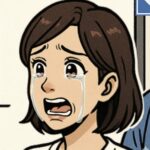
Shi-chan, Rin was truly so strong in Episode 19. She heads to the Okuda household to get Tama back, and declares her intention to divorce Kamekich and Tei. But when she hears Kamekich has been drinking and going on rampages, I got so worried — it seemed far too dangerous.

You’re right. Episode 19 is a moment where Rin’s courage shines, but from a nurse’s perspective, it’s also an episode that can’t be viewed through “courage” alone. Going to face someone with a history of violence alone is very dangerous. We need to think about how to balance a mother’s desire to get her child back with keeping herself safe.
Episode 19 is an episode where Rin clearly shows that she is choosing her own life.
But it is not a quiet resolve. Tama is taken. She has no choice but to return to the Okuda household. Kamekich is drinking and rampaging. Tei’s complicated feelings. Kotaro’s concern. And Rin’s declaration of divorce.
This episode is packed with themes that matter deeply to nurses: mother-child safety, domestic violence, alcohol problems, family control, decision-making, and crisis response.
Nursing is not just about looking at a patient’s body. It is also about: What kind of home environment does this person live in? Is there a safe place to return to? Are they being threatened within their family? Is their own will being respected? Is their child’s safety being protected?
Episode 19 was an episode that trains us to see the dangers that hide within daily life.
- Episode 19 Synopsis
- Nurse’s Perspective ①: A Child Being Taken Is a Serious Safety Crisis
- Nurse’s Perspective ②: The Danger of Meeting Someone with a Violence Risk Alone
- Nurse’s Perspective ③: Alcohol and Violence Are Not Just “A Personality Flaw”
- Nurse’s Perspective ④: Declaring Divorce Is an Act of Self-Determination
- Nurse’s Perspective ⑤: Putting Closure on Past Control
- Nurse’s Perspective ⑥: How to See Tei’s Clumsy Love
- Nurse’s Perspective ⑦: Kotaro’s Concern Is an “Offer of Support”
- Nurse’s Perspective ⑧: Mother-Child Safety Must Be Seen as a Unit
- Nurse’s Perspective ⑨: Noticing Danger Signs in the Home
- Nurse’s Perspective ⑩: Rin’s Declaration Is “Words That Choose the Future”
- Clinical Observation Points New Nurses Can Use
- Report Examples for Senior Staff, Doctors, and MSW
- Frequently Asked Questions
- Summary: Episode 19 Is About “Mother-Child Safety” and “Words That Choose Your Own Life”
- English Summary of Episode 19
- 🛒 しーちゃんのおすすめ情報
Episode 19 Synopsis
In Episode 19, Rin heads to Tochigi to get back Tama, who was taken in the previous episode.
The person who took Tama was connected to the Okuda household — the very family Rin had fled. The place she ran from becomes the place she must now face again to get her daughter back.
Along the way, Rin reunites with her childhood friend Kotaro. He tells her that while the Okuda store is still doing well, Kamekich has been drinking and going on rampages.
This information is critically important. Kamekich is not simply a bad-tempered husband. He is portrayed as someone whose drinking makes him violent and dangerous to those around him.
Even though Kotaro offered to come with her, Rin goes alone. I understand how she feels, but it seemed truly dangerous.
Right. From a nursing perspective, that scene is quite alarming. I want to respect her choice to go alone — but going to face someone with a violence risk by yourself is dangerous. In the modern era, this would be a moment to think about a safety plan, someone to accompany her, and connecting with police or support services.
Rin arrives at the Okuda household and faces Kamekich and mother-in-law Tei for the first time in a long while. She is there to get Tama back — and to put closure on her own life.
Rin clearly declares her intention to divorce.
This scene is one of the highlights of Episode 19. Rin is not simply “the woman who ran away.” She is someone who faces her past with her own will, protects her daughter, and begins to choose her own future.
Meanwhile, Tei’s reaction is also striking. She had seemed strict and difficult for Rin. But in Episode 19, glimpses of her clumsy affection for Tama — and even a side that helps Rin — begin to emerge. A jar of simmered small fish reveals that clumsy love.
I thought Tei was just scary at first, but she had feelings for Tama too. The tsukudani scene was really bittersweet.
Family relationships are never simple. Even within structures of harm and control, clumsy love can be mixed in. But love doesn’t automatically mean safety — and that’s exactly what nurses need to keep in mind and examine carefully.
Episode 19 was the episode where Tama is reclaimed, divorce is declared, and closure is made with the Okuda household as a past.
Nurse’s Perspective ①: A Child Being Taken Is a Serious Safety Crisis
The starting point of Episode 19 is that Tama has been taken.
For Rin as a mother, this is the most severe crisis possible. Where is she? Who took her? Is she safe? Is she healthy? Is she eating and drinking? Is she frightened?
Children have limited ability to ensure their own safety. That is exactly why adults must move quickly.
If a child goes missing — first search, make contact, gather information, right?
Exactly. In a hospital, call for backup immediately and confirm: last time seen, location, clothing, exits, security cameras, and family or related staff. In the community too — never carry this alone; gather people and act.
In modern settings, if there is a possibility a child has been taken, police, child welfare services, and related organizations may need to be contacted. “It’s a family matter so it’s fine” is not always true — even if the person who took the child is a relative, if the child’s safety is at risk, support is needed.
Rin moves alone to get Tama back. Her desperation is completely understandable. But as a nurse, this is a scene where I want to say: “Please don’t carry this alone.” Respecting a mother’s sense of responsibility while connecting her to surrounding support is the key.
Nurse’s Perspective ②: The Danger of Meeting Someone with a Violence Risk Alone
Kotaro tells Rin that Kamekich has been drinking and going on rampages. This is a clear danger sign.
Alcohol-related violence. Difficulty controlling anger. Attempting to control family and others through force. Taking a child away. When these factors stack up, Rin going to meet him alone is dangerous.
Even if she says she wants to go alone, from a safety standpoint I’d want to stop her.
Right. We respect her will — but where there is a violence risk, a safety plan is essential. A nurse’s job isn’t just to praise someone’s courage; it’s to think together about how they can act safely.
In modern DV support, when meeting a perpetrator or leaving a home, a careful safety plan is made: arrange for someone to accompany you; do not enter a closed room alone; let someone you trust know where you are; secure a way to communicate; confirm an escape route in case of emergency; connect with police or support services; prepare necessary documents and belongings; put the child’s safety first.
Rin’s era had none of these systems. That is exactly why her going alone holds both strength and danger. Nurses do not end with “be careful” when a patient or family member may be returning to a dangerous person. They think through specific safety measures together.
Nurse’s Perspective ③: Alcohol and Violence Are Not Just “A Personality Flaw”
Kamekich is described as someone who drinks and then goes on rampages. What is important here is not treating drinking and violence as merely “a bad personality.”
Of course, violence is never acceptable. No circumstances can justify violence that threatens a family. At the same time, nurses look at the impact alcohol problems have on the entire household.
Alcohol problems affect not just the person themselves but the whole family, don’t they?
Yes. Verbal abuse, violence, financial waste, and an unstable home life from drinking all affect family safety and children’s development. Nurses need to look not just at how much the person drinks, but at how the family is being affected.
In a household with alcohol problems, the following can occur: verbal and physical abuse; financial hardship; a child’s anxiety; constant tension in the family; the person’s own declining health; problems at work and in relationships; the family hiding the problem; children learning to read adult moods.
Nurses observe not just the drinking itself but these impacts on the family. Asking: “Is there anything difficult at home after drinking?” “Does your family ever feel frightened?” “Is your child able to live safely?” — these questions are not easy to ask, but they are important for recognizing danger within the home.
Kamekich in Episode 19 is depicted as someone who threatens Rin and Tama’s safety. Nurses must not treat violence as an individual problem — it must be seen as a safety issue for the entire family.
Nurse’s Perspective ④: Declaring Divorce Is an Act of Self-Determination
In Episode 19, Rin declares her intention to divorce to Kamekich and Tei. This is an enormous act of self-determination.
Rin is stepping down from a life that was decided for her: following the household she married into; following her husband; following what the family requires; enduring as a mother. Instead, she chooses to protect herself and Tama’s life.
Divorce must have been an enormously heavy decision for a woman of that era.
It’s a weight that’s different from divorce today. Social stigma, the anxiety of livelihood, Tama, the family’s reaction. And yet expressing her own will is a huge step toward Rin’s recovery.
Nursing is full of moments that support a patient’s self-determination: whether to receive treatment; where to go after discharge; whether to live at home; what to do about work; what to tell family; whether to leave for safety. The patient’s choice matters deeply.
But to choose, one needs information and safety. Rin’s intention to divorce deserves to be respected. At the same time, it is also crucial that the setting in which she conveys that intention is safe. Supporting self-determination is not handing the decision over and saying “please choose.” It is about creating the conditions in which choosing becomes possible.
Nurse’s Perspective ⑤: Putting Closure on Past Control
Rin heading to the Okuda household is not only about getting Tama back. It is also about putting closure on the control she experienced in the past.
Rin suffered difficult experiences at the Okuda household. She had no choice but to flee. She headed to Tokyo to protect her daughter. Facing that past again is an enormous psychological burden.
Going back to a place that caused you so much pain must be terrifying.
Yes. Confronting a place or person connected to trauma puts a heavy toll on body and mind. Nurses must not casually say “facing it is the right thing to do” — they need to carefully consider safety and timing.
People carrying trauma can experience physical reactions when approaching a place or person from the past: palpitations; trembling; nausea; tears; anger; a blank mind; hyperventilation; confusion of memories. These are not signs of weakness. They are the body and mind’s protective response.
Nurses want to hold a trauma-informed care perspective: “That reaction is completely natural.” “Let’s talk in a safe place.” “You don’t have to push yourself to speak.” “Let’s look at your options together.”
In the scene of Rin heading to the Okuda household, it is important to see not only her strength in facing the past, but also the weight of what that costs her.
Nurse’s Perspective ⑥: How to See Tei’s Clumsy Love
In Episode 19, the impression of mother-in-law Tei shifts a little. Tei had been strict and a frightening presence for Rin. But glimpses of her affection for Tama, and a side of her that helps Rin, also begin to show. The simmered small fish reveals Tei’s clumsy love.
Tei isn’t simply a bad person, is she. But that’s exactly what makes it so complicated.
Right. Family relationships can mix love and control, worry and hurtful words. Nurses must not conclude “there’s love, so it’s safe.”
In family support, nurses understand that complex feelings exist within the family: loving but causing hurt; worried but becoming controlling; wanting to protect but not knowing how; guilt coming out as anger. These patterns are not rare.
However, the complexity does not make violence or child abduction acceptable. Even if Tei has clumsy love, Rin and Tama’s safety comes first. Nurses must understand a family’s feelings while never losing sight of protecting the person and the child.
Nurse’s Perspective ⑦: Kotaro’s Concern Is an “Offer of Support”
Kotaro is worried about Rin and tries to go with her to the Okuda household. This is an offer of support.
Rin tells him she will go alone, but from a nurse’s perspective, the existence of a supporter like Kotaro is tremendously important.
Not being alone in a dangerous situation. Having someone who knows the situation. Being able to call for help if something happens. Even if they’re not right there, having someone who knows where you are provides a sense of security. Knowing there’s someone to turn to can itself give someone courage.
Kotaro’s presence can be seen as an important resource that keeps Rin from carrying too much alone.
Nurse’s Perspective ⑧: Mother-Child Safety Must Be Seen as a Unit
In Episode 19, Rin and Tama’s safety need to be considered as a set.
If Rin is not safe, Tama is not safe either. If Tama is threatened, Rin’s mind and body are also deeply shaken. In mother-child support, nurses look not just at the mother alone or the child alone, but at mother and child as a single living unit.
Supporting the mother also means protecting the child.
Exactly. When the caregiver is pushed to their limit, the child’s safety tends to become unstable too. And when the child’s safety is threatened, the caregiver also comes under intense stress. Mother and child influence each other.
Points to look at in mother-child support include: Is the home safe? Are they eating? Is there violence or control? Is there a risk of the child being taken? Does the caregiver have someone to turn to? Is there a financial foundation? Is the environment one where the child’s health can be monitored? Is the caregiver getting enough sleep?
Rin and Tama’s situation is exactly a mother-child safety issue. Rin’s declaration of divorce is also an action to protect not just herself but Tama’s safety.
Nurse’s Perspective ⑨: Noticing Danger Signs in the Home
Episode 19 contains several danger signs within the home: a husband’s drinking and violence; a child being taken; a mother who had to flee; fear of returning to the household she married into; family control.
These are signs that nurses working today must also not overlook.
In a hospital, how can we notice dangers in the home?
The key is not to jump to conclusions from a single sign. But notice: delayed medical visits, conflicting accounts, family members strongly cutting off conversation, the person appearing frightened, vague explanations for injuries, a child unnaturally tense. Hold on to those feelings of something being off.
Signs nurses want to notice include: the person cannot speak freely in front of the family; family members answer everything on the person’s behalf; an injury is explained unnaturally; medical visits are delayed; medication or money is managed by the family; the person is afraid to go home; the child fears a specific adult; the person says “I’m fine” while their face is stiff.
When these signs appear, nurses do not judge alone — they share with the team. When necessary, they connect with doctors, medical social workers, public health nurses, child welfare services, and DV consultation offices.
Episode 19 is also an episode that teaches the perspective of seeing through the dangers within a home.
Nurse’s Perspective ⑩: Rin’s Declaration Is “Words That Choose the Future”
In Episode 19, Rin declares her intention to divorce. It is a word that cuts off the past. But at the same time, it is also a word that chooses the future.
Rin is not simply rejecting the Okuda household. She is beginning to choose how she will live from here on, for herself and for Tama. And beyond that lies the path toward becoming a trained nurse.
Rin’s “I will divorce” is a word that reclaims her life.
I think so too. In nursing support as well, the moment when a patient can say “I want to do this” in their own words is deeply important. Those words can sometimes be the beginning of that person’s recovery.
Patients and families sometimes put their will into words: I want to go home; I want to receive treatment; I want a little more time to think; I want to tell my family the truth; I want to receive support; I want to go somewhere safe. Nurses must not take those words lightly. They may be a will the person has only just managed to express.
Rin’s declaration in Episode 19 was the words she needed to reclaim her own life.
Clinical Observation Points New Nurses Can Use
Here is a summary of points from Episode 19 that new nurses can apply in clinical practice.
1. Check whether home is safe to return to
Whether there is somewhere to be discharged to is not enough. Check whether that place is safe, whether there is control or violence, and whether the person is afraid to return.
2. See the impact of drinking and violence on the whole family
Not just the person’s alcohol use — check whether family members are frightened, and whether children are being affected.
3. Think through a safety plan when meeting someone dangerous
Think concretely: not going alone, having a way to communicate, confirming an escape route, connecting with support organizations.
4. Respect the person’s will while also protecting their safety
Self-determination matters deeply. But when there is danger, safety must be considered at the same time. A perspective that does not stop at “they said so themselves” is needed.
5. Do not oversimplify family complexity
Even loving families can harm the person. Conversely, families that seem strict may also hold clumsy feelings of care. Safety, however, always comes first.
Report Examples for Senior Staff, Doctors, and MSW
Here is a summary of report examples that new nurses can use easily in the field.
When domestic violence is suspected
“The patient says they want to go home, but their face tightens whenever the family comes up in conversation. The explanation for the injury is also a little vague. I feel it is necessary to confirm whether they can live safely at home.”
When an alcohol problem seems to be affecting the family
“The patient says there is verbal abuse after a family member drinks, and they cannot sleep at night. It seems likely to affect continuity of treatment, so I would like to consult with the MSW.”
When a child’s safety is a concern
“There is instability in the relationship between caregivers, and the patient has expressed fear of having the child taken. I would like to confirm whether consultation with a public health nurse or related organizations is needed to ensure mother and child safety.”
When the person is about to go alone to meet someone dangerous
“The patient says they will go alone to the other party’s home to collect their belongings, but this is someone who has been violent in the past. I would like to discuss safety planning, someone to accompany them, and the option of using support organizations.”
Frequently Asked Questions
Q. When domestic violence is suspected, what should a new nurse do?
Do not judge alone — share with a senior nurse, doctor, or MSW. Prioritizing the person’s safety, be careful not to ask probing questions carelessly in front of the family.
Q. If the person says “I’m fine,” is it better not to ask further?
If something feels off about their expression or situation, it is important to create a space where they feel safe to speak. Since there are things that cannot be said in front of family, consider opportunities to speak with the person alone.
Q. Is it acceptable for nurses to be involved in topics like divorce or separation?
Legal advice is referred to specialists. However, when it relates to violence, safety, child protection, or the care environment, it is important for nurses to understand the situation and connect to support.
Q. If a family has love, can we assume they are safe?
No. Even with love, situations involving violence, control, child abduction, or excessive interference cannot be called safe. It is important to look at feelings and actions separately.
Summary: Episode 19 Is About “Mother-Child Safety” and “Words That Choose Your Own Life”
In Episode 19, Rin heads to Tochigi to reclaim Tama. Along the way she reunites with Kotaro, and hears that Kamekich has been drinking and going on rampages.
Kotaro tries to accompany her out of concern, but Rin heads to the Okuda household alone. There, she faces Kamekich and Tei and declares her intention to divorce.
✅ A child being taken is a serious safety crisis|✅ Going alone to meet someone with a violence risk is dangerous|✅ Drinking and violence must be seen as a health issue for the whole family|✅ Declaring intent to divorce is an act of self-determination|✅ Confronting past control requires both safety and support|✅ Family love and safety must be considered separately|✅ The existence of a supporter becomes a resource that protects the person|✅ Mother-child safety must be seen as a unit
Episode 19 — Rin was truly so strong. But seen through a nurse’s eyes, there were also so many dangers.
That’s right. Courage matters. But when facing someone dangerous, courage alone is not enough — a safety plan is needed. A nurse’s work includes supporting people so that they can act safely — while respecting their will.
Rin headed to the Okuda household to reclaim Tama. And she declared her intention to divorce. Those were words of closing the door on the past, and words of choosing the future.
Episode 19 was, for Shi-chan, a truly important episode for thinking about “mother-child safety,” “self-determination,” and “danger signs within the home.”
For new nurses too: when a patient leaves, please try to imagine a little whether the home they are returning to is truly safe. That perspective is what connects to nursing that protects patients and families.
English Summary of Episode 19
Here is a 10-line summary of Episode 19’s key points in straightforward English, for use in English study or reviewing the episode.
- In Episode 19, Rin travels to Tochigi to reclaim her daughter Tama, who was taken by someone connected to the Okuda household.
- Along the way, she learns from Kotaro that her husband Kamekich has been drinking heavily and becoming violent — a serious danger sign.
- Despite Kotaro’s offer to accompany her, Rin chooses to go alone, showing courage but also facing real risk.
- In modern DV support, meeting someone with a history of violence requires a careful safety plan: a companion, a communication device, a known escape route, and links to support services.
- Rin declares her intention to divorce to Kamekich and his mother Tei — a profound act of self-determination, choosing her own life over a path decided by others.
- From a nursing perspective, self-determination support means creating the conditions in which a person can choose freely and safely — not simply telling them to decide.
- Mother-in-law Tei reveals clumsy affection through a small jar of simmered fish, reminding nurses that love and safety are not the same thing and must be assessed separately.
- Mother-child safety must be viewed as a unit: when the caregiver is under threat, the child is too; and when the child is taken, the caregiver’s wellbeing collapses as well.
- Nurses need to notice home danger signs: delayed medical visits, vague injury explanations, family members speaking for the patient, fear of going home, or a child who seems unnaturally tense.
- Rin’s declaration of divorce is not just the end of a marriage — it is the beginning of choosing the life she and Tama deserve, and a step toward the path of nursing.
🛒 しーちゃんのおすすめ情報
💼 転職を考えているナースへ。MCナースネットで理想の職場を探そう
「今の職場、なんかしんどいな」と感じたら、それはサインかもしれません。MCナースネットは看護師・保健師・助産師専門の転職支援サービス。担当コンサルタントが非公開求人を含めた情報をもとに、あなたの希望にあった職場を一緒に探してくれます。登録・相談は無料なので、転職を決めていなくても「話だけ聞いてみる」から始めてOKです。
- 非公開求人も多数掲載
- 専任コンサルタントが転職をサポート
- 登録・利用は完全無料
。°+°。°+ °。°。°+°。°+ °。°。°+°。°+ °。°+ °。°
◇◆ 看護師の求人・転職ならMC─ナースネット ◆◇
業界最大級!求人数20000件以上、会員数100,000人の実績!
全国での拠点展開だから身近なコンサルタントに相談可!
大人気の企業・健診・添乗のお仕事も豊富!
登録・お問い合わせはこちら
⇒https://px.a8.net/svt/ejp?a8mat=4AVF01+3RQUPE+28MI+61JSJ
。°+°。°+ °。°。°+°。°+ °。°。°+°。°+ °。°+ °。°
📚 しーちゃんのおすすめ看護本・国試参考書【Amazon】
「もっと深く勉強したい」「国試に向けてしっかり対策したい」という方へ。Amazonで購入できるおすすめの看護関連書籍をご紹介します。現役ナースの私が実際に使ったり、役立つと感じた本を厳選しています。
🛌 看護師の疲れた体に。特許取得の整体枕で熟睡できる眠りを
立ちっぱなしのシフト勤務、夜勤明けの肩こり・首こり……看護師のカラダって毎日本当にしんどいですよね。そんな私が出会ったのが、整体師が開発した特許取得の枕「Cure:Re THE MAKURA」。首・肩・背中のコリをほぐしながら寝られる設計で、翌朝の目覚めが全然違います。ふだん整体に行く余裕がない方にこそ試してほしい一品です。
✨ 夜勤明けのむくみ・疲れ顔に。自宅でできるEMS美顔器「BIOAESTECH」
夜勤明け、鏡を見てため息……なんてこと、ありませんか?
看護師の仕事は不規則なシフト・立ちっぱなし・ストレスで、顔のむくみやたるみが気になりやすい。エステや美容院に行く時間もなかなか取れないですよね。
そこでしーちゃんが試してみたのが、BIOAESTECH DUAL ORB DEEP LIFT。EMSで深部の筋肉にアプローチして、顔のリフトアップ・引き締めを自宅でケアできる美容機器です。
月々2,191円(税込)のサブスクで始められるから、忙しいナースにもお財布にやさしい。
🌙 夜勤明けのスキマ時間でセルフケア
💆 エステ不要、自宅で本格EMS体験
💳 月々2,191円〜のサブスク形式で気軽にスタート
テクノロジーと実証で肌を変える!高機能スキンケアの新定番【BIOAESTECH】
PR
📱 スキマ時間の勉強・調べ物に|通信費を抑えたい看護師さんへ
休憩中に薬や疾患を調べたり、勉強動画を見たり…看護師はスマホのデータ通信を使う場面がたくさんあります。「ギガが足りない」「通信費が高い」と感じている方に、データ使い放題の楽天モバイルはぴったりです。
- ✅ データ高速無制限・使い放題で 月3,278円(税込)※1
- ✅ 契約事務手数料0円・初期費用なし
- ✅ Rakuten Linkアプリで国内通話かけ放題 ※2
- ✅ 楽天市場のお買い物ポイントが最大+4倍 ※3
※1 製品代・オプション料・通話料別。公平なサービスのため、速度制限の場合あり。環境により速度低下する場合あり。
※2 Rakuten Linkアプリ利用時。(0570)などから始まる他社接続サービスや一部特番(188)への通話は無料通話の対象外。アプリ未使用時は30秒22円。
※3 ご契約中のプラン・会員ランクに応じてポイント倍率が異なります。上限・達成条件あり。
※本記事はプロモーション(アフィリエイト)を含みます。
PR
💬 いまの働き方、これからのこと|看護師求人サイト「MCナースネット」
毎日がんばっているからこそ、ふと「このままでいいのかな」と立ち止まる日もありますよね。すぐに転職しなくても、どんな働き方の選択肢があるかを知っておくだけで、心はぐっと軽くなります。MCナースネットは、看護師資格を持つ方のための求人サイト。常勤だけでなく、いろいろな働き方に出会えます。
- ✅ 常勤・非常勤・派遣・単発など多様な働き方
- ✅ ツアーナース・健診・夜勤なしの企業求人も
- ✅ 全国に拠点があり、地方の求人にも対応
- ✅ 登録・相談は無料。面談で自分に合う働き方を整理できる
※看護師・准看護師・保健師・助産師の資格をお持ちの方向けのサービスです。登録後、電話での本人確認と面談のご案内があります。
※本記事はプロモーション(アフィリエイト)を含みます。
コメント