![A Nurse Analyzes "Kaze, Kaoru" Episode 15: Naomi's Lie, Sutematsu's Soup Kitchen & Rin's Life Rebuilding — Lessons in Community Support [Shi-chan's Nurse Perspective]](https://considerate-thank-you-nursecareer.com/wp-content/uploads/2026/06/Episode-15-Kaze-Kaoru-eyecatch.jpg)
By reading this page…
✅ You will understand the plot of Episode 15 from a nurse’s perspective
✅ You will learn to see Sutematsu catching Naomi’s lie through the lens of “blaming support” vs. “nurturing support”
✅ You will understand soup kitchens as food support, community support, and public health
✅ You will learn how Mitsu and neighbor Matsu’s help represents the power of community in rebuilding a life
✅ You will know how new nurses can engage with patients who have “things they couldn’t say”
Hello, I’m Shi-chan, a working nurse!
I have 20 years of experience as a veteran nurse, and I work as a Certified Critical Care Nurse.
Hi, I’m Mirai-chan! I’m in my first year as a nurse, and I watch the morning drama “Kaze, Kaoru” every day and ask Shi-chan questions!
Today, we’ll break down Episode 15 of “Kaze, Kaoru” from a nurse’s perspective — in detail!
※ At the end of this article, there is an “English Summary” with 10 lines covering Episode 15 in English. Feel free to use it for language practice or reviewing the story.
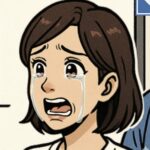
Shi-chan, in Episode 15, Sutematsu sees through Naomi’s lie, and I was nervous about what would happen! But Sutematsu doesn’t just get angry — she asks Naomi to help with the soup kitchen. That response was really memorable.

That’s right. Episode 15 wasn’t about “getting caught in a lie means it’s over” — it was about “seeing the background behind the lie, and finding a way to use that person’s strengths for society.” From a nursing perspective, it was an episode about not ending with blame when a patient or family couldn’t tell the truth.
Episode 15 is packed with themes that are deeply important for nurses.
Seeing through a lie. But not abandoning the person who lied.
A soup kitchen as community support. The power of neighborhood relationships in getting life on track.
A mother’s determination. Naomi telling Kohinata how she truly feels.
All of these connect to a kind of nursing that cannot be completed inside the hospital walls.
A nurse’s job involves gathering “accurate information” about the patient.
But that isn’t for the purpose of interrogating people.
It’s for the purpose of treating them safely and helping them rebuild their lives.
Episode 15 teaches us that “knowing the truth” and “supporting the person” can coexist.
- Plot Summary: Episode 15
- Nurse Point ①: What to Do After Seeing Through a Lie
- Nurse Point ②: Behind a Lie Are “Things That Couldn’t Be Said”
- Nurse Point ③: A Soup Kitchen Is Both “Food Support” and “Connection Support”
- Nurse Point ④: Public Health Is Nursing “Outside the Hospital”
- Nurse Point ⑤: Sutematsu’s Way of Asking Is “Handing Over a Role” as Support
- Nurse Point ⑥: The Power of Community — Mitsu and the Neighborhood Women Like Matsu
- Nurse Point ⑦: Getting Life on Track Requires “Environmental Adjustment”
- Nurse Point ⑧: Naomi’s Feelings for Kohinata and “Her Own Value”
- Nurse Point ⑨: A Supporter Needs Both “the Power to See” and “the Power to Wait”
- Nurse Point ⑩: The Soup Kitchen Is Also a “Preview” of Future Medical Settings
- Clinical Observation Points for New Nurses
- Report Examples: For Seniors, Doctors, and MSWs
- Frequently Asked Questions
- Summary: Episode 15 Is About “Supporting Without Blaming” and “Life Supported by Community”
- English Summary: Episode 15 in 10 Lines
- 🛒 しーちゃんのおすすめ情報
Plot Summary: Episode 15
In Episode 15, Naomi’s lie is discovered by Sutematsu.
Naomi had been working as a server at the Rokumeikan by misrepresenting her background.
Using her excellent English skills, she had been taking action to seize her own future.
There was, undeniably, a lie in her actions.
But behind that lie was the difficulty of living in an era when women had few places to use their abilities.
Naomi wasn’t simply looking for an easy way out.
She was searching for a way to survive.
The lie was wrong, but there’s a background behind why Naomi had no other choice, isn’t there?
Exactly. When a patient can’t tell the truth, nurses shouldn’t just see it as “they lied” — we need to ask “why couldn’t they say it?” Of course, confirming facts for safety is necessary. But only blaming them can make it even harder for the person to open up.
Sutematsu sees through Naomi’s lie.
But rather than excluding Naomi, she asks her to help with the soup kitchen.
Behind this response is Sutematsu’s own conviction.
Even while living in the glamorous world of the Rokumeikan, Sutematsu keeps her eyes on the people that the light of society has not reached.
A soup kitchen is a support that brings warm meals to people who are struggling to afford food.
From the glittering world of the Rokumeikan, Naomi now heads toward the community, where people in need are waiting.
Meanwhile, Rin’s life is also slowly starting to find its rhythm.
Thanks to Mitsu’s efforts, the neighborhood women — including Matsu — help clean up the house.
Rin is working at Mizuhoya while rebuilding her life with Tamaki and her family.
With the hands of neighbors coming in, daily life slowly begins to find its tracks.
Rin’s life isn’t just about her own effort anymore — she’s starting to receive help from the people around her.
That’s the important part. Rebuilding a life is difficult with only the person’s own effort. Family, neighborhood, workplace, community resources — many different kinds of support come together before a life really stabilizes.
And then Naomi tells Kohinata how she truly feels.
What exactly she says, and what direction their relationship takes — that becomes a turning point for Naomi’s future in the story.
Nurse Point ①: What to Do After Seeing Through a Lie
When Sutematsu discovers that Naomi was lying, what does she do?
She doesn’t expel Naomi. She doesn’t shame her publicly. She doesn’t pretend she didn’t notice.
Instead, she asks Naomi to join the soup kitchen effort.
This response is very nursing-like.
She saw through the lie, but she also saw the person’s strengths.
Exactly. I don’t think Sutematsu let Naomi off the hook. She saw through the lie — as a lie. But she also saw Naomi’s English ability, her initiative, her ability to read people — and recognized those as something she could use for society.
In clinical nursing, patients sometimes cannot tell the truth.
They say they’re taking their medication, even when they’re not.
They say their eating is fine, even when they can’t eat.
They say their pain has eased, even when it hasn’t.
They say they have a safe home, even when their living environment is actually dangerous.
When nurses discover these discrepancies, the response matters enormously.
“You lied to me.” — This closes the relationship.
“I’m a little worried. Can we look at this together?” — This keeps the relationship open.
The goal is always the same: to support the person’s safety and their life.
Sutematsu’s response to Naomi is a model for what good support looks like after the truth is discovered.
Nurse Point ②: Behind a Lie Are “Things That Couldn’t Be Said”
Why did Naomi lie?
Because in her era, a woman of her background could not enter the Rokumeikan as herself.
She had the ability. She had the drive. She had a vision.
But the door was not open to her as she was.
So she changed what she said about herself.
A patient’s lie doesn’t always come from bad intentions, does it?
Right. Of course there are rare cases where the intention is harmful, but in most cases the background is embarrassment, anxiety, fear of being scolded, fear of losing support, or simply not knowing how to say it.
In clinical nursing, nurses encounter many situations where “the patient couldn’t say it.”
Couldn’t say they had stopped taking their medication.
Couldn’t say they were struggling financially.
Couldn’t say they were drinking again.
Couldn’t say they were being hurt at home.
All of these are situations where asking “why couldn’t they say it?” matters far more than simply noting “they lied.”
What was the person afraid of? What would they lose by telling the truth? Who would they need to trust to be able to speak?
These questions guide more effective support.
Nurse Point ③: A Soup Kitchen Is Both “Food Support” and “Connection Support”
The soup kitchen that Sutematsu leads is more than just distributing food.
Food sustains life. But it also becomes a doorway to connection with support.
A soup kitchen is more than just giving out food, isn’t it?
Exactly. Food sustains life, and at the same time it can be the moment that connects someone to support. When someone receives food, their complexion, how they walk, how they’re dressed, how the children with them look, signs of isolation — all of these can become visible.
In modern Japan, soup kitchens, community cafeterias, and children’s cafeterias (kodomo shokudo) have become important places for seeing the health of people who have not yet reached medical care.
People who come hungry. Elderly people who live alone. Single-parent households. People with signs of domestic violence. Children who may be experiencing neglect.
The soup kitchen is not a medical facility. But it is a place where health and welfare issues are observed.
Nurses who understand community support know how to connect people from these settings to appropriate care.
“There is a community cafeteria in this area.” “The welfare office provides this kind of support.” “Your local public health center can help with this.”
Knowledge of social resources makes a nurse’s support much more concrete.
Nurse Point ④: Public Health Is Nursing “Outside the Hospital”
Sutematsu’s soup kitchen is a form of public health activity.
Public health means protecting the health not just of individual patients, but of communities and society.
I thought nursing was only inside hospitals, but you need to see the community as a whole too.
That’s right. Even if a patient receives treatment in the hospital, if they go home and can’t eat, can’t sleep, and are isolated, their health cannot be protected. Nurses need to be able to imagine the life that exists outside the hospital.
In historical Japan (the Meiji era setting of Kaze, Kaoru), there were no systems like public health centers or social welfare.
Sutematsu’s soup kitchen was a pioneering form of community public health work.
In modern nursing, new nurses are taught “discharge planning” — thinking about what the patient’s life will look like after they leave the hospital.
What is the home environment like? Who is around? Can they eat? Can they manage their medications? Is there a support network?
Sutematsu’s approach — going into the community, seeing people’s reality, and providing tangible support — is exactly what this kind of nursing looks like.
Nurse Point ⑤: Sutematsu’s Way of Asking Is “Handing Over a Role” as Support
Sutematsu doesn’t just scold Naomi for lying.
She gives her something to do: “Help with the soup kitchen.”
Handing over a role seems like what happened with Rin at Mizuhoya, too.
Exactly. People don’t just recover by being helped — sometimes having a role allows someone to reclaim their own strength. Naomi might have been left with nothing if she had only been blamed. But by being given the role of helping with the soup kitchen, she gets to channel her abilities in a different direction.
In nursing, giving patients a role is an important concept in rehabilitation and mental health care.
“Can you press this button yourself?” “Would you like to try standing with support?” “Is there anything you’d like to do for yourself while you’re here?”
Small roles restore confidence and independence.
Sutematsu handing Naomi the role of soup kitchen helper is not simply punishment.
It is a form of support that sees Naomi’s ability and gives her a place to use it.
Nurse Point ⑥: The Power of Community — Mitsu and the Neighborhood Women Like Matsu
Mitsu’s energy helps organize the neighborhood women to clean up Rin’s house.
This scene shows the power of community ties in action.
It’s so wonderful that Matsu and the others help out. When the house gets organized, the heart probably feels more settled too.
That’s right. When the environment is organized, it connects to mental and physical stability. The room is tidied up, there’s a proper place to sleep, there’s a space to cook. These things are directly connected to health.
In modern medicine and nursing, this kind of help is sometimes provided by visiting nurses, home helpers, and welfare workers.
But in reality, the support that neighbors provide on a daily basis is enormous.
“I brought some food.” “I swept the entryway.” “I’ll walk the child to school today.”
These small acts of kindness weave the fabric of someone’s life.
Nurses who can see the community around a patient — not just the hospital team — can plan more complete care.
Nurse Point ⑦: Getting Life on Track Requires “Environmental Adjustment”
For Rin, having her house cleaned and organized is not a small thing.
It is a major step in rebuilding her life.
Getting life on track is about many small kinds of support coming together, isn’t it?
Exactly right. The same is true in medicine. Giving someone a prescription alone doesn’t get a life on track. Food, housing, family, work, transportation, a place to consult — only when all these conditions are adjusted can treatment continue.
In nursing, “environment adjustment” is a formal part of care.
Safety in the home environment. Sleep position. Fall prevention measures. Medication management. Kitchen safety. Lighting. Air quality.
All of these affect the patient’s health and their ability to recover.
Rin’s clean and organized home is not just about aesthetics — it is a prerequisite for her health and stability.
Nurse Point ⑧: Naomi’s Feelings for Kohinata and “Her Own Value”
In Episode 15, Naomi conveys her true feelings to Kohinata.
Telling someone how you truly feel is not easy.
Naomi, who appears strong on the outside, is actually wavering on the inside about her own value.
Naomi seems strong, but she seems to be conflicted about her own value.
That’s right. People who look strong on the outside often carry deep anxiety within. Nurses should remember not to assume a patient is fine just because they look energetic.
Telling someone how you feel requires courage.
It requires trusting that the other person will receive what you say.
For patients, it can be like that too.
“I’m actually scared of this surgery.” “I don’t fully understand what the doctor said.” “I don’t know if I can really do rehabilitation.” “I don’t want to be a burden to my family.”
These feelings often go unspoken.
Nurses who create space for those feelings — who ask “how are you actually feeling about this?” — help those hidden voices come out.
Nurse Point ⑨: A Supporter Needs Both “the Power to See” and “the Power to Wait”
Sutematsu sees through Naomi’s lie.
But she doesn’t act on it immediately. She waits for the right moment.
It’s not just about seeing through the lie — it’s also about creating an opportunity for the person to change.
Exactly. Nurses also need the ability to notice a patient’s vulnerability. But after noticing it, pushing back with logic immediately isn’t always right — you also need the ability to wait for a timing and form that the other person can receive.
In clinical nursing, this is a real skill.
Nurses sometimes see that a patient is not coping well, or that something is wrong.
But saying it all immediately doesn’t always help.
Choosing when to speak, how to say it, and in what form — these judgments define what effective, respectful support looks like.
Nurse Point ⑩: The Soup Kitchen Is Also a “Preview” of Future Medical Settings
In Episode 15, Naomi begins helping at the soup kitchen.
This experience will likely shape what Naomi notices and cares about in future episodes.
Even in a place distributing food, you can notice changes in someone’s physical condition?
Yes, you can. In community support settings, you can sometimes notice health issues in people who have not been to a hospital. Complexion, how they walk, how they eat, how the children look, a cough, a fever, signs of dehydration — picking up those signals matters.
In modern public health nursing, nurses work in community settings — not just hospitals — for exactly this purpose.
School nurses, public health center nurses, visiting nurses — all of them find health problems in people before they reach the hospital.
Sutematsu’s soup kitchen in Meiji Japan is a forerunner of exactly this kind of work.
Naomi’s experience there may be what draws her toward a path in health and welfare in later episodes.
Clinical Observation Points for New Nurses
Here are key points from Episode 15 that new nurses can use in clinical practice.
1. Think about why the patient couldn’t say it
When information differs from what the patient said, don’t just note “the patient lied.”
Ask: Why couldn’t they say it? Were they afraid of being scolded? Embarrassed? Worried about losing support? Unable to find the right words?
When you understand the background, your support becomes much more specific and useful.
2. See food support as health support
Eating is a basic life activity.
A patient who cannot eat is experiencing physical deterioration, social isolation, and economic difficulty all at once.
Community cafeterias, food banks, and soup kitchens are not just about feeding people — they are health resources.
Knowing what is available in the community makes it easier to connect patients to these resources.
3. Incorporate the power of community into support
Neighbors, local community associations, religious groups, voluntary organizations.
These informal networks can sometimes provide faster, more flexible support than official services.
Nurses who understand what is available in the community can weave those resources into their plans.
4. Check whether the environment has been adjusted
After discharge, will the patient’s home support their recovery?
Is there a safe sleeping space? Can they manage medications? Is the kitchen functional?
Environmental factors directly affect health outcomes — they deserve the same attention as treatment itself.
5. Hand over roles without taking over ability
Letting the patient do what they can do themselves is a core part of independence support.
Small roles — even tiny ones — restore confidence and the feeling of being useful.
Not taking over from the patient is often harder than it sounds.
Report Examples: For Seniors, Doctors, and MSWs
When a patient seems reluctant to say they haven’t been taking medication
“The patient said they’ve been taking their medication, but looking at the blister pack, there are pills left. I want to check whether they actually haven’t been able to take them, or if there was a reason they couldn’t say so. I’d like to create a gentle opportunity to ask.”
When there seems to be a background issue with not being able to eat
“The patient says she has been eating, but she appears to have lost weight and seems fatigued. I’m wondering if there might be a financial or environmental issue behind not eating. I’d like to explore whether a social worker consultation might be helpful.”
When the living environment is not in order
“The patient’s discharge destination appears to have clutter and a living environment that may pose fall risks. I’d like to involve a social worker to think about home visiting support or in-home services.”
When you want the patient to have a role
“The patient seems to have low self-confidence, but when we talk about what she was doing before this hospitalization, her eyes light up. I’d like to think about small roles she could take on during rehabilitation that would help her regain confidence.”
Frequently Asked Questions
Q. If a patient lied to me, am I allowed to stop trusting them?
It does affect the trust relationship. But rather than immediately cutting them off, confirm why they couldn’t tell the truth.
Information related to safety needs to be confirmed accurately, but it’s important to also sort out the anxiety or difficulty behind what they said.
Q. Are soup kitchens and children’s cafeterias relevant to nursing?
Yes, they are.
Food support connects to nutrition, dehydration prevention, isolation prevention, and health observation of children.
Knowing these community resources makes it easier for nurses to connect patients to support.
Q. Does a nurse need to pay attention to home cleanliness and living environment?
Yes, we do.
Living environment affects falls, medication management, eating, sleeping, and caregiver burden.
Nurses don’t clean the home ourselves — but we need the perspective to connect patients to the appropriate support services.
Q. Won’t giving a patient a role burden them?
It depends on their condition.
When their health is poor, rest comes first.
But in the recovery phase, having small roles a person can do themselves can lead to restored confidence and daily life capacity.
Summary: Episode 15 Is About “Supporting Without Blaming” and “Life Supported by Community”
In Episode 15, Naomi’s lie is discovered by Sutematsu.
But Sutematsu doesn’t simply blame Naomi — she asks her to help with the soup kitchen.
There was a perspective in that response: to use Naomi’s strengths for society.
Meanwhile, with the help of Mitsu and the neighborhood women like Matsu, Rin’s life slowly finds its rhythm.
The house is organized, neighborhood hands reach in, and life gradually takes shape.
These are all important themes that connect directly to nursing.
✅ After seeing through a lie, don’t end with blame
✅ Look at the background of what couldn’t be said
✅ A soup kitchen is food support and connection support
✅ Public health is nursing that exists outside the hospital
✅ Handing over a role supports a person’s dignity
✅ Community power organizes and sustains life
✅ Environmental adjustment is the foundation for continuing treatment
✅ A supporter needs both the power to see and the power to wait
Episode 15 is about Naomi’s lie being exposed, but it doesn’t just end with a scolding — that was really striking to me. Sutematsu is strict, but she’s someone with a big heart.
That’s right. Seeing through a lie and not giving up on a person can coexist. As nurses, when we notice something a patient couldn’t say, I want to be the kind of professional who helps them move forward safely — not just the one who points out what was wrong.
English Summary: Episode 15 in 10 Lines
- In Episode 15, Naomi’s lie is discovered by Sutematsu, who then asks her to help with the soup kitchen rather than expelling her.
- Sutematsu’s response models what nursing calls “supporting without blaming” — seeing the person behind the problem.
- Behind Naomi’s lie was the reality of a woman with ability who had no legitimate path to use it in Meiji-era Japan.
- Nurses learn to ask not “did they lie?” but “why couldn’t they say the truth?” — the background always matters.
- A soup kitchen is more than food distribution — it is a place to see health problems in people who haven’t reached medical care yet.
- Sutematsu’s community-based work in the Meiji era was a forerunner of modern public health nursing.
- Meanwhile, Rin’s life gets organized with the help of Mitsu and neighborhood women — showing how community support rebuilds lives.
- Environmental adjustment — a clean home, proper sleeping space, functional kitchen — is a recognized part of nursing care.
- Giving a patient a role, as Sutematsu does for Naomi, is a form of support that restores dignity and confidence.
- Episode 15 reminds nurses that the goal is always to help the person move forward safely — not just to point out what went wrong.
🛒 しーちゃんのおすすめ情報
💼 転職を考えているナースへ。MCナースネットで理想の職場を探そう
「今の職場、なんかしんどいな」と感じたら、それはサインかもしれません。MCナースネットは看護師・保健師・助産師専門の転職支援サービス。担当コンサルタントが非公開求人を含めた情報をもとに、あなたの希望にあった職場を一緒に探してくれます。登録・相談は無料なので、転職を決めていなくても「話だけ聞いてみる」から始めてOKです。
- 非公開求人も多数掲載
- 専任コンサルタントが転職をサポート
- 登録・利用は完全無料
。°+°。°+ °。°。°+°。°+ °。°。°+°。°+ °。°+ °。°
◇◆ 看護師の求人・転職ならMC─ナースネット ◆◇
業界最大級!求人数20000件以上、会員数100,000人の実績!
全国での拠点展開だから身近なコンサルタントに相談可!
大人気の企業・健診・添乗のお仕事も豊富!
登録・お問い合わせはこちら
⇒https://px.a8.net/svt/ejp?a8mat=4AVF01+3RQUPE+28MI+61JSJ
。°+°。°+ °。°。°+°。°+ °。°。°+°。°+ °。°+ °。°
📚 しーちゃんのおすすめ看護本・国試参考書【Amazon】
「もっと深く勉強したい」「国試に向けてしっかり対策したい」という方へ。Amazonで購入できるおすすめの看護関連書籍をご紹介します。現役ナースの私が実際に使ったり、役立つと感じた本を厳選しています。
PR
🌸 「看護師になりたい」その一歩を応援|さくら看護予備校
この記事を読んでくださっている方の中には、これから看護学校を受験する方や、社会人から看護師を目指す方もいるかもしれません。「勉強が苦手」「数学が不安」「独学では限界…」——そんな悩みに寄り添うのが、看護受験専門の個別指導「さくら看護予備校」です。
- 🌸 看護受験専門の個別指導に特化した予備校
- 🌸 勉強が苦手・社会人からの再受験でも合格を目指せるカリキュラム
- 🌸 マンツーマンで学習進捗・弱点克服を徹底サポート
- 🌸 看護学校の入試傾向に精通した講師が指導
- 🌸 対面・オンライン両方OKで全国どこからでも受講可能
※仕事や育児と両立しながらオンラインで学びたい方、独学に不安がある方にもおすすめです。
※本記事はプロモーション(アフィリエイト)を含みます。
PR
📱 スキマ時間の勉強・調べ物に|通信費を抑えたい看護師さんへ
休憩中に薬や疾患を調べたり、勉強動画を見たり…看護師はスマホのデータ通信を使う場面がたくさんあります。「ギガが足りない」「通信費が高い」と感じている方に、データ使い放題の楽天モバイルはぴったりです。
- ✅ データ高速無制限・使い放題で 月3,278円(税込)※1
- ✅ 契約事務手数料0円・初期費用なし
- ✅ Rakuten Linkアプリで国内通話かけ放題 ※2
- ✅ 楽天市場のお買い物ポイントが最大+4倍 ※3
※1 製品代・オプション料・通話料別。公平なサービスのため、速度制限の場合あり。環境により速度低下する場合あり。
※2 Rakuten Linkアプリ利用時。(0570)などから始まる他社接続サービスや一部特番(188)への通話は無料通話の対象外。アプリ未使用時は30秒22円。
※3 ご契約中のプラン・会員ランクに応じてポイント倍率が異なります。上限・達成条件あり。
※本記事はプロモーション(アフィリエイト)を含みます。
コメント