![[EP20 English] NHK Drama "Kaze, Kaoru" Episode 20 — A Nurse Explains: Rin's Resolve, Mitsu's Marriage Test & the Entrance Ceremony — Learning Career Choice in Nursing](https://considerate-thank-you-nursecareer.com/wp-content/uploads/2026/07/EP20-English-eyecatch.jpg)
By reading this page, you will…
✅ Understand Episode 20 from a nurse’s perspective
✅ Think about Rin’s declaration to become a trained nurse as an act of career choice
✅ Understand Mitsu’s marriage proposal talk as a way families test resolve
✅ See the connection between Naomi’s haircut and the nursing concept of self-renewal
✅ Think about the support systems needed to balance childcare and learning
Hi, I’m Shi-chan, a working nurse.
I have 20 years of nursing experience and work as a certified critical care nurse.
I’m Mirai-chan! I’m in my first year as a nurse, and I watch NHK drama “Kaze, Kaoru” every episode while asking Shi-chan all kinds of questions.
This time, I’ll give a thorough nurse’s-eye analysis of Episode 20 of “Kaze, Kaoru.”
※ At the end of this article, I’ve included a 10-line English Summary of Episode 20. Feel free to use it for English study or a quick review of the episode.
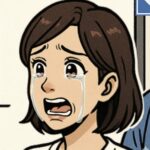
Shi-chan, in Episode 20 Rin finally declared she would become a trained nurse! I was surprised by Mitsu’s marriage proposal talk, but by the end we got all the way to the entrance ceremony — it really felt like the nursing story was properly beginning at last.

You’re right. Episode 20 was a hugely significant episode as the close of Week 4. After getting Tama back, what kind of life would Rin choose? As a mother, as a daughter, as an individual woman, and as someone now aiming for a profession — it was an episode where Rin conveyed her resolve in her own words.
Episode 20 holds many themes that matter deeply to nurses: recovery after a crisis; conveying your own will to family; the path that looks stable — a marriage proposal — versus the unknown path of nursing; balancing childcare and learning; choosing your own path while being supported by family; the entrance ceremony as a gateway to professional life.
These themes connect deeply with the careers of nurses today. The path to becoming a nurse begins before the textbooks even open. Why choose this path? What do you want to protect? Who opposes you, and who supports you? How do you balance life and learning?
Episode 20 was the episode where Rin faced those questions and finally took her first step.
- Episode 20 Synopsis
- Nurse’s Perspective ①: After a Crisis, Time to Restore Safety Is Essential
- Nurse’s Perspective ②: The Power of Putting Your Resolve Into Words
- Nurse’s Perspective ③: Mitsu’s Marriage Proposal Talk Is a “Test of Resolve”
- Nurse’s Perspective ④: The Path That Looks Stable vs. the Path You Choose Yourself
- Nurse’s Perspective ⑤: Balancing Childcare and Learning Requires a Support System
- Nurse’s Perspective ⑥: Mitsu’s “Make This a Winning Battle” — Words of Support in One’s Own Style
- Nurse’s Perspective ⑦: Uzaburo’s Perspective — “People Cast Out of the Ordinary”
- Nurse’s Perspective ⑧: The Entrance Ceremony Is “The Gateway to a Profession”
- Nurse’s Perspective ⑨: Naomi’s Haircut Is a Sign of “Cutting Away the Past”
- Nurse’s Perspective ⑩: Episode 20 Is “The End of the First Chapter and Its Beginning”
- Clinical Observation Points New Nurses Can Use
- Report Examples for Senior Staff, Doctors, and MSW
- Frequently Asked Questions
- Summary: Episode 20 Is About “Choosing Your Own Life and Standing at the Gateway to a Profession”
- English Summary of Episode 20
Episode 20 Synopsis
In Episode 20, after safely getting Tama back, Rin spends a joyful evening with Kotaro’s family and the Nakamuras for the first time in a long while.
Up to the previous episode, Rin had headed to the Okuda household, reclaimed Tama, and declared her intention to divorce to Kamekich and Tei. That was a massive action — one that took something close to her whole life’s courage.
In Episode 20, that tension loosens a little. She reunites with people from her hometown and shares a meal with them.
Seeing Rin smiling was such a relief. With so much tension in the story continuing, it felt like she’d been able to return somewhere safe.
That’s right. After a crisis, sharing a meal with people who make you feel safe, laughing, sleeping. These are all vitally important for mental recovery. From a nurse’s perspective, this is what we’d call “restoration of security after a crisis.”
After that, Rin returns to Tokyo and shares her resolve with her mother Mitsu once again: she will become a trained nurse in order to raise Tama; she will live by her own strength. She chooses that path clearly.
This is not a light interest of “I’d like to try nursing.” It is a decision rooted in determination as a mother and a deep desire for independence. To protect Tama. To not entrust her own life to whoever she marries next. To decide the ending of her own story herself.
Rin’s feeling of “I don’t want the finish line of my life to be becoming a wife” really resonated with me. It’s about choosing your own life.
Exactly. That’s a really important scene. In nursing careers too, the path that makes people around you feel at ease and the path you truly want to take are sometimes different. I think Rin chose not the path that looks stable, but the path of living by her own strength.
However, Mitsu does not accept it right away. Instead, she reveals that a marriage proposal has come from a long-established sake brewery in Yokohama. As a daughter of the Ichinose family, there is a path to a secure marriage.
At the time, that might have been seen by society as “the right path.” But Rin does not choose it. She says she does not want to entrust her life and Tama’s life to a husband again.
In fact, this proposal was also Mitsu’s way of testing Rin’s resolve. Mitsu does not immediately accept the path of trained nurse. But she does acknowledge Rin’s determination — and sends her off with words like “make this a winning battle.”
After that, Rin tells Uzaburo too that she is going to pursue nursing. Uzaburo takes it in warmly, saying it would be interesting to have people like Rin — those who’ve been cast out of the ordinary — in society.
Four months later, Rin leaves Tama with Mitsu and An and heads to the entrance ceremony. There, she finds Naomi — who has cut her hair dramatically short. Rin and Naomi finally reunite in the place where they will learn nursing together.
Episode 20 was the important turning point where Rin chose her own life and stepped onto the path toward trained nursing alongside Naomi.
Nurse’s Perspective ①: After a Crisis, Time to Restore Safety Is Essential
In the first half of Episode 20, Rin spends a joyful evening with Kotaro’s family and the Nakamuras. For Rin, who has just got Tama back, this time is incredibly precious.
Just because a crisis is over does not mean the mind and body bounce right back. The tension releasing can bring an exhausted wave crashing in. Tears may come. The moment safety arrives, you may become overwhelmingly sleepy. You may find you can eat again.
Even after the crisis ends, care is still needed, isn’t it?
That’s right. After an emergency, a disaster, a family crisis — patients and families are not simply “fine now that they’ve survived.” Resting in a safe place, eating, talking to someone — these are all part of recovery.
In nursing settings, post-crisis care matters deeply: family members after a patient’s sudden deterioration; patients after surgery; evacuees after a disaster; people who have fled domestic violence or abuse; families whose child nearly went missing. These people need not just physical safety but psychological security.
“You are safe now.” “Let’s rest here for a little while.” “Let’s get some water.” “Let’s sort through what happened together.” “You are not alone.” These kinds of engagement support recovery after a crisis.
The joyful evening in Episode 20 was, I believe, time for Rin and Tama to restore a sense of safety after the crisis they had been through.
Nurse’s Perspective ②: The Power of Putting Your Resolve Into Words
Rin returns to Tokyo and conveys her resolve to Mitsu: she will become a trained nurse; she will live by her own strength to raise Tama. Putting this resolve into words carries enormous power.
Rather than just thinking it inside one’s head, telling someone makes the resolve begin to take on reality.
Saying it out loud makes it harder to back away, but it also clarifies your own feelings.
Right. Whether in nursing career choices or in a patient’s decision-making, putting things into words matters. Saying it with your own mouth lets you confirm for yourself: “This is what I want to choose.”
In nursing, there are moments when a patient’s will is put into words: I want to go home; I want to receive treatment; I want to reduce the pain; I want to tell my family the truth; I want to keep working; I want to spend my final days at home. A will put into words becomes the starting point for support. Nurses do not take those words lightly.
Rin’s declaration of “I will become a trained nurse” was the words that would set her own life in motion.
Nurse’s Perspective ③: Mitsu’s Marriage Proposal Talk Is a “Test of Resolve”
Mitsu brings up the marriage proposal to Rin: a proposal has come from a long-established sake brewery in Yokohama; as a daughter of the Ichinose family, that path is available.
At first glance, this looks like Mitsu once again standing in the way of Rin’s path. But in Episode 20, it becomes clear that it was also a way of testing whether Rin’s resolve was real.
Mitsu is strict, but she wanted to see whether Rin was truly serious.
I think so. When a family appears to be opposing, sometimes they are genuinely opposed — but other times they are trying to test the person’s resolve and their realistic outlook. Nurses need the ability to tell the difference.
Even in modern settings, families sometimes raise questions about a patient’s choices: Can they really go home? What about the care? Can they balance work and treatment? Is the money okay? Can they live alone? Sometimes this is a denial of the person. But sometimes it is a genuine practical concern. Nurses do not receive a family’s words simply as opposition — they sort out what the family is trying to confirm: “What is it that the family is worried about?” “How does the person want to respond to that worry?” “Let’s confirm together what practical preparation is needed.”
Mitsu’s marriage proposal talk was a strong question that drew out Rin’s resolve.
Nurse’s Perspective ④: The Path That Looks Stable vs. the Path You Choose Yourself
The marriage proposal is a path that looks stable for Rin: a long-established sake brewery in Yokohama; a match fitting the Ichinose family name; a choice that would ease her mother’s mind. By the standards of the time, it might have been “a good offer.”
But Rin does not choose it. She does not want to entrust her life and Tama’s life to whoever she marries next.
A path that looks stable isn’t always what makes the person happy, is it?
Exactly. The same is true in nursing. A choice that looks safe, easy, or correct from the outside doesn’t always match the person’s own values. Listening to what the person truly wants to prioritize is what matters.
The same kind of thing can happen with patients’ choices: moving to a care facility looks safer — but the person wants to live at home; quitting work would let them focus on treatment — but work is what gives the person purpose; living with family seems reassuring — but the person struggles within that family relationship. Even if healthcare providers or family think “this option is better,” the person’s life belongs to the person themselves.
Safety checks are still necessary, of course. But ultimately, respecting the person’s own values is what matters. Rin chose not the path that looks stable, but the path she chooses for herself. This is a scene that connects directly to nursing’s concept of autonomy support.
Nurse’s Perspective ⑤: Balancing Childcare and Learning Requires a Support System
Rin aims to become a trained nurse while raising Tama. This is an enormous challenge: raising a child; maintaining a livelihood; learning; undergoing training; entering a new environment. Carrying all of this alone is immensely hard.
In Episode 20, Rin leaves Tama with Mitsu and An before heading to the entrance ceremony. Here we see the support that makes balancing childcare and learning possible.
Rin can study because Mitsu and An are looking after Tama, isn’t that right?
Exactly. A career challenge cannot sustain itself on the person’s effort alone. Childcare, household tasks, daily life, someone watching over things, finances — it is because of the support around her that she can study.
Even today, there are people going to nursing school while raising children, nurses continuing their careers while parenting, and people keeping up with their career while caring for a family member. What they need is not their own grit alone: childcare; family cooperation; understanding from the workplace; time for studying; financial support; health management; someone to consult.
When nurses support patients and families too, the same applies. For a person to achieve what they want to achieve, a surrounding support system is needed. Rin’s enrollment is not Rin’s victory alone. It is a step made possible by the support of Mitsu, An, Tama, Uzaburo, and everyone around her.
Nurse’s Perspective ⑥: Mitsu’s “Make This a Winning Battle” — Words of Support in One’s Own Style
As if acknowledging Rin’s resolve, Mitsu sends her off with the words “make this a winning battle.” These words are very true to Mitsu’s character — not a gentle embrace, but more like a firm push at the back.
Mitsu’s support feels a little strict, but it carries a sense of believing in Rin’s strength.
Right. The words of support differ from person to person. Mitsu’s worry runs deep, but she seems to be saying: if Rin is truly serious, fight it through to the end.
There are many kinds of words that nurses use to support patients and new colleagues: “It’s going to be okay” — words that offer reassurance; “Let’s think through it together” — words that come alongside; “Let’s take a look at the reality here” — words that face the facts; “You can do this” — words that push from behind. The words that are needed change depending on the other person’s state.
Mitsu’s words are not ones that coddle Rin. But they are words that acknowledge Rin’s resolve. Family support does not always have to be soft words. There is a form of support that is true to who that person is.
Nurse’s Perspective ⑦: Uzaburo’s Perspective — “People Cast Out of the Ordinary”
Rin also tells Uzaburo that she is going to become a trained nurse. Uzaburo responds that it would be interesting if people like Rin — those cast out of the ordinary — existed in society.
This too is an important point in Episode 20. Rin has deviated from society’s norms up to now: a woman who fled her husband’s household; a woman with a child; a woman who chose divorce; a woman trying to work and become independent. In the society of the time, she may not have been easily accepted.
Because she has stepped outside of what’s normal, she can see things others can’t, right?
Yes. That’s an important perspective for nurses too. People who have had difficult experiences, people who have been cast out by society, can sometimes have the ability to notice others who are struggling in the same way. Of course we must not romanticize painful experiences — but sometimes those experiences become the strength to support someone else.
Nurses come from all kinds of backgrounds: people who have experienced illness; people who have been caregivers; people who have lost a family member; people raising children; people who changed careers; people who took a different path first; people who have carried hardship. Those experiences can give nursing depth. Rin’s experience of being cast out of society’s norms will become the strength with which she sees patients as a nurse.
Nurse’s Perspective ⑧: The Entrance Ceremony Is “The Gateway to a Profession”
At the close of Episode 20, Rin heads to the entrance ceremony. From here, her training as a trained nurse begins. The entrance ceremony is not simply the day one enters a school. It is the gateway to becoming a professional.
The nursing school entrance ceremony makes you a little nervous, doesn’t it? It feels like it’s finally beginning.
It really does. Studying nursing is not just gaining knowledge — it is learning the responsibility of being involved in people’s lives and livelihoods. The entrance ceremony is the day you stand at that gateway.
Learning nursing means acquiring many things: anatomy and physiology; knowledge of illness; nursing techniques; infection control; observation skills; documentation; communication; ethics; teamwork; and the ability to see a patient’s dignity. Rin and Naomi have been trying to help people with their sensitivity and drive up to now. But from here, they transform that into professional expertise. The entrance ceremony in Episode 20 is the beginning of the transformation from “the desire to help” into “trained nursing.”
Nurse’s Perspective ⑨: Naomi’s Haircut Is a Sign of “Cutting Away the Past”
At the entrance ceremony, Rin reunites with Naomi, who has dramatically cut her hair short. Naomi’s haircut is very symbolic: Naomi who dressed up at the Rokumeikan; Naomi who was hurt by Kohinata’s lie; Naomi who apologized to Sutematsu for her own lie. That Naomi cuts her hair and appears at the place where nursing will be learned. This looks like a sign of closing the chapter on her past self and stepping forward onto a new path.
Naomi with her hair cut — her resolve was clear. When your appearance changes, your inner feelings can switch too, can’t they?
That’s right. A change in appearance can support an inner change. Even with patients — tidying their hair before discharge, choosing clothes, putting on make-up — these can help them feel ready to return to life.
Nurses do not dismiss appearance and grooming lightly: staying clean; tidying hair; changing into fresh clothes; drawing closer to one’s own sense of self — these relate to dignity and self-recovery. Naomi’s haircut is not simply a new look. It can be seen as a way of switching gears — carrying her lies and past wounds with her, but still stepping forward onto a new path.
Nurse’s Perspective ⑩: Episode 20 Is “The End of the First Chapter and Its Beginning”
Episode 20 is the close of Week 4, “Our Society.” Up to this point, Rin and Naomi have each walked a difficult path: Rin fled her husband’s household, protected Tama, rebuilt her life, and declared her intention to divorce; Naomi left the church, faced her own strengths and lies, was hurt at the Rokumeikan, and turned toward nursing.
And in Episode 20, the two of them stand in the same place — the place where nursing will be learned.
From here the two will become real partners, won’t they?
That’s right. Episode 20 is both an ending and a beginning. Everything they have experienced up to now will feed into the nursing they will do from here.
For nurses too, the day they entered nursing school or started working as new nurses was not the beginning of everything. Everything they had experienced before: what they had worried about; what they had hesitated over; what had hurt them; what they had been helped through; the moment they wanted to help someone. All of those things become the foundation of a nurse. Rin and Naomi, carrying their lives with them, enter the world of nursing. That is exactly why the nursing of these two will surely be unconventional and deeply felt.
Clinical Observation Points New Nurses Can Use
Here is a summary of points from Episode 20 that new nurses can apply in clinical practice.
1. Check that safety is restored after a crisis
Even after a crisis has ended, the mind and body of patients and families remain tense. Check whether they are sleeping, eating, have someone to talk to, and have a place where they feel safe.
2. Receive the person’s resolve as words
When a patient or family member shares their hope, it is important not to treat those words lightly. Record them as the starting point for support and share them with the team.
3. Do not dismiss family questions as simple opposition
When a family expresses worry, sort out what they are trying to confirm. Separate and ask about the specifics of their anxiety — money, care capacity, safety, the future, the person’s own resolve.
4. Balancing childcare or care responsibilities with a career requires a support system
Do not leave it all to the person’s effort alone. Confirm what support systems are in place — family, the workplace, systems, childcare, consultation resources.
5. Support the tension of entering a new environment
Starting school, starting a new job, being transferred, being discharged, starting a service. Everyone feels nervous in a new environment. Repeat explanations and create an atmosphere where it’s easy to ask questions.
Report Examples for Senior Staff, Doctors, and MSW
Here is a summary of report examples that new nurses can use easily in the field.
When a patient has put their post-discharge hopes into words
“The patient has said they would like to live at home with their child. The family is hoping for a care facility, but I would like to share this as the patient’s own will with the team and consider what practical support system is needed.”
When the family is opposing
“The family is opposed to the patient going home, but it seems the main anxieties are around what to do if they fall and who will check on them at night. I would like to separate out the patient’s wishes and the family’s anxieties and work through them.”
When balancing childcare and treatment is needed
“The patient wants to continue treatment, but is anxious about where to leave their young child. I would like to consult with the MSW about childcare and family support options to help them continue coming to appointments.”
When fatigue is significant after a crisis
“After confirming the child’s safety, the family seems relieved, but their fatigue is significant and they have not been able to eat. Before proceeding with any explanations, I would like to encourage them to rest and get some fluids.”
Frequently Asked Questions
Q. What should I do when a family recommends a different path?
First, try asking what the family is worried about. The approach to the conversation will differ depending on whether it is genuine opposition or a desire to confirm practical readiness.
Q. Is it possible to aim to become a nurse while raising a child?
Yes. However, it is not the person’s effort alone — childcare, family cooperation, study time, finances, and health management are all important. Not carrying it all alone is essential.
Q. I’m anxious about nursing school and life as a new nurse.
Feeling anxious is natural. Everyone feels nervous in a new environment. Creating someone you can ask when you don’t understand something, and building up small successes one by one, is what matters.
Q. Does a painful past experience put you at a disadvantage as a nurse?
Not necessarily. Having experienced pain can sometimes give you the ability to notice what patients are going through. At the same time, having people to care for yourself and someone to consult is also important.
Summary: Episode 20 Is About “Choosing Your Own Life and Standing at the Gateway to a Profession”
In Episode 20, after safely getting Tama back, Rin spends a joyful evening with Kotaro’s family and the Nakamuras. Back in Tokyo, she conveys her resolve to Mitsu that she will become a trained nurse. Mitsu raises the marriage proposal, but it was also a question to test Rin’s resolve.
Rin chooses not to entrust her life and Tama’s life to whoever she marries next — she chooses the path of living by her own strength. Four months later, she leaves Tama with Mitsu and An and heads to the entrance ceremony, where she finds Naomi — her hair dramatically cut short.
✅ After a crisis, time to restore safety is necessary|✅ Putting resolve into words becomes the starting point for support|✅ Family questions can hold both anxiety and a test of resolve|✅ The path that looks stable is not always the best for the person|✅ Balancing childcare and learning requires a support system|✅ Family support comes in each person’s own style|✅ Experiences of being cast out of the ordinary can become the strength to nurse others|✅ The entrance ceremony is the gateway to a profession
Episode 20 was the episode where Rin finally chose her own life. Mitsu wasn’t fully in agreement, but it felt like she acknowledged Rin’s resolve and sent her on her way.
Right. When choosing a career, not everyone around you will be on board from the start. But conveying your resolve in your own words, building the practical support you need, and moving forward one step at a time — that’s what matters, I think.
Rin chose the path of trained nursing to protect herself and Tama’s life. Naomi cut her hair and stood in a new place. The two finally stand at the same gateway.
For Shi-chan, Episode 20 was a truly important episode for thinking about “career choice,” “family support,” and “the gateway to a profession.” For new nurses too — every now and then, try to remember why you chose this path. That reason can be the thing that holds you up on the hard days.
English Summary of Episode 20
Here is a 10-line summary of Episode 20’s key points in straightforward English, for use in English study or reviewing the episode.
- In Episode 20, after reclaiming Tama, Rin shares a warm, joyful evening with friends — a crucial moment of post-crisis recovery for both mind and body.
- Rin formally declares to her mother Mitsu that she will become a trained nurse, living independently to raise Tama — words that set her life in motion.
- Mitsu counters with a marriage proposal from a prestigious sake brewery, which turns out to be a test of Rin’s true resolve rather than simple opposition.
- From a nursing perspective, when families raise questions about a patient’s choice, the first step is to sort out what they are genuinely worried about, not to dismiss it as opposition.
- Rin chooses her own path over a “safe” marriage — a clear example of autonomy, the nursing principle that a person’s life belongs to that person alone.
- Rin’s ability to study is made possible not only by her own effort but by the support of Mitsu, An, and others — balancing childcare and career always requires a support system around the person.
- Mitsu’s parting words — “make this a winning battle” — remind us that family support can take many forms; sometimes a firm push is more meaningful than a gentle embrace.
- Uzaburo’s reflection that people “cast out of the ordinary” bring something valuable resonates in nursing: lived experience of hardship can sharpen a nurse’s ability to see patients clearly.
- Naomi appears at the entrance ceremony with her hair dramatically cut — a symbolic act of closing one chapter and stepping into a new identity as a professional.
- Episode 20 is both an ending and a beginning: all of Rin and Naomi’s past experiences — their pain, their choices, their scars — will become the foundation of the nurses they are becoming.
コメント