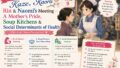
![A Nurse Analyzes "Kaze, Kaoru" Episode 11: New Life at Mizuho-ya, Working with a Child & Learning How Support Begins from Rin's Tension [Shi-chan's Nurse Perspective]](https://considerate-thank-you-nursecareer.com/wp-content/uploads/2026/06/b4e4678802382f40b4d04a5e3ca0c391.jpg)
By reading this page, you will…
✅ Understand the story of Episode 11 from a nurse’s perspective
✅ Analyze the scene where Rin and Tamaki begin their new life at Mizuho-ya — through the lens of housing support and employment support
✅ Connect the difficulty of working while raising a child to modern mother-child support
✅ Learn about new nurses’ anxiety and psychological safety from the scene where Rin freezes in front of a foreign customer
✅ Read Usaburo’s support as engagement that protects dignity
Hello, I’m Shi-chan, a working nurse.
I have 20 years of experience as a veteran nurse and work as a certified critical care nurse.
I’m Mirai-chan! I’m in my first year as a nurse, and I ask Shi-chan all kinds of questions every episode while watching the morning drama “Kaze, Kaoru.”
This time, we’ll take a thorough look at Episode 11 of “Kaze, Kaoru” from a nurse’s perspective.
※ At the end of this article, we’ve included an “English Summary” — 10 lines summarizing Episode 11 in English. Please use it for English learning or to review the content.

Shi-chan, I felt a bit relieved in Episode 11. Rin and Tamaki finally found a place to live and work, didn’t they. But it wasn’t just relief — the scene where Rin froze in front of a foreign customer made my stomach tighten.

I know what you mean. Episode 11 doesn’t end with “good, they were helped.” After connecting to housing and work, can she truly work with peace of mind in that place? When someone new to an environment nearly fails, how does the team support them? From a nurse’s perspective, it was an episode that made me think about both the “entry point” and the “continuation” of support.
Episode 11 is a major turning point for Rin and Tamaki.
Until the previous episode, Rin had no place to live, no job, and had lost her way in Tokyo while carrying her daughter Tamaki.
The person who extended a helping hand to such Rin was Shimizu Usaburo.
In Episode 11, Rin and Tamaki begin a new life at “Mizuho-ya,” the Western goods store run by Usaburo.
From a nurse’s perspective, this is the first step of life rebuilding.
Just receiving food.
Just having a place to sleep for one night.
That alone doesn’t stabilize life.
Having a place to live.
Having a place to work.
Being able to be with one’s child.
Having people around to watch over them.
Not being immediately dismissed even if they fail.
When these conditions align, people can finally start thinking about “tomorrow.”
Episode 11 doesn’t feature medical procedures.
But it’s packed with perspectives that are very important for nurses who support patients and families.
- Episode 11 Synopsis
- Nurse Perspective Point ①: A Place to Live Is the Foundation of Health
- Nurse Perspective Point ②: Working While Raising a Child Requires More Than “Personal Effort”
- Nurse Perspective Point ③: Usaburo’s Support Is Not “Charity” — It’s “Giving a Role”
- Nurse Perspective Point ④: Thinking About “Income That Sustains Life” from the 3-Yen Monthly Wage
- Nurse Perspective Point ⑤: In a New Environment, People Freeze
- Nurse Perspective Point ⑥: Naomi’s Follow-Up Is “Supporting as a Team”
- Nurse Perspective Point ⑦: A Workplace with Psychological Safety Develops People
- Nurse Perspective Point ⑧: A New Life Brings “Security” and “Burden” at the Same Time
- Nurse Perspective Point ⑨: Children Sensitively Sense Adults’ Changes
- Nurse Perspective Point ⑩: Supporters See Both “Contract” and “Relationship”
- Observation Points New Nurses Can Use in Clinical Practice
- Report Examples for Senior Staff, Doctors & MSW
- Frequently Asked Questions
- Summary: Episode 11 Is an Episode for Thinking About “After Connecting to Support”
- English Summary: Episode 11 in 10 Lines
- 🛒 しーちゃんのおすすめ情報
Episode 11 Synopsis
In Episode 11, Kawai Rin, with help from Shimizu Usaburo, begins living with her daughter Tamaki at the Western goods store “Mizuho-ya.”
Usaburo gives Rin both a place to work and a place to live.
From a state where she had nowhere to go and was wandering the streets, Rin gains at least a foothold for life.
Finding a place to live and work at the same time must be really significant for Rin.
That’s right. From a nurse’s perspective, this scene can be seen as “the moment life’s foundation begins to take shape.” Food, housing, income, supervision of the child. Without this foundation, both mind and body have difficulty recovering.
Mizuho-ya is a store that handles foreign goods.
For Rin, it’s a new environment surrounded by things she’s never seen, words she’s not used to, and unfamiliar customers.
Even so, she must work there or Rin and Tamaki’s life won’t hold together.
Usaburo presents Rin with a wage of 3 yen per month.
He also explains the work content and life at the store.
For Rin, these are welcome conditions, but they also bring great tension.
Can she do this?
Is it okay to work while bringing Tamaki along?
Will she cause trouble?
Will she be thrown out if she fails?
She must have had these anxieties.
In Episode 11, a foreign customer visits Mizuho-ya.
Rin tries to handle the situation but is overwhelmed by the language and the customer’s atmosphere, and she freezes.
Naomi steps in to handle it instead.
This scene doesn’t just depict Rin’s inexperience.
It depicts how powerfully someone freezes when they’ve just arrived somewhere new and suddenly face a high hurdle.
That scene reminded me of my own early days. It’s similar to the feeling of going blank when a patient asks a question.
Exactly. It’s not just a lack of knowledge — the body can seize up from tension. New nurses can freeze the same way during their first emergency response, first family explanation, or first report to a doctor.
Episode 11 also features Shimada Kenjiro, also known as Shima-ken.
Young people are gathering, and the atmosphere of the new Meiji era is slowly becoming visible.
Rin is a woman who grew up in a samurai household and fled from her marriage.
Naomi is a woman raised at a church, still searching for her own place.
Mizuho-ya, where Usaburo and Shima-ken are, becomes a place for both women to encounter a new kind of society.
Episode 11 doesn’t end with Rin being rescued.
It depicts the beginning of how she will work, learn, and create her own place there.
Nurse Perspective Point ①: A Place to Live Is the Foundation of Health
The first thing to consider in Episode 11 is that Rin and Tamaki obtained a place to live.
Housing is the foundation of health.
This is also a very important perspective in modern nursing.
Even if an illness is cured, life isn’t stable without a place to return to.
Receive medicine, but have no place to store it.
Receive dietary guidance, but have no kitchen.
Need rest, but have no place to lie down.
Need to attend outpatient appointments, but have no stable address or contact information.
In an environment where you can’t sleep at night, neither physical strength nor mind can recover.
I thought housing was a separate issue from medical care. But when I think about life after discharge, they’re closely related.
That’s right. Patients with unstable housing can find it difficult to continue treatment. Nurses need to imagine not just the hospital bed, but the place the person is returning to.
Until the previous episode, Rin and Tamaki were uncertain even about “where to sleep tonight.”
In this state, neither mind nor body can rest.
For a child like Tamaki, that’s especially true.
Children can sleep, eat, play, cry, and grow when there’s a safe place for them.
If housing is unstable, it affects children’s development too.
When nurses see mother-child pairs, it’s very important to confirm not just the child’s condition, but the home environment.
Where are they sleeping?
Are they able to eat?
Is the caregiver getting rest?
Is there a safe place to spend their time?
Is there anyone outside the family to rely on?
Mizuho-ya in Episode 11 became, at minimum, a place where Rin and Tamaki could put their bodies. That is the first step of life rebuilding.
Nurse Perspective Point ②: Working While Raising a Child Requires More Than “Personal Effort”
Rin must work while raising Tamaki.
Even in modern times, working while raising children is not easy.
All the more when family to rely on is scarce and housing and income are unstable — the hurdles of working with a child become even higher.
She wants to work.
But has nowhere to leave her child.
Can’t work because there’s nowhere to leave the child.
No income because she can’t work.
Life doesn’t stabilize because there’s no income.
This vicious cycle exists even today.
It’s easy to say “just work,” but if there’s no one to look after the child, you can’t work.
That’s absolutely right. Having to simultaneously look for work and protect the child’s safety. That’s enormously difficult. It’s not a problem that can be solved by personal effort alone.
What nurses need to see in mother-child support is not just whether the mother has the will to work.
Is there a place where the child can be safely left?
Do work hours match childcare hours?
Is there someone who can respond if the child suddenly develops a fever?
Is the caregiver themselves able to rest?
Does the workplace understand childcare needs?
Is the income enough for living?
In Rin’s case, Mizuho-ya is a place where she can work while living in.
This is major support.
But live-in work also has its own difficulties.
Boundaries between work and life become unclear.
Hard to take time to rest.
Workplace relationships affect daily life too.
The child gets caught up in the workplace atmosphere.
Losing the job also means losing housing at the same time.
That’s exactly why follow-up after receiving support is important.
Not “they connected to a place to work, so they’re fine” — but seeing whether life can truly continue in that place.
Nurse Perspective Point ③: Usaburo’s Support Is Not “Charity” — It’s “Giving a Role”
Usaburo gives Rin both housing and work.
What’s important here is that Usaburo is not treating Rin as simply an object of protection.
He gives Rin a job, presents a wage, and assigns her a role.
This is extremely important for protecting the dignity of the person receiving support.
Not just helping — he’s also giving her the role of a worker.
That’s right. A person’s self-esteem can be hurt by just receiving help alone. Of course in emergencies, ensuring safety is the top priority. But after that, having a role — “there are things you can do too,” “you have a place here” — becomes a force for recovery.
The same is true in nursing.
Doing everything for patients is not necessarily good nursing.
Taking away even what they can do may reduce patients’ confidence and capacity for daily living.
For example:
・ Doing all the feeding for patients who can eat themselves
・ Keeping people who may be able to walk in bed indefinitely
・ Having only family or medical staff decide what the person can decide for themselves
・ Not building in hospital the strength they’ll need after discharge
Even from good intentions, these interactions can take away a person’s capacity.
Support is not about making the other person helpless.
It’s about setting up the necessary scaffolding so they can reclaim their own life.
Usaburo gave Rin not just food and housing, but the role of “a person who works.”
This can be seen as support that protects Rin’s dignity.
Nurse Perspective Point ④: Thinking About “Income That Sustains Life” from the 3-Yen Monthly Wage
In Episode 11, a wage of 3 yen per month is presented as Rin’s conditions.
The value of the amount differs by era, but what nurses should focus on is that “having income” and “income being enough to live on” are different things.
There is work.
There is a salary.
That alone doesn’t mean peace of mind.
Housing, food, children’s clothing, medical costs, transportation costs, unexpected expenses.
Various money is needed for daily life.
There are people who struggle even though they’re working, aren’t there.
Exactly. That’s why nurses must not assume “they have a job so they’re fine.” Even with income, there are many people barely getting by due to medical costs, caregiving, childcare, debt, and rent.
In modern clinical settings too, financial difficulty affects treatment.
Can’t pay for medication.
No transportation money for the hospital.
Worried about hospitalization costs, wants to go home early.
Cutting back on food.
The co-payment for caregiving services is heavy.
Taking time off work reduces income, so appointments are delayed.
These circumstances don’t naturally come out from patients.
Embarrassing.
Don’t want to cause trouble.
Afraid of being scolded.
Don’t know how to ask.
Many people feel this way.
Nurses need to ask without blaming.
“Are there any concerns about medical costs or getting to appointments?”
“Is there anything that might be difficult about preparing food or medications after discharge?”
“Are you concerned about taking time off work?”
“I can connect you with someone who handles daily life matters.”
Rin’s 3 yen is the beginning of hope.
But continuing that hope as a life requires the watching over and support of those around her.
Nurse Perspective Point ⑤: In a New Environment, People Freeze
What’s memorable in Episode 11 is the scene where Rin freezes in front of a foreign customer.
Rin wasn’t being lazy.
It’s not that she lacked motivation.
But a new environment, new work, unfamiliar customers, unknown words.
These all rushed in at once, and her body stopped moving.
This happens often with new nurses too.
I understand… My head tells me I have to move, but in front of a senior or patient, I tense up and the words don’t come out.
That happens. Freezing is not because there’s no motivation — it can also be the brain’s reaction to sensing danger or tension. When instructing new nurses, rather than “why can’t you do this,” it’s important to look together at what they were anxious about and where they stopped.
When people feel strong tension, they may react by fighting, fleeing, or freezing.
In nursing settings too, we encounter new nurses who freeze.
Can’t move during an emergency.
Words don’t come out when reporting to the doctor.
Goes blank when a patient asks a question.
Goes silent when a family member speaks strongly.
Hands shake during the first procedure.
This doesn’t mean they lack ability.
It may be a state where preparation, experience, and reassuring support are insufficient.
The scene where Rin froze in front of the foreign customer offers hints for thinking about learning environments for new nurses.
Growth doesn’t happen from only blaming what went wrong.
What happened?
Where did they stop?
What needs to be prepared for next time?
Who needs to be nearby for them to be able to move?
This kind of reflection is necessary.
Nurse Perspective Point ⑥: Naomi’s Follow-Up Is “Supporting as a Team”
When Rin freezes, Naomi steps in to handle the situation.
This scene shows not just Naomi’s high ability, but the importance of supporting as a team.
New people and those who’ve entered a new environment can’t do everything perfectly from the start.
That’s why those who can help temporarily support.
After that, rather than blaming the person who couldn’t do it, think together about how they can do it next time.
This is development.
It helps when a senior steps in to cover. But sometimes I worry about being scolded afterward.
What happens after the follow-up is important. Rather than “I covered for you so reflect on yourself,” saying “Where did you get stuck? Let’s prepare together for next time” makes it easier for new nurses to learn.
In nursing teams too, follow-up happens daily.
A senior takes over when a new nurse can’t get an IV line.
A senior adds to a patient explanation midway through.
During an emergency, the leader assigns roles.
A supervisor steps in when there’s trouble with family response.
Helping together with documentation and reports.
Follow-up is not to hide failure.
It’s support so the new nurse can grow for next time while protecting patient safety.
Naomi’s taking over the customer response was not a complete negation of Rin.
Rather, it can be seen as a scene where the people around her supplemented the parts Rin wasn’t yet ready for.
What’s important is making sure Rin doesn’t break afterwards thinking “I’m useless.”
Nurse Perspective Point ⑦: A Workplace with Psychological Safety Develops People
Mizuho-ya in Episode 11 is an unknown workplace for Rin.
For people to develop in an unknown workplace, psychological safety is necessary.
Simply put, psychological safety means an atmosphere where you can ask things you don’t know, report failures, and say “help me.”
This is also very important in nursing settings.
An atmosphere where you can ask things you don’t know is really important. I sometimes feel afraid to ask seniors who seem busy.
In busy settings especially, being able to ask is directly connected to safety. If new nurses can’t ask and bear things alone, it affects patient safety too.
In workplaces with low psychological safety, the following things happen:
・ Hiding things they don’t know
・ Hard to report mistakes
・ Can’t ask for help
・ Pretending to be able to do things
・ New nurses become intimidated
・ Small feelings of unease aren’t shared
This affects patient safety.
On the other hand, in workplaces with high psychological safety, the following behaviors become easier:
・ Can say “I don’t understand”
・ Can ask “please check with me”
・ Can share mistakes and near-misses early
・ Seniors can see the situation and follow up
・ Reflection becomes learning rather than blame
For Rin to grow at Mizuho-ya, just giving her work is not enough.
Being able to ask questions.
Being able to learn from failure.
Being practically supported by those around her so she can work while living with Tamaki.
Such an environment is necessary.
This overlaps directly with what makes workplaces where new nurses develop.
Nurse Perspective Point ⑧: A New Life Brings “Security” and “Burden” at the Same Time
In Episode 11, Rin and Tamaki finally enter a place where they can feel safe.
But just because they entered a safe place doesn’t mean they immediately become energized.
A new life comes with burden alongside security.
New human relationships.
New work.
New rules.
New roles.
New rhythm of living.
Anxiety about moving toward the future while carrying wounds from the past.
These use more physical and mental strength than people think.
That’s right, even after being helped it’s still hard. It doesn’t end with “how nice for you.”
That’s right. Right after connecting to support, fatigue can actually come out. Tension releases and tears come, the body becomes unwell, anxiety intensifies. That’s why follow-up after starting support is very important.
In modern nursing too, care is needed right after discharge, right after transfer, right after moving into a facility, and right when a new service begins.
When the environment changes, patients and families get confused.
Medication management changes.
Life rhythm changes.
The caregiver changes.
The place to consult changes.
Things that were possible become temporarily impossible.
Therefore, after support begins, it’s not “connected, so we’re done” — it’s necessary to watch over for a while.
Rin is the same.
Connecting to Mizuho-ya is great progress.
But continuing to work there, living with Tamaki, and building relationships with those around her takes time.
Nurses should have the perspective of “the first few days have higher burden” when patients and families enter new living situations.
Nurse Perspective Point ⑨: Children Sensitively Sense Adults’ Changes
In Episode 11, Tamaki also begins living in a new place.
Adults think: how nice that they found housing, how nice that they found work.
But for a child, it also means entering an unknown place, unknown adults, unknown atmosphere.
Children pick up on environmental changes more than adults think.
If the mother is tense, the child becomes anxious too.
If the adults around them are angry, the child may think it’s their own fault.
If the mother is busy in a new place, they may become anxious about being left behind.
Even without being able to explain everything in words, Tamaki seems to be sensing Rin’s anxiety.
That’s right. Children watch adults’ expressions, tone of voice, and atmosphere closely. That’s why in mother-child support, it’s necessary to carefully observe the child themselves too.
When nurses observe children, they watch:
Expression.
Sleep.
Appetite.
Elimination.
Play.
Way of crying.
Whether they can separate from the mother.
Or conversely, whether they cling excessively.
How they react to new adults.
Whether their reaction is age-appropriate.
Whether Tamaki can adjust to the new life is also connected to Rin’s stability.
It’s important to see not only the mother but also the child as an individual in their own right.
Nurse Perspective Point ⑩: Supporters See Both “Contract” and “Relationship”
Usaburo gives Rin work and presents a wage.
This is a contract.
On the other hand, for Rin and Tamaki to be able to live with peace of mind, human relationships are also necessary.
Support needs both contract and relationship.
If conditions are too vague, support won’t continue.
But handling people only by conditions doesn’t create peace of mind.
Both contract and relationship are important.
That’s right. In nursing too, systems and rules are important. But patients don’t feel at ease just from systems. It’s because there’s a relationship of “this person sees me” that they can receive support more easily.
In modern support too, there are contracts and systems.
Visiting nursing contracts.
Long-term care insurance services.
Public assistance.
Mother-child living support facilities.
Welfare services.
Discharge support plans.
These are important frameworks.
But whether the people using these frameworks can feel at ease depends on the attitude of those engaged with them.
Is the explanation understandable?
Do they feel respected?
Are they given options?
Will they not be abandoned if they fail?
Is it easy to consult?
The support Usaburo showed Rin was not mere sympathy, but support that organized the conditions for life.
And there lies the room for human relationships to grow.
This balance is also found in nursing.
Observation Points New Nurses Can Use in Clinical Practice
From Episode 11, here are observation points that new nurses can use in clinical practice.
1. Is there a place to live after discharge?
Even if a patient is in a condition to be discharged, it doesn’t mean the place they’re returning to is safe.
Can they go home?
Do they live alone?
Is there family support?
Are steps, the toilet, and bath okay?
Can they manage meals and medications?
Is their address and contact information stable?
Confirming housing is important nursing information.
2. Can working and treatment coexist?
For patients who are working, also confirm whether treatment and work can coexist.
Can they secure time for appointments?
Can they keep medication times?
Can they consult their workplace?
Do they need leave or reduced hours?
Are they anxious about reduced income?
Work is both a purpose and a burden.
3. Is there a supervision system for children and family?
Look at not just the patient themselves, but the family’s life.
If there are small children, who takes care of them?
If there are family members needing care, who supports them if the patient falls ill?
The family’s safety is also relevant to support planning.
4. Are they freezing in a new environment?
Transfer, discharge, moving into a facility, starting a new service, first outpatient visit.
In new environments, people get tense.
They may say “yes” without understanding the explanation.
They may be anxious but unable to ask.
Rather than only asking “is there anything you don’t understand?”, also try: “Is there anything we should check together so far?”
5. Can follow-up continue after connecting to support?
Connecting to a system isn’t the end.
Were they actually able to use it?
Haven’t their troubles increased?
Are they satisfied?
Is the family not exhausted?
Do they know where to consult next?
It’s important to confirm continuation of support.
Report Examples for Senior Staff, Doctors & MSW
For new nurses, here are report examples that are easy to use in clinical settings.
When housing is unstable
“When I checked their post-discharge situation, I found their housing is temporary and I’m concerned whether they can continue recovering there. As it may also affect medication management and clinic visits, I’d like to consult with the MSW.”
When childcare and treatment seem hard to balance
“There is a preschool-aged child, and the patient is the primary caregiver. As the situation for childcare while attending outpatient appointments or during hospitalization is unstable, I’d like to check if we can connect them to local mother-child support.”
When anxiety about a new service is strong
“We explained introducing visiting nursing, but the patient said ‘I’m anxious about having strangers in my home.’ It seems like strong anxiety rather than refusal, so I’d like to explain the specific process again before introducing it.”
When a new nurse has frozen
“In the response earlier, the person seemed to understand but appeared to freeze from tension and words didn’t come out. For next time, I think it would help to confirm expected questions in advance and have a senior close by to follow up.”
Frequently Asked Questions
Q. Is it okay for nurses to ask about housing and work?
Yes, it’s okay.
However, it’s important to ask not out of mere curiosity, but to ensure safe treatment and post-discharge life.
“I’m confirming so you can be at ease after discharge.”
“I’m checking if there are any difficulties in terms of continuing treatment.”
Communicating the purpose makes it easier for patients to answer.
Q. Won’t giving roles to people receiving support be a burden?
It depends on their condition.
In emergencies or when unwell, rest and safety assurance come first.
But in the recovery phase, gradually reclaiming what they can do themselves is also important.
Roles are not something to impose — they’re discussed together based on the person’s capacity and wishes.
Q. What should be done if a new nurse freezes from tension?
First, if necessary, a senior follows up to protect patient safety.
After that, rather than blaming, look together at where they stopped and what they were anxious about.
Preparing a format for reporting and anticipated questions in advance makes it easier to move next time.
Q. What should be observed when supporting someone working while raising a child?
Not just the parent’s will to work — look together at the child’s safety, childcare arrangements, response to sudden fever, caregiver’s rest, income, and housing.
It’s important not to “work and solve everything” but to confirm “whether there are conditions to keep working.”
Summary: Episode 11 Is an Episode for Thinking About “After Connecting to Support”
Episode 11 was an episode where Rin and Tamaki began their new life at Mizuho-ya.
From the urgent hunger and having nowhere to go of previous episodes, there’s a small glimmer of what’s ahead.
But that’s where the real beginning starts.
Obtaining a place to live.
Obtaining a working role.
Obtaining a wage.
Living with the child.
Entering new human relationships.
Challenging unfamiliar work.
Freezing in front of a foreign customer.
Being helped by Naomi.
All of these are part of the life rebuilding process.
- In Episode 11, the story highlights Rin’s new life at Mizuho-ya, working with a child, and starting support.
- Rin and the people around her face a new lesson about nursing and life.
- The episode shows that nursing is not only about skills, but also about seeing people clearly.
- Patients and families have their own fears, backgrounds, and reasons for their choices.
- Nurses need knowledge, observation, communication, and compassion to support them safely.
- Small words, actions, and habits can change the way care is received.
- From a nursing point of view, this episode connects historical scenes with modern care.
- It also reminds new nurses that confusion and hesitation can become important learning moments.
- Shii-chan’s view is that good nursing begins with thinking about the person, not only the problem.
- This episode helps us learn how kindness can become safer and more thoughtful care.
Episode 11 was an episode where I felt a new kind of difficulty was starting after being finally helped. The scene where Rin froze was very relatable for me as a new nurse.
That’s right. Even when a person enters a safe place, they can’t immediately do everything. They get tense, they fail, they grow little by little with help. Nurses are the same. Patients are the same. That’s why support isn’t “connect and done” — watching over the beginning of the next steps matters.
Rin and Tamaki have begun a new life at Mizuho-ya.
That’s not a goal.
It means they’ve finally been able to stand at the starting line.
When nurses support patients, it’s the same.
Discharge is not the goal.
Connecting to a system is not the goal.
Having visiting nursing come in is not the goal.
That person being able to continue living in their own way.
Being able to consult when there are difficulties.
The child and family being able to spend time safely.
Nursing supports the first step toward that.
For Shi-chan, Episode 11 was a very important episode for thinking about “the beginning of life rebuilding” and “the environment in which new nurses develop.”
New nurses, when patients and families enter new living situations, please try to imagine whether they can truly set out with peace of mind.
That perspective connects to discharge support, outpatient nursing, and everyday calls on the ward.
English Summary: Episode 11 in 10 Lines
Here is Episode 11’s key points summarized in 10 lines of simple English for language learning and content review.
- In Episode 11, the story highlights Rin’s new life at Mizuho-ya, working with a child, and starting support.
- Rin and the people around her face a new lesson about nursing and life.
- The episode shows that nursing is not only about skills, but also about seeing people clearly.
- Patients and families have their own fears, backgrounds, and reasons for their choices.
- Nurses need knowledge, observation, communication, and compassion to support them safely.
- Small words, actions, and habits can change the way care is received.
- From a nursing point of view, this episode connects historical scenes with modern care.
- It also reminds new nurses that confusion and hesitation can become important learning moments.
- Shii-chan’s view is that good nursing begins with thinking about the person, not only the problem.
- This episode helps us learn how kindness can become safer and more thoughtful care.
🛒 しーちゃんのおすすめ情報
🛌 看護師の疲れた体に。特許取得の整体枕で熟睡できる眠りを
立ちっぱなしのシフト勤務、夜勤明けの肩こり・首こり……看護師のカラダって毎日本当にしんどいですよね。そんな私が出会ったのが、整体師が開発した特許取得の枕「Cure:Re THE MAKURA」。首・肩・背中のコリをほぐしながら寝られる設計で、翌朝の目覚めが全然違います。ふだん整体に行く余裕がない方にこそ試してほしい一品です。
💼 転職を考えているナースへ。MCナースネットで理想の職場を探そう
「今の職場、なんかしんどいな」と感じたら、それはサインかもしれません。MCナースネットは看護師・保健師・助産師専門の転職支援サービス。担当コンサルタントが非公開求人を含めた情報をもとに、あなたの希望にあった職場を一緒に探してくれます。登録・相談は無料なので、転職を決めていなくても「話だけ聞いてみる」から始めてOKです。
- 非公開求人も多数掲載
- 専任コンサルタントが転職をサポート
- 登録・利用は完全無料
。°+°。°+ °。°。°+°。°+ °。°。°+°。°+ °。°+ °。°
◇◆ 看護師の求人・転職ならMC─ナースネット ◆◇
業界最大級!求人数20000件以上、会員数100,000人の実績!
全国での拠点展開だから身近なコンサルタントに相談可!
大人気の企業・健診・添乗のお仕事も豊富!
登録・お問い合わせはこちら
⇒https://px.a8.net/svt/ejp?a8mat=4AVF01+3RQUPE+28MI+61JSJ
。°+°。°+ °。°。°+°。°+ °。°。°+°。°+ °。°+ °。°
✨ 夜勤明けのむくみ・疲れ顔に。自宅でできるEMS美顔器「BIOAESTECH」
夜勤明け、鏡を見てため息……なんてこと、ありませんか?
看護師の仕事は不規則なシフト・立ちっぱなし・ストレスで、顔のむくみやたるみが気になりやすい。エステや美容院に行く時間もなかなか取れないですよね。
そこでしーちゃんが試してみたのが、BIOAESTECH DUAL ORB DEEP LIFT。EMSで深部の筋肉にアプローチして、顔のリフトアップ・引き締めを自宅でケアできる美容機器です。
月々2,191円(税込)のサブスクで始められるから、忙しいナースにもお財布にやさしい。
🌙 夜勤明けのスキマ時間でセルフケア
💆 エステ不要、自宅で本格EMS体験
💳 月々2,191円〜のサブスク形式で気軽にスタート
テクノロジーと実証で肌を変える!高機能スキンケアの新定番【BIOAESTECH】
✨ 看護師のスキルアップに。スキンケアアドバイザー資格を自宅で取得
患者さんのスキンケア相談、自信を持って答えられますか?一般社団法人日本スキンケア協会のスキンケアアドバイザー通信講座なら、肌の仕組みから正しいスキンケア方法まで体系的に学べます。自宅学習だからシフト勤務でも無理なく続けられ、取得した資格は患者さんへの指導・美容系への副業・日常生活にも活かせます。
- 自宅で学べる通信講座
- 看護・医療現場での患者指導にも活用できる
- 日本スキンケア協会が認定する公認資格
📚 しーちゃんのおすすめ看護本・国試参考書【Amazon】
「もっと深く勉強したい」「国試に向けてしっかり対策したい」という方へ。Amazonで購入できるおすすめの看護関連書籍をご紹介します。現役ナースの私が実際に使ったり、役立つと感じた本を厳選しています。
コメント