![A Nurse Analyzes "Kaze, Kaoru" Episode 9: Rin & Naomi's Meeting — A Mother's Pride, Soup Kitchens & Social Determinants of Health [Shi-chan's Nurse Perspective]](https://considerate-thank-you-nursecareer.com/wp-content/uploads/2026/06/142f095de65c176b3c3dd80c43b2a980.jpg)
By reading this page…
✅ You’ll understand the synopsis of Episode 9 “Rin and Naomi” from a nurse’s perspective
✅ You’ll learn about poverty and maternal-child support through Rin and Tamaki’s journey to Tokyo
✅ You’ll be able to analyze Naomi’s act of “feeding the child” through nursing ethics
✅ You’ll understand soup kitchens, charity, and social resources and connect them to modern nursing
✅ You’ll understand why it matters for new nurses to ask about patients’ living situations
Hello, I’m Shi-chan, a working nurse! 🌿
I’ve been a veteran nurse for 20 years, working as a Certified Nurse in Critical Care.
I’m Mirai-chan! I’m a first-year nurse, and I watch the morning drama “Kaze, Kaoru” while asking Shi-chan all kinds of questions each episode.
Today, we’re going to give a thorough nurse’s analysis of Episode 9 of the morning drama “Kaze, Kaoru” — titled “Rin and Naomi.”
※ At the end of this article, I’ve included an “English Summary” of Episode 9 in 10 lines of simple English. Feel free to use it for English study or to review the episode content.
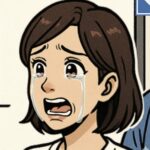
Shi-chan, Episode 9 finally brought Rin and Naomi together! But both of them seemed to have nowhere to go, and watching them suffer made my heart squeeze so tight.

That’s true. Episode 9 felt less like a glamorous first meeting and more like “two people who’ve lost their place in the world finally connecting with someone.” As a nurse, the episode was packed with themes that connect directly to modern clinical practice — poverty, maternal-child support, nutrition, trauma, and the difficulty of accepting help.
Episode 9 doesn’t directly depict medical procedures.
But for nurses, it’s an incredibly important episode.
That’s because a patient’s health isn’t determined only within the walls of a hospital.
Do they have a place to live?
Do they have food to eat?
Do they have someone to rely on?
Do they have an environment where they can protect their child?
Can they tell someone about their vulnerabilities?
These living circumstances are deeply tied to the onset of illness, recovery, readmission, and mental health.
Episode 9 reminded us that nurses must “see not just the disease, but the person’s entire life.”
- Synopsis of Episode 9: “Rin and Naomi”
- Nurse Perspective Point ①: Poverty Is a Health Issue in Itself
- Nurse Perspective Point ②: A Mother’s Pride and the Struggle to Accept Help
- Nurse Perspective Point ③: A Child’s Hunger Is a Warning Sign You Cannot Overlook
- Nurse Perspective Point ④: Naomi’s Involvement — Advocacy Within Toughness
- Nurse Perspective Point ⑤: Viewing Rin’s Reactions Through Trauma-Informed Care
- Nurse Perspective Point ⑥: Soup Kitchens and Charity — Viewing Them as Social Resources
- Nurse Perspective Point ⑦: Naomi and Mary’s Farewell — Rethinking “Self-Sufficiency Support”
- Nurse Perspective Point ⑧: Rin and Naomi’s Meeting as the Beginning of “Mutual Support”
- Observation Points New Nurses Can Use in Clinical Practice
- How to Report to Senior Nurses, Physicians, and Medical Social Workers
- Frequently Asked Questions (Q&A)
- Q. Episode 9 doesn’t have many medical scenes — is there still value in viewing it from a nurse’s perspective?
- Q. How involved should nurses be in a patient’s financial poverty?
- Q. What should you do if a patient refuses support?
- Q. Is it okay for nurses to be concerned about a child’s hunger or nutritional status?
- Q. Doesn’t asking about a patient’s living background feel intrusive or rude?
- Summary: Episode 9 Teaches Us That “Nursing Means Seeing People’s Lives”
- English Summary: Episode 9 in 10 Lines
- 🛒 しーちゃんのおすすめ情報
Synopsis of Episode 9: “Rin and Naomi”
In Episode 9, Rin escapes from the Okuda household where she married into, and heads to Tokyo with her daughter Tamaki.
Her hope rests on her late father Shinuemon’s younger brother — her uncle Nobukatsu.
For Rin, Tokyo was supposed to be the place to start a new life, and the last hope of protecting her daughter.
But the reality waiting for her upon arrival was far from sweet.
Nobukatsu’s business is struggling, and he has no capacity to take in Rin and Tamaki.
In fact, Nobukatsu himself has been pushed to the point of having to give up his home.
She finally made it to Tokyo, but even the uncle she was counting on was in a difficult situation himself. Rin must have felt like giving up.
Yes. From a nurse’s perspective, this scene shows “believing there was support available, but then finding that support simply doesn’t exist.” Even today, it’s not uncommon for a patient’s family to be planned as the discharge support, only to find that the family itself lacks the capacity or financial resources to provide care.
Rin searches for live-in work while taking care of Tamaki.
But this was not an era when a woman with a young child and difficult circumstances could easily find employment.
On top of that, Rin carries the pride of her former samurai family background.
She has a strong resistance to relying on others, accepting charity, or showing weakness.
Meanwhile, a major turning point arrives for Naomi as well.
Mary, the missionary who has been watching over Naomi at the church, is about to leave Japan.
Naomi pleads to be taken along, but Mary refuses.
Naomi is confronted with the reality that she cannot live a life of being led somewhere — she must choose her own path forward.
And then, in the streets of Tokyo, Rin and Naomi meet.
The catalyst was Tamaki’s pinwheel.
Blown away by the wind, the pinwheel was picked up by Naomi — and through that moment, the lives of Rin, Tamaki, and Naomi intersect.
The pinwheel meeting was such a beautiful scene — it really tied in with the title “Kaze, Kaoru” (The Fragrant Wind). But what followed was quite raw and realistic, with Tamaki being so hungry…
Exactly. As a nurse, I can’t just see that scene as a “beautiful encounter.” There’s a child’s hunger, a mother at her limit, resistance to accepting help, and the question of how a third party intervenes. It was a very important scene that connects directly to modern maternal-child support.
Naomi offers food to Tamaki.
Rin hesitates.
Her pride, her guilt as a mother, her sense of dignity as a former samurai, her shame before her mother Mitsu.
All sorts of emotions swirl inside Rin.
Naomi shows that she wants to feed Tamaki first — not Rin herself.
That one gesture and word deeply shakes Rin’s heart.
Episode 9 was the fateful meeting of Rin and Naomi, but at the same time it portrayed “accepting help,” “protecting a child,” and “torn between pride and survival.”
Nurse Perspective Point ①: Poverty Is a Health Issue in Itself
The first thing to consider in Episode 9 is poverty.
Rin and Tamaki are placed in a situation without stable housing, income, or sufficient food.
In modern terms, this is a problem of “social health.”
When we think of health, we might picture blood pressure, temperature, SpO2, or lab values.
Of course, those are important.
But human health isn’t determined by medical data alone.
Housing, income, food, work, education, family relationships, community connections.
These social conditions have a profound impact on illness and recovery.
Is a difficult life situation also a health problem that nurses should be looking at?
Absolutely. When life is unstable, people can’t keep taking their medications, can’t come in for appointments, can’t eat properly, can’t sleep. In clinical practice, it’s very common to find that a health problem has its roots in financial hardship.
Modern healthcare considers these kinds of backgrounds as “Social Determinants of Health” (SDH).
It sounds like a technical term, but simply put, it means “living conditions and social factors that influence health and illness.”
For example:
・Can’t afford rent and housing is unstable
・Cutting food expenses
・Can’t take time off work, so medical visits are delayed
・No family to rely on
・Raising children and working alone
・Fleeing from violence or control
・Unaware of available support systems
All of these are health concerns.
Rin and Tamaki’s situation is exactly this.
Rin isn’t sick.
But her housing is unstable, her food is insufficient, she’s caring for a young child, and she’s mentally pushed to her limit.
Left unaddressed, this is a state with a high risk of damaging her health.
So when a patient comes to the hospital, we shouldn’t only look at the “diagnosis” — we also need to see how they’re living their life?
Exactly. Whether it’s discharge support, outpatient nursing, or the ER — it’s all the same. Can this patient actually live when they go home? Can they eat? Can they keep taking their medications? Do they have someone to rely on? Only when we look that far, does nursing truly begin.
Nurse Perspective Point ②: A Mother’s Pride and the Struggle to Accept Help
What’s striking about Episode 9 is that Rin can’t immediately accept help.
Tamaki is hungry.
She needs food.
Rin understands this in her head.
But Rin hesitates.
Within her is the self-blame of a mother and the pride of a former samurai.
“I’ve made my daughter suffer like this.”
“I’m sorry to my mother.”
“I’m so pathetic.”
These feelings torment Rin.
Watching it, I kept thinking “please just let her eat!” but I also kind of understood Rin’s feelings. Accepting help isn’t easy, is it?
That’s right. It’s easy to say to someone who’s struggling, “just accept the support.” But for that person, receiving support can feel like “admitting my own failure” or “throwing away my pride.” As nurses, we need to understand this without judging.
In modern nursing, we sometimes encounter patients or families who can’t accept help.
For example:
・Feeling that using care services is “a family shame”
・Having resistance to welfare or social assistance programs
・Disliking home visits because “strangers will see inside my house”
・Feeling like a “failed mother” for accepting childcare support
・Struggling emotionally but saying “I’m just being weak” and not seeking help
These reactions are not at all uncommon.
What nurses want to focus on is understanding “why are they refusing?”
It’s not simply stubbornness.
There’s a background of shame, guilt, past wounds, little experience relying on others, and distrust of the system.
When I see someone refusing support, I might instinctively think “just use it!” wouldn’t I.
That feeling is natural. But if you respond with “why won’t you use it?” you might cause them to close off even more. The important thing is, rather than “will they use it or not,” to first ask “what are you worried about?”
What worked as a nurse approach:
“Do you have any resistance to receiving support?”
“Is there some anxiety about relying on someone?”
“Shall we check together what programs are available to protect your child?”
“This isn’t being weak — it’s a system that exists to protect your life.”
“You don’t have to decide everything right now. Would you like to just hear the information first?”
What Rin needed wasn’t a lecture — it was the concrete support of “feed the child first.”
Naomi’s words may sound harsh.
But Naomi focused not on Rin’s face-saving, but on Tamaki’s hunger.
This is the major nursing-perspective turning point in Episode 9.
Nurse Perspective Point ③: A Child’s Hunger Is a Warning Sign You Cannot Overlook
The scene where Tamaki is hungry is critically important from a nursing perspective.
A child’s hunger isn’t simply “being hungry.”
It can lead to malnutrition, dehydration, hypoglycemia, reduced stamina, vulnerability to infection, and emotional instability.
Young children especially have less physiological reserve than adults.
If they go without food for extended periods, they may become lethargic, irritable, overly sleepy, or show signs of dehydration or low blood sugar.
While adults might be able to hold out a little, children can’t do that, can they?
That’s right. Children’s bodies are smaller, so changes happen faster. When a child isn’t eating or drinking enough, even if they seem okay on the surface, you need to observe carefully.
Observation points for young children include:
・Skin color
・Energy level
・Strength of cry
・Dryness of lips and tongue
・Frequency of urination
・Coldness of hands and feet
・Signs of lethargy
・Excessive sleepiness
In Episode 9, Tamaki is hungry and responsive to food.
This is a state where the child’s body is signaling “I need this now.”
What Naomi did first — offering Tamaki food — was an extremely practical form of support.
“Let’s listen to what they have to say first” is also important.
But if the child in front of you is hungry, sometimes providing food, fluids, and a safe place must come first.
Nurses also prioritize what’s immediately life-threatening or safety-related, right?
Exactly. In nursing, prioritization is everything. Rin’s pride and feelings matter too, but Tamaki’s hunger is a problem that needs addressing right now. I think Naomi sensed this instinctively.
In modern hospitals, nurses sometimes notice a child’s nutritional status or home environment.
For example, poor weight gain at an outpatient visit, repeated dehydration in the ER, or an exhausted parent.
In those moments, nurses don’t accuse — they check the background.
“Is there any difficulty preparing meals at home?”
“Is it hard to get to the grocery store?”
“Are there any financial worries about food?”
“Is there anyone you can talk to?”
These questions are nursing that protects children.
Nurse Perspective Point ④: Naomi’s Involvement — Advocacy Within Toughness
Naomi speaks to Rin in quite strong words.
But at the core of her actions is the desire to protect Tamaki.
In nursing language, this perspective is close to “advocacy.”
Advocacy means speaking on behalf of patients or those in vulnerable positions to protect their rights and interests.
Nurses play the role of voicing the needs of those who can’t speak for themselves — whether patients, children, or the elderly.
Naomi spoke on Tamaki’s behalf.
That’s right. Tamaki can say “I’m hungry,” but she can’t say “please feed me before you worry about your mother’s pride.” Naomi spoke that part for her. The words were strong, but it was an action that put the child’s best interests first.
There are many moments in clinical practice where nurses take on the role of advocate.
・Conveying a patient’s unspoken pain to the doctor
・Speaking on behalf of a patient with dementia’s anxiety
・Connecting child safety concerns to caregiver support
・Sharing end-of-life patient wishes with the care team
・Linking someone who can’t continue treatment due to financial reasons to a medical social worker
Patients don’t always communicate their struggles well.
In fact, the people who are most in need often have the hardest time speaking up.
I’m embarrassed.
I don’t want to be a burden.
I’m afraid of being scolded.
I don’t know how to say it.
Feelings like these stop the words from coming out.
So nursing is also about noticing what people can’t say.
Exactly. Not just vital signs, but silence, facial expressions, clothing, belongings, family dynamics, delayed clinic visits, anxiety about medical costs. The ability to notice from those small signs that “something might be wrong” is so important.
Nurse Perspective Point ⑤: Viewing Rin’s Reactions Through Trauma-Informed Care
Rin has endured painful experiences in her marital home.
Even after fleeing to Tokyo in Episode 9, she can’t feel safe right away.
An unfamiliar place.
Relatives she can’t rely on.
No work.
No home.
A hungry child.
And a feeling of self-blame.
This is an extremely high-stress state.
In modern nursing, when caring for someone like this, the concept of “Trauma-Informed Care” (TIC) becomes important.
Trauma-Informed Care is an approach of engaging with the assumption that “this person may have had wounding experiences in the past,” while prioritizing safety, trust, choice, and collaboration.
So trauma isn’t only from big events like disasters or accidents?
Not at all. Domestic violence, control, poverty, discrimination, isolation, and repeated experiences of being denied — these can all leave deep wounds in a person’s heart. What we see as Rin’s stubbornness can actually be understood as a defensive reaction from someone who has been pushed to the edge.
People who have experienced trauma may not immediately accept help even when it’s offered.
They can’t trust the other person.
They think it’s their own fault.
They worry they’ll be controlled again.
They think showing weakness will lead to being judged.
These kinds of reactions can arise.
What nurses want to avoid is trying to control the other person.
Rather than pushing “you should do this,”
“There are options you can choose from.”
“You don’t have to decide right now.”
“You can talk here safely.”
“I’m not asking this to blame you.”
Communicating these things is so important.
So if a support provider speaks too forcefully, the person being supported might become frightened?
Yes. Naomi’s words were necessary to protect Tamaki, but as a modern nurse, the choice of words that doesn’t break the other person’s sense of safety also matters. The balance between strength and gentleness is a real challenge.
Nurse Perspective Point ⑥: Soup Kitchens and Charity — Viewing Them as Social Resources
In Episode 9, the soup kitchen (soup line) becomes a key keyword.
A soup kitchen provides warm food to those in need.
Even today, food support takes many forms — disaster relief, support for people in poverty, homeless support, community food pantries, and children’s cafeterias.
Nurses need to know about these kinds of support as “social resources.”
Social resources refer to systems, services, people, and places that patients and families can use to maintain their lives.
Should hospital nurses also know about things like soup kitchens and community food programs?
Knowing them makes you stronger as a nurse. You don’t need to memorize every detail, but just knowing “there are places I can connect people who are struggling with food” changes how you engage with patients. Problems that medicine alone can’t solve often need to be addressed by connecting people to community support.
Examples of social resources to be aware of in modern practice:
・Medical Social Workers (MSW)
・Community Comprehensive Support Centers
・Public Health Nurses
・Child and Family Support Centers
・Self-Sufficiency Support Programs
・Public Assistance (Welfare)
・Community Children’s Cafeterias
・Food Banks
・Domestic Violence Consultation Hotlines
・Mother-Child Support Facilities
・Visiting Nursing Services
・Home Care Services
・Discharge Planning Departments
Nurses don’t need to solve everything on their own.
But they can “connect” people.
Notice a patient’s difficulties and connect them to the right professional.
This is one of the most important roles a nurse can play.
It sounds like asking “is there anything you’re struggling with?” alone might not be enough to get them to open up.
Exactly. That’s why it’s important to ask specifically. “Are you getting enough to eat?” “Are you struggling with the cost of medication?” “Do you have transportation to get to appointments?” “Do you spend long periods of time alone at home?” — questions like these.
Rin couldn’t say “please help me” herself.
But there was a sign — Tamaki’s hunger.
Naomi noticed that, and tried to connect them to the soup kitchen as a resource.
This overlaps with what modern nurses do: “bridging people to social resources.”
Nurse Perspective Point ⑦: Naomi and Mary’s Farewell — Rethinking “Self-Sufficiency Support”
In Episode 9, there is also a major farewell for Naomi.
Mary, the missionary who has been watching over Naomi at the church, is leaving Japan.
Naomi pleads to be taken along, but Mary refuses.
This scene may appear cold.
But from a nurse’s perspective, it makes us think hard about the difficulty of “dependency” versus “self-sufficiency support.”
I thought, “why won’t Mary just take her along…”
It’s natural to feel that way. But support doesn’t only mean taking on everything for someone else. Sometimes prompting someone to make their own choice is how you truly support them. That’s completely different from abandoning them, of course.
In nursing too, there are moments of uncertainty when supporting patients and families.
How much should we do for them?
From what point should we let them choose?
Should we intervene to ensure safety?
Or should we wait, respecting the person’s wishes?
This is an incredibly difficult theme.
For example, in discharge planning, even if a patient wants to go home, the home environment or caregiving capacity may be insufficient.
Nurses respect the patient’s wishes while thinking together about ways to live safely.
Self-sufficiency support does not mean “do everything yourself.”
It means giving people information so they can make their own choices.
Thinking together about a range where it’s safe to try and fail.
Creating a place they can return to when they’re in trouble.
Connecting them to the support they need.
That is true self-sufficiency support.
Mary’s words were tough for Naomi, but they became the trigger for her to think about her own life.
I think that’s right. Naomi begins to consider not “where someone will take me” but “what do I actually want to do?” Nurses too — rather than making decisions for patients, our role is to support them in making their own choices.
Nurse Perspective Point ⑧: Rin and Naomi’s Meeting as the Beginning of “Mutual Support”
One of the great highlights of Episode 9 is the meeting of Rin and Naomi.
Rin wants to protect her daughter, but is torn between her pride and reality.
Naomi has lost her place to belong, and is being asked how she will live from here on.
It’s not the case that one is the complete supporter and the other is the one being supported.
Both of them are struggling.
Both of them are incomplete.
But perhaps that’s exactly why they can notice each other’s pain.
Even though Naomi was in a difficult situation herself, she still shared food with Tamaki.
Exactly. It’s not only people who have plenty who help others. Sometimes it’s because you yourself are struggling that you can understand another person’s pain. For nurses too, our own experiences and pain can connect us to a deeper understanding of our patients.
Nursing is a profession that supports patients.
But nurses themselves are also supported by others as they work.
Senior colleagues, fellow nurses, physicians, rehabilitation staff, pharmacists, social workers, family, friends.
No one can carry everything alone.
Rin and Naomi’s meeting teaches us that “the supporter” and “the one being supported” are not fixed roles.
Some days you are the one supporting.
Other days you are the one being supported.
Within that kind of relationship, people move forward.
Observation Points New Nurses Can Use in Clinical Practice
Translating Episode 9 into modern nursing, there are many observation points that new nurses should look out for.
The perspective is not just observing disease symptoms, but looking at difficulties in daily life.
🩺 Observation Points for Living Background
・Is housing stable?
・Are they eating regularly?
・Are they struggling with medication costs or transportation?
・Do they have means of getting to appointments?
・Do they have family or support persons?
・Do they have children or family members requiring care?
・Is the patient in a state where they can ask for help?
・Are there any signs of domestic violence, control, or abuse?
・Is daily life after discharge realistically sustainable?
I’m not sure how far I should ask about these things.
It’s natural to be unsure. That’s why it’s important to explain your purpose before asking, rather than jumping straight in. Saying “I’m checking to make sure you can feel comfortable after discharge” or “I’m asking in order to connect you with any support you need” makes it much easier for patients to answer.
For example, you might say:
“After you’re discharged, who will be helping with meals?”
“Do you have transportation to get to your appointments?”
“Are there any concerns about medication costs or clinic fees?”
“Is there someone who can look after your children?”
“Do you have a comfortable place to rest at home?”
“What is the one thing you’re most worried about right now?”
These questions aren’t meant to pry into patients’ lives.
They’re meant to confirm that they can live safely.
Asking about a patient’s life is also part of nursing, isn’t it.
It is. In fact, without seeing the life, nursing stays only halfway. Even if someone gets better temporarily in hospital, if they can’t eat when they get home, can’t afford medication, or have no one to turn to — they may deteriorate again.
How to Report to Senior Nurses, Physicians, and Medical Social Workers
When you notice a patient who may need support due to poverty or maternal-child circumstances, how should you report it?
New nurses might hesitate: “Is it okay to report something like this?”
But a patient’s living background is absolutely legitimate information to report.
I find it easy to report vital signs and symptoms, but living situation feels harder to bring up.
In those cases, it helps to separate the facts from your concerns. “The patient told me this” and “I’m worried about these specific points” — organize it clearly.
For example, a report might sound like:
“Regarding Mr./Ms. ○○, they’ve expressed concern about preparing meals after discharge. They live alone, and there are no support persons nearby. It may affect their ability to continue taking medication, so I was wondering if we could consult with the MSW?”
For cases involving maternal-child support:
“The patient came in with their child, and the child appears to not be eating adequately. The caregiver seems significantly exhausted, and there may be a need to connect them to childcare or life support services.”
For cases with DV or safety concerns:
“There are aspects of what the patient shared that raise concern about domestic control or violence. I think a safety check is needed, and would like to consider a private room interview or referral to a consultation service.”
Reports like these exist to protect patients and families.
The key is not to jump to conclusions.
Rather than stating
“This is abuse.”
“This family is a problem.”
Saying instead:
“There’s something I’m concerned about.”
“There may be a need to connect them to support.”
“I’d like to confirm this.”
makes it easier for the whole team to think it through together.
Frequently Asked Questions (Q&A)
Q. Episode 9 doesn’t have many medical scenes — is there still value in viewing it from a nurse’s perspective?
Absolutely.
Episode 9 depicts living conditions, poverty, maternal-child support, and the difficulty of accepting help more than direct medical procedures or hospital scenes.
This connects directly to modern nursing concepts of “discharge support,” “community collaboration,” and “assessment of social background.”
Q. How involved should nurses be in a patient’s financial poverty?
Nurses don’t need to solve everything.
However, noticing difficulties and connecting patients to medical social workers, community comprehensive support centers, public health agencies, and public health nurses is an important role.
Q. What should you do if a patient refuses support?
First, confirm why they’re refusing.
Shame, anxiety, distrust in the system, or past wounds may be at the root of their refusal.
Don’t force it — start with providing information.
Q. Is it okay for nurses to be concerned about a child’s hunger or nutritional status?
Of course.
A child’s food intake, hydration, energy level, urination, and caregiver exhaustion are all important observation points.
When necessary, it’s important to connect the child to a pediatrician, public health nurse, or child and family support services.
Q. Doesn’t asking about a patient’s living background feel intrusive or rude?
The way you ask is what matters.
“I’m checking to make sure you can feel comfortable after discharge.”
“I’m asking in order to connect you with any support you might need.”
When you explain your purpose like this, patients find it much easier to answer.
Summary: Episode 9 Teaches Us That “Nursing Means Seeing People’s Lives”
Episode 9, “Rin and Naomi,” was a pivotal episode where two heroines finally meet.
But from a nurse’s perspective, it was so much more than that.
Rin and Tamaki’s journey to Tokyo.
The uncle they relied on, himself in financial hardship.
The fear of losing a home and a job.
Tamaki’s hunger.
Naomi and Mary’s farewell.
The soup kitchen as a social resource.
A mother’s pride, and the difficulty of accepting help.
All of these are themes that connect directly to modern nursing.
✅ Poverty is a health issue in itself
✅ A mother’s pride and self-blame can raise the barrier to accepting support
✅ A child’s hunger is a warning sign you cannot ignore
✅ Naomi’s actions can be seen as advocacy protecting the child’s best interests
✅ People carrying trauma need engagement that prioritizes a sense of safety
✅ Soup kitchens, community cafeterias, and welfare systems are social resources that connect to nursing
✅ Nursing is not just about illness — it’s about seeing patients’ entire lives
I had thought Episode 9 was light on nursing content since there weren’t many hospital scenes. But it was actually an episode that gets to the very roots of nursing.
That’s right. Nursing isn’t only IV drips and procedures. Eating, sleeping, having a home, being able to rely on someone, protecting a child — seeing those foundations of daily life is also nursing. Episode 9 showed us, through Rin and Naomi’s meeting, exactly what it means to be a nurse in the truest sense.
Rin and Naomi are both still at a loss about their lives.
But through their meeting, they begin to change, little by little.
There are times when people cannot stand alone.
But sometimes, meeting someone gives them the strength to take the next step.
The pinwheel in Episode 9 is not just a prop.
I think it was a gentle wind connecting two people who had lost their way.
For new nurses too — please be someone who can notice the small winds blowing through your patients’ lives.
That noticing can become the next step forward for your patients and their families.
English Summary: Episode 9 in 10 Lines
Here is a simple 10-line English summary of the key points from Episode 9, great for English study or review.
- In Episode 9, Rin escapes from the Okuda household with her daughter Tamaki and heads to Tokyo.
- Her uncle Nobukatsu, who she hoped would help, is himself in financial difficulty and cannot take them in.
- Rin searches for live-in work while resisting accepting help due to her pride as a former samurai.
- Naomi learns that missionary Mary is leaving Japan, and is told she must find her own path forward.
- Rin and Naomi meet in the streets of Tokyo, with Tamaki’s pinwheel as the catalyst.
- Naomi offers food to the hungry Tamaki, while Rin struggles between pride and the need for help.
- From a nurse’s perspective, this episode highlights the Social Determinants of Health and poverty as a health issue.
- Naomi’s actions in prioritizing Tamaki’s needs represent the nursing concept of advocacy.
- Trauma-Informed Care helps us understand Rin’s difficulty accepting support.
- Soup kitchens and charity programs are viewed as social resources that nurses should connect patients to.
🛒 しーちゃんのおすすめ情報
🛌 看護師の疲れた体に。特許取得の整体枕で熟睡できる眠りを
立ちっぱなしのシフト勤務、夜勤明けの肩こり・首こり……看護師のカラダって毎日本当にしんどいですよね。そんな私が出会ったのが、整体師が開発した特許取得の枕「Cure:Re THE MAKURA」。首・肩・背中のコリをほぐしながら寝られる設計で、翌朝の目覚めが全然違います。ふだん整体に行く余裕がない方にこそ試してほしい一品です。
💼 転職を考えているナースへ。MCナースネットで理想の職場を探そう
「今の職場、なんかしんどいな」と感じたら、それはサインかもしれません。MCナースネットは看護師・保健師・助産師専門の転職支援サービス。担当コンサルタントが非公開求人を含めた情報をもとに、あなたの希望にあった職場を一緒に探してくれます。登録・相談は無料なので、転職を決めていなくても「話だけ聞いてみる」から始めてOKです。
- 非公開求人も多数掲載
- 専任コンサルタントが転職をサポート
- 登録・利用は完全無料
。°+°。°+ °。°。°+°。°+ °。°。°+°。°+ °。°+ °。°
◇◆ 看護師の求人・転職ならMC─ナースネット ◆◇
業界最大級!求人数20000件以上、会員数100,000人の実績!
全国での拠点展開だから身近なコンサルタントに相談可!
大人気の企業・健診・添乗のお仕事も豊富!
登録・お問い合わせはこちら
⇒https://px.a8.net/svt/ejp?a8mat=4AVF01+3RQUPE+28MI+61JSJ
。°+°。°+ °。°。°+°。°+ °。°。°+°。°+ °。°+ °。°
✨ 夜勤明けのむくみ・疲れ顔に。自宅でできるEMS美顔器「BIOAESTECH」
夜勤明け、鏡を見てため息……なんてこと、ありませんか?
看護師の仕事は不規則なシフト・立ちっぱなし・ストレスで、顔のむくみやたるみが気になりやすい。エステや美容院に行く時間もなかなか取れないですよね。
そこでしーちゃんが試してみたのが、BIOAESTECH DUAL ORB DEEP LIFT。EMSで深部の筋肉にアプローチして、顔のリフトアップ・引き締めを自宅でケアできる美容機器です。
月々2,191円(税込)のサブスクで始められるから、忙しいナースにもお財布にやさしい。
🌙 夜勤明けのスキマ時間でセルフケア
💆 エステ不要、自宅で本格EMS体験
💳 月々2,191円〜のサブスク形式で気軽にスタート
テクノロジーと実証で肌を変える!高機能スキンケアの新定番【BIOAESTECH】
✨ 看護師のスキルアップに。スキンケアアドバイザー資格を自宅で取得
患者さんのスキンケア相談、自信を持って答えられますか?一般社団法人日本スキンケア協会のスキンケアアドバイザー通信講座なら、肌の仕組みから正しいスキンケア方法まで体系的に学べます。自宅学習だからシフト勤務でも無理なく続けられ、取得した資格は患者さんへの指導・美容系への副業・日常生活にも活かせます。
- 自宅で学べる通信講座
- 看護・医療現場での患者指導にも活用できる
- 日本スキンケア協会が認定する公認資格
📚 しーちゃんのおすすめ看護本・国試参考書【Amazon】
「もっと深く勉強したい」「国試に向けてしっかり対策したい」という方へ。Amazonで購入できるおすすめの看護関連書籍をご紹介します。現役ナースの私が実際に使ったり、役立つと感じた本を厳選しています。
コメント