![A Nurse Analyzes "Kaze, Kaoru" Episode 10: Naomi's Slap, Anxiety About Leaving Tamaki & Lessons on Mother-Child Support from Usaburo's "Society" [Shi-chan's Nurse Perspective]](https://considerate-thank-you-nursecareer.com/wp-content/uploads/2026/06/7d3a3c263aff7fbb63cb2a3a34eb71bb.jpg)
By reading this page, you will…
✅ Understand the story of Episode 10 “The Road of Light” from a nurse’s perspective
✅ Analyze the scene where Rin leaves Tamaki behind to look for work — through the lens of mother-child support and safety assurance
✅ Decode the anger behind Naomi’s slap as an act of child rights advocacy
✅ Connect Shimizu Usaburo’s concept of “society” to modern nursing’s social determinants of health
✅ Learn hints for new nurses to recognize “limit signs” in patients and families
Hello, I’m Shi-chan, a working nurse.
I have 20 years of experience as a veteran nurse and work as a certified critical care nurse.
I’m Mirai-chan! I’m in my first year as a nurse, and I ask Shi-chan questions every episode while watching the morning drama “Kaze, Kaoru.”
This time, we’ll take a close look at Episode 10 of the morning drama “Kaze, Kaoru” from a nurse’s perspective.
※ At the end of this article, we’ve included an “English Summary” — 10 lines summarizing Episode 10 in English. Please use it for English learning or to review the content.
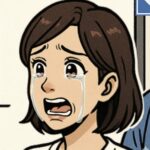
Shi-chan, I was on edge throughout Episode 10. I understand why Rin wanted to leave Tamaki to look for work, but Tamaki was waiting the whole time. And Naomi’s angry scene was really intense.

That’s right. Episode 10 isn’t just “the episode where Rin got scolded,” I think. From a nurse’s perspective, this episode showed how a mother pushed to her limit can start to lose her judgment, how those around her must intervene to protect a child’s safety, and how support that consists of “just being kind” is not enough.
Episode 10 doesn’t center on medical procedures.
But it contains many themes that nurses need to see.
Because the problems facing Rin and Tamaki are, in themselves, a “crisis in daily life” that exists outside the hospital.
No place to eat.
No place to sleep.
No way to find work.
No safe place to leave the child.
There seem to be people to rely on, but trust hasn’t yet been fully built.
And Rin herself — the mother — is close to her limit.
In terms of modern medicine and nursing, this situation connects to everything: discharge support, mother-child support, abuse prevention, support for those facing poverty, and mental health support.
Episode 10 was an episode that reminded us once again: “Nursing is not just about looking at illness.”
- Episode 10 Synopsis
- Nurse Perspective Point ①: Soup Kitchens Are “Support That Connects Lives”
- Nurse Perspective Point ②: The Scene of Leaving Tamaki Behind — Thinking of It as “Mother-Child Separation”
- Nurse Perspective Point ③: Rin Is Not a “Bad Mother” — She Is a “Mother at Her Limit”
- Nurse Perspective Point ④: Naomi’s Slap Is Anger on Behalf of “Child Safety”
- Nurse Perspective Point ⑤: A Child’s Crying Is “Information” to Receive
- Nurse Perspective Point ⑥: Supporters Also Need “Boundaries”
- Nurse Perspective Point ⑦: Usaburo’s “Society” Is the Social Perspective of Nursing Itself
- Nurse Perspective Point ⑧: Chocolate Is “Nutrition” and a “Signal of Safety”
- Nurse Perspective Point ⑨: “Where to Live and Work” Is the Foundation of Health
- Nurse Perspective Point ⑩: Support Is Given While Protecting “The Person’s Dignity”
- Observation Points New Nurses Can Use in Clinical Practice
- Report Examples for Senior Staff, Doctors & MSW
- Frequently Asked Questions
- Summary: Episode 10 Teaches Us About “Support That Protects Children” and “Support That Doesn’t Blame Mothers”
- English Summary: Episode 10 in 10 Lines
- 🛒 Shi-chan’s Recommendations
- 🛒 しーちゃんのおすすめ情報
Episode 10 Synopsis
In Episode 10, the relationship between Rin, Tamaki, and Naomi — who met in the previous episode — takes a step forward.
Rin and Tamaki, guided by Naomi, head to a soup kitchen.
There, they find Yoshie Yoshisaku, who cares about Naomi, and members of a church.
The soup kitchen is a lifeline for those who have lost their place — people struggling for food, those who need someone’s help.
For Rin, it may have appeared to be a place that wounded her pride.
But for Tamaki, it was a place connected to the immediate needs of food and safety.
Even from Episode 9, I thought Rin was truly at her limit. She has to prioritize feeding Tamaki over her own feelings. But that must be so painful for her.
That’s right. A parent pushed to the edge doesn’t become confused because they don’t care about their child — rather, it’s precisely because they care so much that they panic with thoughts of “I have to do something” and their perspective narrows. Simply blaming them won’t lead to real support.
Rin leaves Tamaki — exhausted — with Naomi and Yoshie, and heads out to look for work.
This action is a scene that different viewers will interpret differently.
Some may have felt: “How could she leave her child behind?”
Others may have felt their heart ache at Rin’s desperation: “She had no choice but to look for work to survive tomorrow.”
Rin was not being lazy.
She was not undervaluing Tamaki.
Rather, she was searching for work for the sake of living together with Tamaki.
But the result was that Tamaki waited a long time for her mother.
A mother’s circumstances, and a child’s safety.
Both matter.
A nurse must see both simultaneously.
The job search doesn’t go well.
At a loss, Rin is approached by a man named Shimizu Usaburo.
Usaburo offers Rin chocolate and tells her he can help if she’s in need.
Rin thinks not of eating it herself, but of giving it to her daughter.
And she opens up about how she’s looking for a place to live and a job, and how she’s fled from her marriage.
When Rin received the chocolate, rather than eating it herself, she was thinking of Tamaki. I thought — she really does care about Tamaki.
Yes. That’s what’s important. Rin isn’t a perfect mother. But she does care about Tamaki. At the same time, within her limits, she’s no longer able to make safe judgments. Nurses must not judge based only on whether love is present or absent — they must look at whether the child’s safety is actually being protected.
Usaburo presents Rin with the idea of “society.”
A society includes both the strong and the weak.
This way of thinking brings Rin a new perspective on life.
Rin is up against a reality that cannot be resolved through individual effort alone.
She wants to work, but can’t find work.
She wants a home, but has no place to live.
As a mother she wants to protect Tamaki, but the conditions needed to do so aren’t in place.
What’s needed is not willpower.
It’s support that comes from society.
Late at night, when Rin returns to the church, Naomi is furious.
Because Tamaki had been waiting for her mother the whole time, crying.
Naomi slaps Rin across the cheek.
This slap was a shocking scene.
Of course, in modern nursing, violence is not permitted.
A nurse raising a hand to a patient or family member must never happen.
But seen as a dramatic scene, Naomi’s anger also arose from her strong emotion to “protect Tamaki.”
Episode 10 is not simply an episode about blaming Rin.
Nor is it an episode that simply calls Naomi right.
When mother and child are pushed to the brink, how does a supporter engage with them?
How do we protect a child’s safety?
How do we handle a supporter’s anger or sense of powerlessness?
It was an episode that made us think through all of that.
Nurse Perspective Point ①: Soup Kitchens Are “Support That Connects Lives”
The first important scene in Episode 10 is the soup kitchen.
A soup kitchen is not simply a place to distribute food.
Eating.
Having something warm to put in your mouth.
Entering a place where there are people.
Learning that others besides yourself are also struggling.
And gaining a starting point to connect with support.
These are all part of what it means.
In modern terms, it connects to soup kitchens, children’s cafeterias, food banks, food pantries, support for those facing poverty, and disaster shelter support.
I had thought of soup kitchens purely as food support. But they’re also an entry point to broader support, aren’t they.
That’s right. From a nurse’s perspective, a soup kitchen is both “a place to supplement nutrition” and “a place to find people who are isolated.” Food becomes the starting point from which issues around housing, work, childcare, illness, violence, and debt can emerge.
The same is true in hospitals.
When a patient says “I’m not eating,” that isn’t simply a matter of poor appetite.
No money.
Unable to go shopping.
Can’t cook.
Holding back for the sake of family and unable to eat freely.
Putting their own meals last because caregiving is exhausting.
Subject to abuse or control, unable to eat freely.
Backgrounds like these may be hidden.
I want new nurses, when looking at a patient’s food intake, to imagine not just hospital meals but what life will be like after discharge.
After going home, can they really eat?
Can they go shopping?
Can they cook?
Are they struggling with food costs?
If there are children or elderly people at home, are the whole family’s meals being provided for?
The soup kitchen in Episode 10 was a place that saved Rin and Tamaki’s lives — at least for that day.
Nurse Perspective Point ②: The Scene of Leaving Tamaki Behind — Thinking of It as “Mother-Child Separation”
Rin leaves Tamaki with Naomi and others and goes out to look for work.
From Rin’s perspective, this was an action taken for the sake of living with Tamaki.
But from Tamaki’s perspective, it was time spent waiting for her mother in an unfamiliar place.
From a nurse’s point of view, this is a scene of “mother-child separation.”
Mother-child separation refers to a child being separated from their primary caregiver.
It happens for various reasons: hospitalization, surgery, disaster, protection, family circumstances.
Even a short time can become a major source of anxiety for a child.
Tamaki was with Naomi and the others, but her anxiety about her mother not coming back was intense, wasn’t it.
That’s right. Children experience time differently from adults. “Wait just a little” to an adult can feel like a very long time to a child. And if it’s an unfamiliar place, the anxiety becomes even greater.
When a small child separates from their mother or caregiver, there are things nurses should be mindful of:
・ Make clear who is beside them
・ Communicate in words the child can understand when the caregiver will return
・ Don’t make promises that may not be kept
・ Don’t brush aside the child’s anxiety with “It’s okay”
・ Don’t negate crying or getting angry
・ Observe food and water intake, elimination, and signs of sleepiness
・ Confirm the caregiver’s contact information and destination
・ If it becomes prolonged, organize a support system
Rin couldn’t fully anticipate the weight of leaving Tamaki behind.
But this is not only Rin’s problem.
It is also a sign that the mother had been pushed to such an extreme.
What nurses want to prioritize is: before asking “Why did you do such a thing?”, looking at “What was she struggling with, that she had to make that decision?”
At the same time, the child’s safety must be protected.
Empathizing with a parent’s circumstances, while not pushing a child’s safety to the back.
Both are necessary.
Nurse Perspective Point ③: Rin Is Not a “Bad Mother” — She Is a “Mother at Her Limit”
Some people watching Episode 10 may have felt uneasy about Rin.
Leaving Tamaki behind and not coming back until late at night.
Leaving it all to Naomi and the others.
It’s natural to question her as a parent.
But as nurses, it’s important not to stop thinking there.
Is Rin a “bad mother”?
Or a “mother pushed to her absolute limit”?
Episode 10’s Rin is closer to the latter.
It’s true that Rin doesn’t not care about Tamaki. But looking at her behavior alone, I thought it was dangerous too.
That’s the really important point. Nurses don’t judge based only on whether love is present. A parent may love their child and still be unable to fully protect that child’s safety when poverty, isolation, exhaustion, violence, and psychological stress pile up.
In modern mother-child support, we see similar situations.
For example:
・ Having no choice but to leave children at home and go to work
・ No one to rely on during appointments or shopping
・ Unable to find daycare, so unable to work
・ Income cut off if they take time off work
・ Escaped from DV (domestic violence) with nowhere to live
・ Unable to rely on family, carrying childcare alone
・ Too exhausted to respond to the child’s crying
In these situations, the parent’s effort alone is not enough to solve things.
What’s needed is not “You’re a mother, try harder” — but social support.
Among patients and family members that nurses encounter, there are often those whose surface behavior looks problematic, but whose background is actually a state of having reached their limit.
Not coming to appointments.
Not taking medicine.
The child’s appointment being delayed.
Appearing not to listen to explanations.
Unable to reach the family.
If we dismiss each of these with “They’re irresponsible” or “They have low awareness,” we lose the entry point for support.
Of course, when there is danger, intervention is necessary.
But intervention is not punishment.
It is support to protect that person and their child.
Nurse Perspective Point ④: Naomi’s Slap Is Anger on Behalf of “Child Safety”
The scene that may have left the strongest impression in Episode 10 is Naomi slapping Rin.
This is something we should think through carefully as nurses.
First, in modern healthcare, hitting is not permitted.
A nurse raising a hand to a patient or family member must never happen.
Even if the anger is justified, violence is not.
I want to make that premise clear.
That said, if we read Naomi’s anger within the drama, it is anger at the fact that “Tamaki was waiting there, crying.”
Naomi understands that Rin is struggling.
Even so, she couldn’t overlook leaving Tamaki in anxiety for so long.
Naomi’s anger wasn’t because she hates Rin — it was because she wanted to protect Tamaki.
I think that’s right. Naomi is someone who knows the pain of having been left behind herself, so Tamaki’s anxiety may not have felt like someone else’s problem. That’s why she reacted so strongly. But in modern nursing, that anger needs to be transformed into words and team response — not violence.
Nurses too can feel strong anger or urgency when they sense children, elderly patients, those with dementia, or those who have difficulty expressing themselves are in danger.
“Why didn’t you bring them in for treatment sooner?”
“Why weren’t they taking their medicine?”
“Why did you leave them in this state for so long?”
These emotions can arise.
But if you direct them as-is, the other person may become defensive and unable to share necessary information.
What nurses need is not to pretend the anger never existed.
It’s to confirm what is behind the anger — “What is it I want to protect?”
What Naomi wanted to protect was Tamaki’s safety and peace of mind.
A modern nurse could reframe this as:
“Tamaki waited a long time for her mother and seemed very anxious.”
“Next time you leave her, please confirm the time you’ll return and your contact information.”
“I understand you need to look for work. But let’s think together of a way to make sure Tamaki isn’t left anxious alone.”
“Let’s first secure a safe place to spend tonight.”
Channeling anger into support.
This is a very important skill for nurses.
Nurse Perspective Point ⑤: A Child’s Crying Is “Information” to Receive
Tamaki waited for her mother, crying.
A child’s crying is important information for nurses.
Crying is not willfulness.
For small children, crying is a way of expressing themselves.
Anxiety.
Hunger.
Sleepiness.
Pain.
Cold.
Fear.
The distress of not knowing what comes next.
Troubles that can’t be put into words emerge as crying.
In pediatric nursing, we’re taught that it’s important to think about why a child is crying.
That’s right. Rather than telling a crying child “Stop crying,” what matters is watching “What are they trying to communicate?” — the way they cry, skin color, breathing, perspiration, temperature of their hands and feet, drowsiness, whether they calm down when held. All of that becomes information.
When nurses observe children, a child’s crying can have many meanings.
Are they crying with energy?
Is it a weak, faint cry?
Is it different from their usual cry?
Do they calm down when held?
Do they feel reassured seeing their parent’s face?
Do they want to sleep but can’t?
Is there dehydration, hypoglycemia, fever, or pain hiding beneath the surface?
Tamaki’s crying was not just a sign of physical crisis — it was also a sign of psychological anxiety.
Even if a child intellectually understands their mother is coming back, their heart still becomes anxious.
All the more so since Tamaki had already left home, come to an unfamiliar place, and had only just arrived at the soup kitchen.
Stresses from many life changes were piling up.
For the mother’s absence to extend for a long time within that was a major source of stress.
Nurses should maintain the posture of receiving a child’s crying not as “what a nuisance” or “what trouble,” but as “they’re communicating something.”
Nurse Perspective Point ⑥: Supporters Also Need “Boundaries”
Naomi watches over Tamaki and waits for Rin.
And when Rin returns late at night, she gets angry.
This also depicts the burden on the side of the supporter.
Supporters cannot receive everything without limit.
Even goodwill has its limits.
Time, physical energy, responsibility, emotions, safety.
Supporters also have things they must protect.
If a supporter says “I’ll do everything” and takes it all on themselves, it won’t last, will it.
That’s absolutely right. Nurses are the same — caring for patients and family is important. But if you take on too much alone, you can burn out, anger can intensify, or your judgment can become sloppy. That’s why we need team support and the ability to set limits.
Limits don’t mean being cold.
They mean making clear what you can and cannot do in order to sustain support.
For example:
・ Until what time can we watch over the child?
・ Who bears responsibility?
・ Where to contact in an emergency?
・ Who handles the child’s meals and elimination?
・ If they’re staying overnight, is there a safe environment?
・ What is the next step for support after this?
Leaving these ambiguous and taking on things out of goodwill puts both the supporter and the person being helped in danger.
In hospitals too, it’s dangerous for nurses to take things on individually out of “I feel sorry for them.”
What’s needed is to connect to team and systems.
Doctors, nurses, medical social workers, public health nurses, child welfare offices, community comprehensive support centers, administrative windows, visiting nurses, schools, nurseries.
Support should not be completed through one person’s kindness — it should be connected to the system.
Naomi’s anger also included the strain of having borne it alone.
However she feels, that is natural.
But in modern nursing, that anger is channeled into words and team response.
Nurse Perspective Point ⑦: Usaburo’s “Society” Is the Social Perspective of Nursing Itself
In Episode 10, Shimizu Usaburo appears.
Usaburo speaks to Rin, offers her chocolate, and tells her that if she’s in trouble, he can help.
And he presents the idea of “society.”
This scene is extremely important within Episode 10.
Until then, Rin had been thinking: “I have to do something myself.”
I have to work.
I have to find a place to live.
I have to protect Tamaki.
That sense of responsibility is noble.
But in reality, there are things that can’t be managed by individual effort alone.
Does Usaburo’s concept of “society” also relate to nursing?
It relates tremendously. Because nursing is not just about looking at a patient’s body — it’s a job that looks at the society the person is living in. Housing, work, money, family, systems, discrimination, education, community. Without seeing all of that, health truly cannot be supported.
In modern nursing, there is a concept called the “social determinants of health.”
In simpler terms: health is not determined only by individual effort or physical constitution — it is greatly influenced by the living environment and the structure of society.
For example:
・ Low income, unable to obtain nutritious meals
・ Unstable housing, unable to sleep soundly
・ Unable to take time off work, so treatment is delayed
・ No transportation to the hospital
・ Unaware of systems, unable to access support
・ Single parent, bearing childcare and work alone
・ Escaping from DV or control
・ Facing language barriers due to foreign roots
・ Discrimination and prejudice make it hard to ask for help
All of these affect health.
Rin’s problems are not due to lack of effort on Rin’s part.
The difficulty for a woman in the Meiji era to find work alone while carrying a child, secure housing, and live safely provides the background.
Usaburo’s presence seems to serve the role of showing Rin: “This is not your problem alone.”
Nurses sometimes say the same to patients.
“This is not because your effort was insufficient.”
“There are systems available.”
“Let’s look for someone to consult with together.”
“If you’re struggling with medical costs or daily life, I can connect you with someone.”
“You don’t have to carry this alone as a family.”
These words have the power to loosen a patient’s or family’s isolation a little.
Nurse Perspective Point ⑧: Chocolate Is “Nutrition” and a “Signal of Safety”
The chocolate Usaburo offers Rin is also an interesting scene from a nurse’s perspective.
Chocolate was something unusual for Rin at that time.
But as a nurse, I see two meanings there.
One is energy that can be quickly consumed.
The other is the trigger to feel: “This person may not be an enemy.”
When someone offers you food, your feelings relax a little, don’t they.
That’s right. Of course, receiving food from a stranger carries risks in modern times, so safety confirmation would be needed. But in support settings, a warm drink or a light snack can become the entry point to easing tension.
Even in disaster support and shelter support, food and drinks are very important.
It’s not just about supplementing nutrition.
People feel a little calmer when they eat.
When they drink something warm, the body’s tension eases.
From food that someone offered them, they may feel: “I haven’t been abandoned.”
When nurses engage with patients, food and fluids can also be an entry point to building trust.
“Let’s have a little water.”
“Is there anything you feel like eating?”
“Even if you’re not in the mood to eat, just moistening your mouth is fine.”
“Let’s have the child eat first.”
These small forms of engagement can sometimes connect to a person’s sense of security.
In Episode 10, Rin doesn’t keep the chocolate for herself alone.
She thinks of having Tamaki eat it.
From here too, we can see Rin’s feelings as a mother.
Nurses want to look not only at the danger in a person’s behavior, but also at the feeling behind it.
Nurse Perspective Point ⑨: “Where to Live and Work” Is the Foundation of Health
What Rin was seeking was a place to live and a job.
These are critically important for protecting health.
No matter how much medical care is available, recovery becomes difficult without a place to live.
Prescribe medicine, but there’s no stable place to store it.
Provide nutritional guidance, but there’s no kitchen or money for food.
Prescribe rest, but there’s no environment to rest in.
Schedule an outpatient appointment, but there’s no money for transportation.
Introduce childcare support, but there’s no residential registration or means of contact.
These situations exist in reality.
So things like where you live and your job are related to health?
Related — they’re the very foundation. For example, even if you explain a low-salt diet to a heart failure patient, it’s difficult without an environment where they can choose their food. Even if you recommend exercise to a diabetes patient, it won’t continue if there’s no safe place to walk or time to do so. Health exists on top of daily life.
Rin searches for a place to live and a job.
That is the action of seeking the foundation for living with Tamaki.
However, the situation was too difficult for Rin alone to search.
That’s exactly why social resources become necessary.
In modern times, nurses would consider the following types of support:
・ Medical social workers
・ Self-Sufficiency Support System
・ Welfare offices
・ Child and Family Support Centers
・ Mother-Child Living Support Facilities
・ DV consultation windows
・ Public health centers
・ Community Comprehensive Support Centers
・ Visiting nursing
・ Food banks
・ Children’s cafeterias
・ Employment support windows
Nurses don’t need to solve everything.
But they can identify struggles and connect people.
“Do you have a place to live?”
“After discharge, will you be able to manage meals and medications?”
“Is there someone to look after your child?”
“Is there anything you’re worried about with medical costs or daily expenses?”
These questions are part of nursing.
Nurse Perspective Point ⑩: Support Is Given While Protecting “The Person’s Dignity”
Rin needs help.
But she’s not accustomed to being helped.
Rather, she has strong resistance to asking for help.
Pride as a former samurai class, responsibility as a mother, a tendency to blame herself.
These overlap, making it impossible to simply say “Please help me.”
I might think “If you’re struggling, just accept support,” but looking at Rin, I can see it’s not that simple.
That’s right. Accepting support can require great courage for some people. That’s why when nurses recommend support, they need to choose words that don’t wound that person’s dignity.
For example, we can say it this way:
“There’s a system available for people who are struggling.”
“This is not special — it’s support for use when needed.”
“Would you like to check it together so you and your child can live with peace of mind?”
“You don’t have to decide right now. Let’s just listen to the information.”
“I’ll work with your own wishes in mind as we look for options.”
There are also ways of saying things to avoid:
“Why didn’t you come to consult earlier?”
“Normally people come in much sooner.”
“You’re a mother, please pull yourself together.”
“This is your own responsibility.”
“You just have to use the system.”
These words can close the other person’s heart.
Support isn’t enough if you just introduce the right system.
What matters is delivering it in a form that the person can receive.
What Rin needed in Episode 10 was not just a lecture.
It was concrete support for protecting Tamaki, and an engagement that would allow Rin herself to think about the next step without blaming herself too much.
Observation Points New Nurses Can Use in Clinical Practice
From Episode 10, here are observation points that new nurses can use in clinical practice.
1. Is the child’s safety being protected?
In households with children, confirm not just the parent’s condition, but also the child’s safety.
Who is caring for them?
Are they eating?
Is there a risk of being alone at night?
Are they connected to nursery or school?
Is there someone who can be relied on if the child becomes suddenly ill?
Children sometimes cannot ask for help themselves.
That’s exactly why adults need to notice.
2. Is the caregiver close to their limit?
Even if caregivers care deeply for their children, reaching their limit can happen when fatigue and isolation pile up.
A stiff expression.
Speech that doesn’t come together.
Unable to sleep.
Quick to tears.
Strong feelings of self-blame.
Refusing support.
Repeating the same struggles.
When these signs appear, think of the need for support before blaming.
3. Is there a foundation for daily life?
Housing, food, income, means of transportation, caregiving capacity, and childcare support after discharge.
These directly connect to continuation of treatment.
Even if the condition has settled, if the foundation of daily life is unstable, there’s the possibility of returning for further visits or readmission.
4. What are the hurdles to receiving support?
Even when systems are introduced, they can’t always be used immediately.
Embarrassment.
The difficulty of procedures.
Family opposition.
Unpleasant past experiences.
Anxiety about personal information.
Distrust of supporters.
Confirm what is acting as a barrier for that individual.
5. Is the nurse bearing it alone?
Issues of poverty, DV, abuse risk, child safety, and housing are not things for a nurse to solve alone.
Share with the team early, and connect to specialists.
Courage to connect is more important than kindness that absorbs everything.
Report Examples for Senior Staff, Doctors & MSW
For new nurses, here are report examples that are easy to use in clinical settings.
When concerned about a child’s safety
“The patient is cooperating with treatment, but it seems that an unattended preschool-aged child is left alone for long periods. The patient also reports strong fatigue and difficulty providing overnight supervision. I would like to confirm whether consultation with an MSW or public health nurse is necessary, including with respect to the child’s safety.”
When poverty seems likely
“When I checked about food and transportation to appointments after discharge, the patient mentioned concerns about food and transportation costs. As this may affect medication continuation, I would like to consult about whether we can connect them to social resources.”
When support is being refused
“The patient is resistant to using support systems and says ‘I don’t want to trouble anyone.’ As it seems difficult for them to receive information about systems alone, I would like to organize the contents of their anxiety and think about how to approach them.”
When caregiver exhaustion is strong
“While feelings toward the child are strong, lack of sleep and fatigue are notable. Decreased decision-making ability is possible, and rather than blaming them, I think adjustment including rest and childcare support is necessary.”
Frequently Asked Questions
Q. If a parent leaves a child and is late returning, should we blame them first?
Confirming the child’s safety is the top priority.
After that, confirm why the caregiver couldn’t return and what their circumstances were.
Simply blaming them makes it harder to connect to support.
However, if the child’s safety is repeatedly compromised, discuss intervention as a team.
Q. Is it too intrusive for nurses to inquire about poverty?
How you ask is important.
“I’m checking to make sure you can feel at ease after discharge.”
“I’m asking whether there are any difficulties in terms of continuing treatment.”
Communicating the purpose makes it easier for patients to answer.
Poverty is greatly related to continuation of treatment and health.
Q. What should supporters do when they feel anger?
Feeling anger is itself natural.
Strong emotions can emerge especially when children or those in vulnerable positions are in danger.
What matters is not directing that anger at the other person, but organizing “what is it I want to protect?” and responding as a team.
Q. How should nurses think about Naomi’s slap?
In modern nursing, violence is not permitted.
However, behind Naomi’s anger was the wish to protect Tamaki’s safety and peace of mind.
Nurses need to transform that wish into words, documentation, reports, team support, and connections to social resources — not violence.
Summary: Episode 10 Teaches Us About “Support That Protects Children” and “Support That Doesn’t Blame Mothers”
Episode 10 was an episode where the relationship between Rin and Naomi deepened dramatically.
Rin and Tamaki heading to a soup kitchen.
Rin leaving Tamaki behind to keep searching for work.
Tamaki waiting and crying.
Shimizu Usaburo calling out to Rin who had nowhere left to go.
And Naomi getting angry at Rin who returned late at night.
Every scene has deep themes when viewed from a nurse’s perspective.
- In Episode 10, the story highlights Naomi’s slap, anxiety about leaving Tamaki, Usaburo’s words, and mother-child support.
- Rin and the people around her face a new lesson about nursing and life.
- The episode shows that nursing is not only about skills, but also about seeing people clearly.
- Patients and families have their own fears, backgrounds, and reasons for their choices.
- Nurses need knowledge, observation, communication, and compassion to support them safely.
- Small words, actions, and habits can change the way care is received.
- From a nursing point of view, this episode connects historical scenes with modern care.
- It also reminds new nurses that confusion and hesitation can become important learning moments.
- Shii-chan’s view is that good nursing begins with thinking about the person, not only the problem.
- This episode helps us learn how kindness can become safer and more thoughtful care.
Episode 10 gave me a mix of emotions — feeling uneasy about Rin, being surprised by Naomi’s anger. But from a nurse’s perspective, it’s not a story where either one is simply to blame, is it.
That’s right. A child’s safety absolutely must be protected. But simply blaming the mother can cause mother and child to become even more isolated. Nurses protect the child while also supporting the caregiver. I think nursing is a profession that refuses to give up on both.
Rin cares deeply about Tamaki.
But there is a reality where caring alone isn’t enough to fully protect.
Naomi wants to protect Tamaki.
But anger alone can’t sustain support.
Usaburo shows Rin the perspective of “society.”
People do not live alone.
The strong and the weak, those who help and those who are helped — all live within the same society.
Nurses are professionals who build bridges so that patients and families don’t become isolated within that society.
For Shi-chan, Episode 10 was a very important episode for thinking about “life support” and “child rights advocacy.”
New nurses, please also try to imagine not just the illness of your patients, but the lives they’re returning to.
Can they eat?
Can they sleep?
Do they have a place to live?
Is the child safe?
Do they have someone to rely on?
Is there resistance to accepting support?
Those questions connect to nursing that protects patients and families.
English Summary: Episode 10 in 10 Lines
Here is Episode 10’s key points summarized in 10 lines of simple English for language learning and content review.
- In Episode 10, the story highlights Naomi’s slap, anxiety about leaving Tamaki, Usaburo’s words, and mother-child support.
- Rin and the people around her face a new lesson about nursing and life.
- The episode shows that nursing is not only about skills, but also about seeing people clearly.
- Patients and families have their own fears, backgrounds, and reasons for their choices.
- Nurses need knowledge, observation, communication, and compassion to support them safely.
- Small words, actions, and habits can change the way care is received.
- From a nursing point of view, this episode connects historical scenes with modern care.
- It also reminds new nurses that confusion and hesitation can become important learning moments.
- Shii-chan’s view is that good nursing begins with thinking about the person, not only the problem.
- This episode helps us learn how kindness can become safer and more thoughtful care.
🛒 Shi-chan’s Recommendations
🛒 しーちゃんのおすすめ情報
🛌 看護師の疲れた体に。特許取得の整体枕で熟睡できる眠りを
立ちっぱなしのシフト勤務、夜勤明けの肩こり・首こり……看護師のカラダって毎日本当にしんどいですよね。そんな私が出会ったのが、整体師が開発した特許取得の枕「Cure:Re THE MAKURA」。首・肩・背中のコリをほぐしながら寝られる設計で、翌朝の目覚めが全然違います。ふだん整体に行く余裕がない方にこそ試してほしい一品です。
💼 転職を考えているナースへ。MCナースネットで理想の職場を探そう
「今の職場、なんかしんどいな」と感じたら、それはサインかもしれません。MCナースネットは看護師・保健師・助産師専門の転職支援サービス。担当コンサルタントが非公開求人を含めた情報をもとに、あなたの希望にあった職場を一緒に探してくれます。登録・相談は無料なので、転職を決めていなくても「話だけ聞いてみる」から始めてOKです。
- 非公開求人も多数掲載
- 専任コンサルタントが転職をサポート
- 登録・利用は完全無料
。°+°。°+ °。°。°+°。°+ °。°。°+°。°+ °。°+ °。°
◇◆ 看護師の求人・転職ならMC─ナースネット ◆◇
業界最大級!求人数20000件以上、会員数100,000人の実績!
全国での拠点展開だから身近なコンサルタントに相談可!
大人気の企業・健診・添乗のお仕事も豊富!
登録・お問い合わせはこちら
⇒https://px.a8.net/svt/ejp?a8mat=4AVF01+3RQUPE+28MI+61JSJ
。°+°。°+ °。°。°+°。°+ °。°。°+°。°+ °。°+ °。°
✨ 夜勤明けのむくみ・疲れ顔に。自宅でできるEMS美顔器「BIOAESTECH」
夜勤明け、鏡を見てため息……なんてこと、ありませんか?
看護師の仕事は不規則なシフト・立ちっぱなし・ストレスで、顔のむくみやたるみが気になりやすい。エステや美容院に行く時間もなかなか取れないですよね。
そこでしーちゃんが試してみたのが、BIOAESTECH DUAL ORB DEEP LIFT。EMSで深部の筋肉にアプローチして、顔のリフトアップ・引き締めを自宅でケアできる美容機器です。
月々2,191円(税込)のサブスクで始められるから、忙しいナースにもお財布にやさしい。
🌙 夜勤明けのスキマ時間でセルフケア
💆 エステ不要、自宅で本格EMS体験
💳 月々2,191円〜のサブスク形式で気軽にスタート
テクノロジーと実証で肌を変える!高機能スキンケアの新定番【BIOAESTECH】
✨ 看護師のスキルアップに。スキンケアアドバイザー資格を自宅で取得
患者さんのスキンケア相談、自信を持って答えられますか?一般社団法人日本スキンケア協会のスキンケアアドバイザー通信講座なら、肌の仕組みから正しいスキンケア方法まで体系的に学べます。自宅学習だからシフト勤務でも無理なく続けられ、取得した資格は患者さんへの指導・美容系への副業・日常生活にも活かせます。
- 自宅で学べる通信講座
- 看護・医療現場での患者指導にも活用できる
- 日本スキンケア協会が認定する公認資格
📚 しーちゃんのおすすめ看護本・国試参考書【Amazon】
「もっと深く勉強したい」「国試に向けてしっかり対策したい」という方へ。Amazonで購入できるおすすめの看護関連書籍をご紹介します。現役ナースの私が実際に使ったり、役立つと感じた本を厳選しています。
コメント